
Water Softener Installation in West Valley City, UT
If you are tired of scale on everything and water heaters that do not last, this is the fix. Sized correctly, a softener is one of the better plumbing investments in this valley.
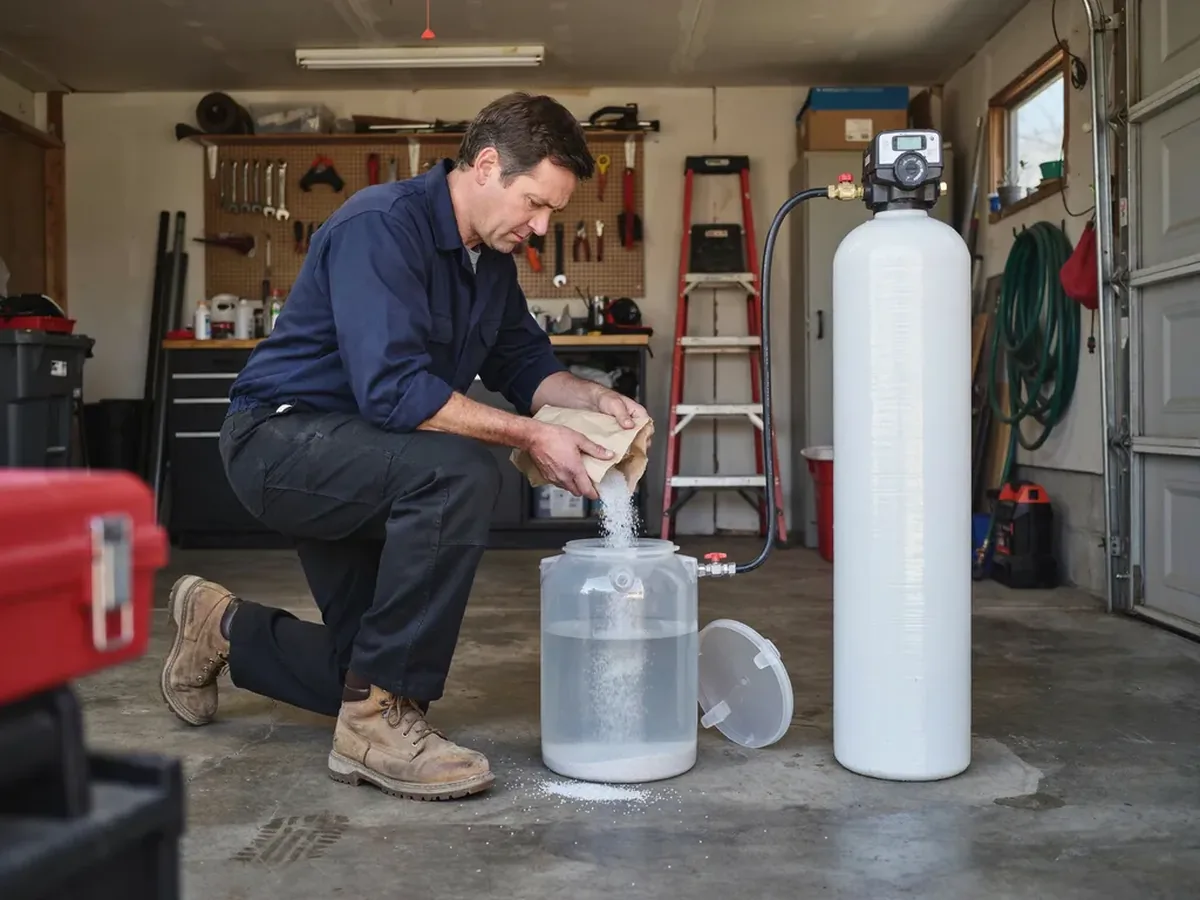
A water softener works by ion exchange. Water passes through a tank of resin beads that hold sodium ions; the calcium and magnesium in the water swap places with the sodium and stay behind on the resin. Periodically the system regenerates, flushing the accumulated hardness to drain with a brine solution and recharging the resin.
The result is water that leaves no scale. No white film on the shower glass, no crust on aerators, no spotting on glassware, soap that lathers with a fraction of the product, and — the part that matters financially — no mineral dropping out in your water heater, dishwasher and washing machine.
The two things that determine whether you are happy with a softener are sizing and installation quality. An undersized unit regenerates constantly, uses more salt than it should and still lets hard water through at peak demand. A badly installed one has no bypass, an improper drain connection, or no provision for the outside hose bibbs, which do not need softening and should not be wasting capacity.
Sizing
Getting the size right
Measure hardness
In grains per gallon, tested on site. This is the number everything else derives from.
Estimate daily use
Roughly 60 to 80 gallons per person per day for a typical household, adjusted for fixtures and habits.
Calculate daily grain load
Hardness multiplied by gallons. That is how much the resin has to remove each day.
Size for a sensible cycle
Regenerating every three to five days is the target. More often wastes salt and water; much less risks hardness breakthrough.
Types
Softener types, honestly compared
Metered ion exchange
The standard and, for most homes, the right answer. Regenerates based on actual water used rather than a timer, so salt and water use track your consumption. Reliable, serviceable, well understood.
Timer-based
Regenerates on a schedule regardless of use. Cheaper, but wasteful, and it can run hard when you are away and short when you have guests. We rarely recommend one.
Twin tank
Two resin tanks alternating, so softened water is available even during regeneration. Worth it for large households or where soft water is needed around the clock.
Salt-free conditioners
Template-assisted crystallisation changes the mineral's form so it is less likely to deposit. No salt, no drain, no waste water, and it does reduce scale in pipes and heaters. But the minerals remain, so you do not get the lathering, the spot-free glassware or the soft feel. A reasonable choice if a drain or salt handling is impractical.
Installation
What a proper softener install includes
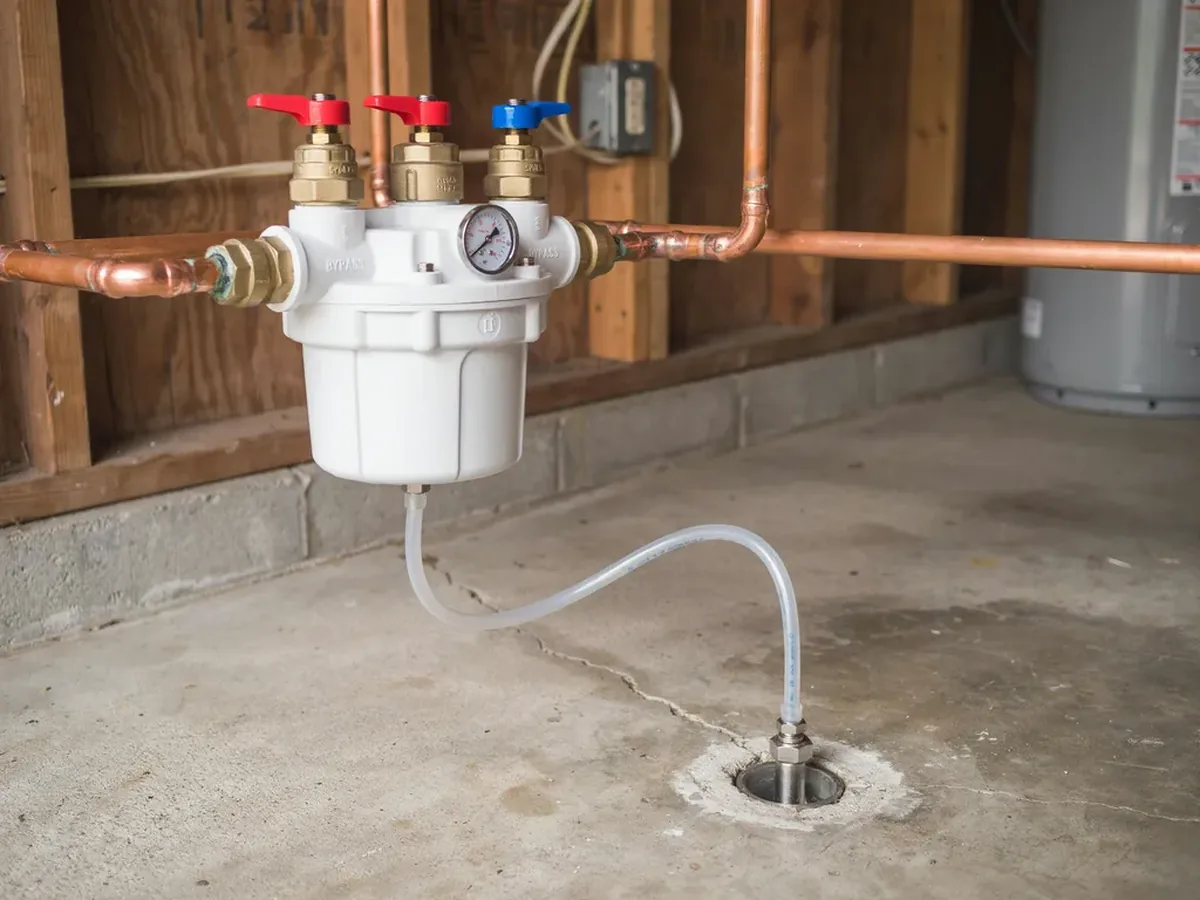
A bypass valve. So the softener can be taken out of service without the house losing water. Non-negotiable, and surprisingly often missing on cheap installs.
A proper drain connection. Regeneration flushes brine to drain, and that connection needs an air gap so there is no possibility of back-siphonage. It also needs to handle the flow rate without backing up.
Outside taps on hard water. There is no point softening water for the lawn and the hose bibbs, and doing so eats capacity and salt. The plumbing should tee off before the softener.
Consideration for the water heater. Softened water can consume some anode rod types faster. It is worth checking the anode a year or two after fitting a softener, which we would do as part of a routine service.
Somewhere to put the salt. Practical, but it matters. A brine tank in an awkward corner of a crawlspace is a brine tank that never gets topped up.
Costs
Water softener costs in West Valley City
| Item | Typical range | Notes |
|---|---|---|
| Metered softener, supplied and fitted | $1,400 – $2,800 | Sized for a typical 3–4 person household. |
| Large or twin-tank system | $2,400 – $4,500 | High demand or continuous soft water. |
| Salt-free conditioner | $1,200 – $2,600 | No drain or salt required. |
| Install a plumbing loop | $450 – $1,200 | Where the house has no pre-plumbed loop. |
| Drain connection with air gap | $180 – $600 | Depends on distance to a suitable drain. |
| Annual service | $120 – $260 | Valve check, brine tank clean, cycle verification. |
| Resin replacement | $400 – $900 | Typically needed after 10 to 15 years. |
| Salt | $8 – $15 per bag | Roughly 4–10 bags per year for a typical household. |
Typical local ranges, not quotes. Sizing is based on tested hardness and your household demand.
Living with one
Practical points about owning a softener
- Keep the brine tank topped up. Salt above the water line, checked every month or two. A softener out of salt is a softener doing nothing.
- Use the right salt. Pellets or solar salt for most units. Rock salt is cheaper and leaves more residue in the brine tank.
- Expect the water to feel different. Soft water feels slippery when you wash. That is soap rinsing properly rather than leaving residue, and most people stop noticing within a week.
- Use less soap and detergent. Genuinely less — often half. Using the same amount is what makes people say soft water leaves them feeling filmy.
- Check the anode rod eventually. Softened water can consume some anode types faster. Worth checking at the next water heater service.
- Service it annually. Valve, brine tank and regeneration cycle. It is cheap and it is what gets you fifteen years out of the unit.
FAQ
Water Softeners: your questions answered
Is a water softener worth it in West Valley City?
For most households here, yes. The water is hard enough that the effects are visible daily, and the appliance and fixture life difference is real. The payback is not purely financial — a lot of it is not scrubbing scale off everything — but the water heater and appliance longevity is a genuine part of it.
Does softened water taste salty?
No. Ion exchange adds sodium in proportion to the hardness removed, which even with hard water is a small amount — roughly comparable to a slice of bread per glass. It is not detectable as saltiness. If sodium is a concern, potassium chloride can be used instead, or an RO tap for drinking water.
How much salt will I use?
For a typical West Valley City household of three or four, somewhere around four to ten bags a year depending on hardness and usage. A metered system uses noticeably less than a timer-based one because it only regenerates when it needs to.
How long does a softener last?
The control valve and tank typically 12 to 15 years, and the resin 10 to 15. With annual servicing, the upper end of those ranges is realistic. Resin can be replaced separately, which is much cheaper than a new system.
Do salt-free systems really work?
They reduce scale formation in pipes and heaters, which is a real benefit, and they need no salt, drain or waste water. What they do not do is remove the minerals, so you will not get the soap lathering, the spot-free glassware or the soft feel. Whether that trade is worth it depends on what was bothering you in the first place.
Will it help my water heater?
Substantially. Sediment build-up is what shortens water heater life in this valley, and softened water dramatically reduces it. The effect is even larger on tankless units, where scale in the heat exchanger is the main failure mode.
Can I install one myself?
It is possible if you have a pre-plumbed loop, but the details that matter — correct bypass, a drain connection with a proper air gap, keeping outside taps on hard water, and sizing it correctly — are what determine whether you are happy with it. Most self-installs we are called to fix have at least two of those wrong.
Related plumbing services
Ready to stop fighting scale?
We will test your hardness on site, size a softener properly and install it with a bypass, a correct drain and the outside taps left alone.