Burst Pipe Repair in West Valley City, UT
A pressurised line that lets go can move hundreds of gallons before you find the shutoff. We find the split, isolate it and repair it properly, not with a clamp and a prayer.
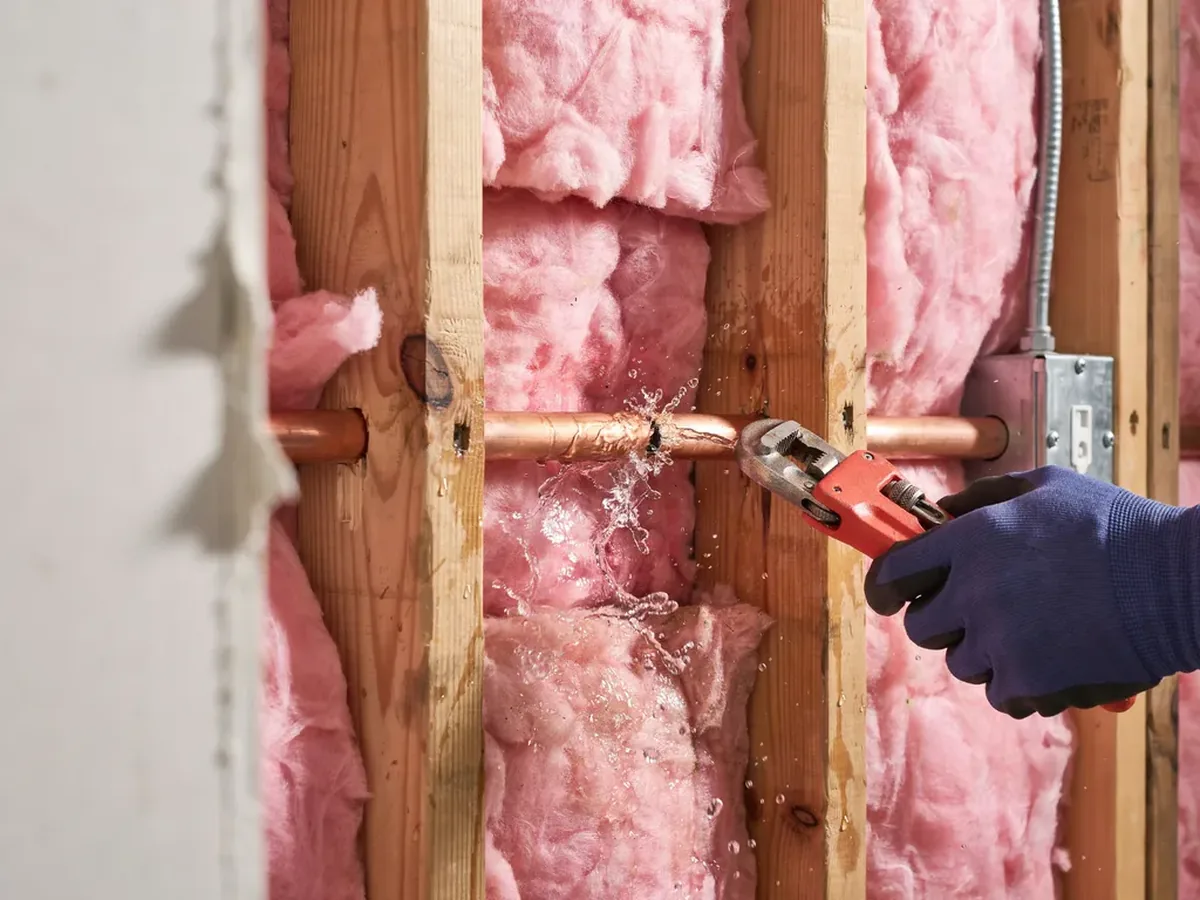
When a pressurised supply line fails, it does not drip. A half-inch line at typical residential pressure can push out several gallons a minute, and it will keep doing it until somebody closes a valve. Inside a wall or above a ceiling, that water spreads along framing and insulation long before it shows up as a stain.
Two things decide how expensive the night gets: how fast the water stops, and whether the repair addresses the reason the pipe burst. We handle both. On the phone we get you to the shutoff. On site we find the actual split rather than cutting open the wall under the wet spot, which is usually the wrong place.
We repair copper, galvanized steel, CPVC and PEX, and we will tell you straight when a pipe is not worth repairing. If a length of galvanized has rusted thin enough to burst in one place, the rest of that run is on the same timeline, and patching it is throwing money at a problem that will be back.
Signs of a burst line
How to tell a pipe has actually burst
Not every burst announces itself with water pouring out of a ceiling. Inside a wall or under a slab, the early signs are subtler.
- Pressure drops suddenly across the house. Showers go weak everywhere at once, not just at one fixture.
- You can hear running water with everything off. A steady hiss or rush in a wall, floor or ceiling when nothing is in use.
- The meter dial keeps moving. Shut every fixture, then watch the leak indicator at the meter. If it still turns, water is escaping somewhere.
- A wet patch, stain or bubbling paint appears. Water tracks along framing, so the visible damage is often several feet from the actual split.
- A warm spot on the floor. On slab homes, a burst hot line under the concrete heats the floor above it. See slab leak repair.
- Your water bill jumps for no reason. A burst line that is draining into soil or a crawlspace can run for weeks without ever surfacing.
Why pipes burst here
What actually causes a burst pipe in West Valley City
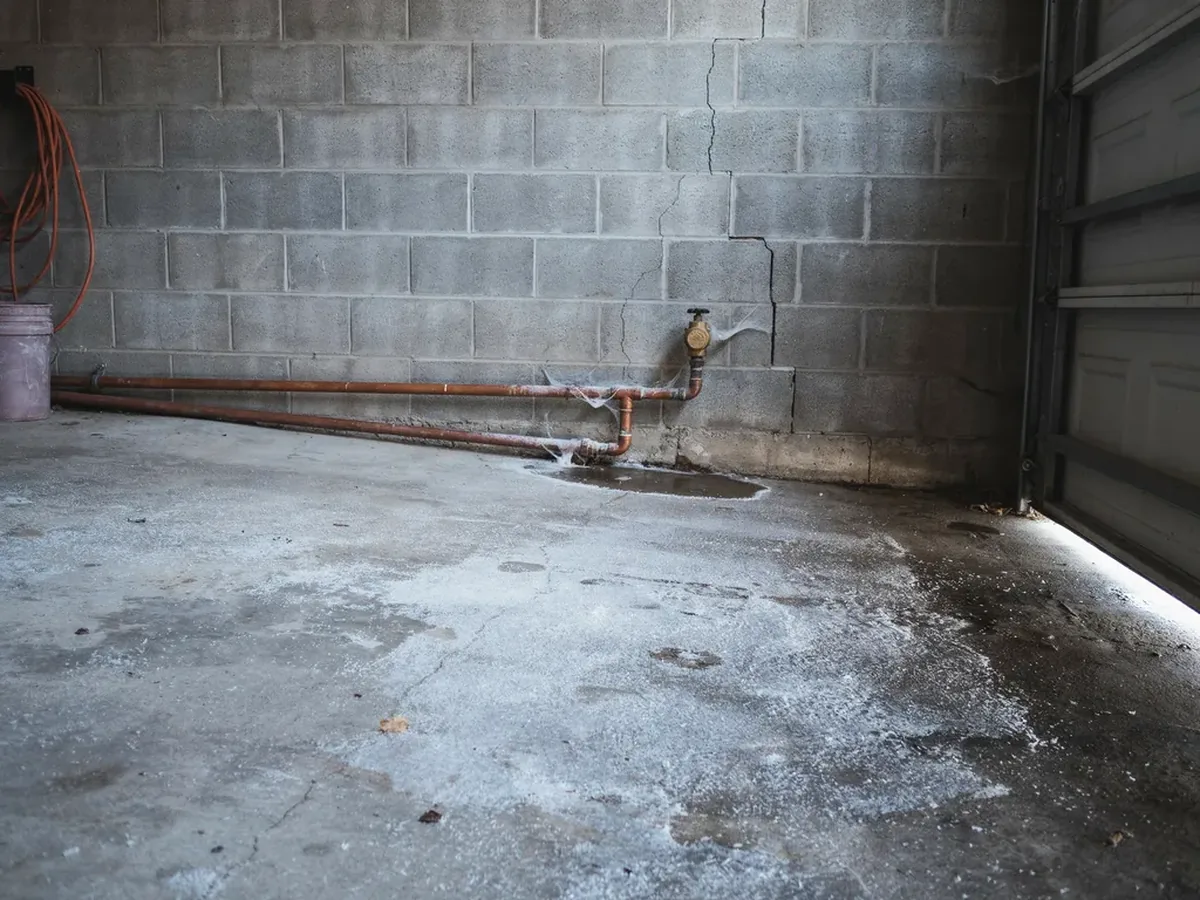
Freezing. The classic Salt Lake Valley cause. Water expands as it freezes and the ice plug pushes pressure ahead of it until the weakest point gives. The split often does not leak until it thaws, which is why so many of these calls come the morning after a cold snap breaks.
Corroded galvanized steel. Homes built through the 1950s to 70s here often still have galvanized supply lines. They rust from the inside out, thin at the threads, and eventually let go. See whole home repiping.
Excess pressure. Some parts of the valley see high street pressure. Without a working pressure reducing valve, sustained pressure over about 80 psi stresses every joint, valve and appliance hose in the house.
Water hammer. Fast-closing appliance valves send a shock wave down the line. Repeated over years it works joints loose and fatigues the pipe.
Physical damage. A screw or nail driven into a line during a remodel, or a shifting foundation stressing a run where it passes through the slab.
Our repair process
How we repair a burst pipe
Isolate and depressurise
Close the nearest valve upstream, drain the line down, and stop the water going into the structure.
Locate the actual split
Acoustic listening, thermal imaging and pressure testing so we open the smallest possible area, in the right place.
Cut out and repair
Damaged section removed and replaced with new copper or PEX, properly supported and transitioned at the fittings.
Pressure test and restore
Line is brought back up and held under pressure while we watch, then the area is left clean and dry.
Repair costs
What burst pipe repair costs in West Valley City
The pipe itself is cheap. What you are paying for is access, locating and the labour to do the repair without wrecking the finishes around it.
| Situation | Typical range | What it involves |
|---|---|---|
| Exposed pipe, basement or crawlspace | $250 – $600 | Cut out the failed section, replace, test. No wall repair needed. |
| Inside a finished wall or ceiling | $500 – $1,400 | Locate, open a small access, repair, test. Drywall patch usually separate. |
| Under a concrete slab | $1,400 – $4,500 | Locate, then either break and repair or reroute overhead. See slab leaks. |
| Buried water service line | $1,600 – $5,500 | Excavation from the meter to the house. See water line repair. |
| Multiple failures in old galvanized | $4,500 – $15,000 | At this point repiping the house is usually cheaper than repeat repairs. |
After-hours call-out is additional and credited against the repair. Figures are typical local ranges, not a quote.
Afterwards
What to sort out once the pipe is fixed
- Get the cavity dried properly. Wet insulation and framing behind a closed wall is how a plumbing problem becomes a mould problem. We will tell you honestly if you need a restoration crew.
- Photograph everything before repair. We do this as standard and give you the images. Insurers want to see the failure, not the finished patch.
- Check your pressure. If street pressure is running high, fitting or replacing the pressure reducing valve protects everything downstream.
- Deal with the rest of the run. One burst in old galvanized is a warning about the whole system, not a one-off.
- Insulate what froze. Pipe sleeve on the run that split, and heat tape where a run cannot be moved out of an unheated space.
- Know your shutoff. If it took ten minutes to find it this time, label it now while it is fresh.
FAQ
Burst Pipes: your questions answered
Can I use a repair clamp until you get here?
A clamp on a small pinhole can buy you an hour, and it is better than nothing if you cannot reach a valve. It is not a repair. Clamps hold against pressure only as long as the pipe wall around them is sound, and on corroded galvanized that is not long.
How do you find a burst pipe inside a wall?
Acoustic listening equipment picks up the sound of water escaping under pressure through the structure, and thermal imaging shows the temperature difference where water is tracking. Between the two we can usually pin it close enough to open one small access rather than a whole wall.
Will my insurance pay for a burst pipe?
Sudden and accidental water damage is usually covered by a standard homeowners policy, though most policies pay for the damage and not for the failed pipe itself. Freeze damage is often covered if the home was heated. Report it quickly and give your adjuster our photos and written cause.
Should I repair or repipe?
One burst in copper or PEX is a repair. Repeated failures, or a first failure in galvanized steel that is fifty years old, means the run has reached the end of its life. We will show you the inside of the cut-out section so you can see what the rest looks like, then you decide.
How long does the repair take?
An accessible section is usually 1 to 3 hours. Behind drywall, add time for locating and access. A slab leak reroute is generally a full day.
Do you patch the drywall you cut?
We cut clean, square access holes and can arrange the patch and paint, or leave it for your own contractor or the restoration company handling the drying. We will tell you which makes more sense before we cut.
Related plumbing services
Pipe burst? Shut the water off and call.
We will talk you to the nearest valve on the phone, then get a plumber to you to find the split and repair it properly.