
Tankless Water Heater Installation in West Valley City, UT
Tankless is excellent when it is installed and maintained properly, and disappointing when it is not. Here is the honest version of both.
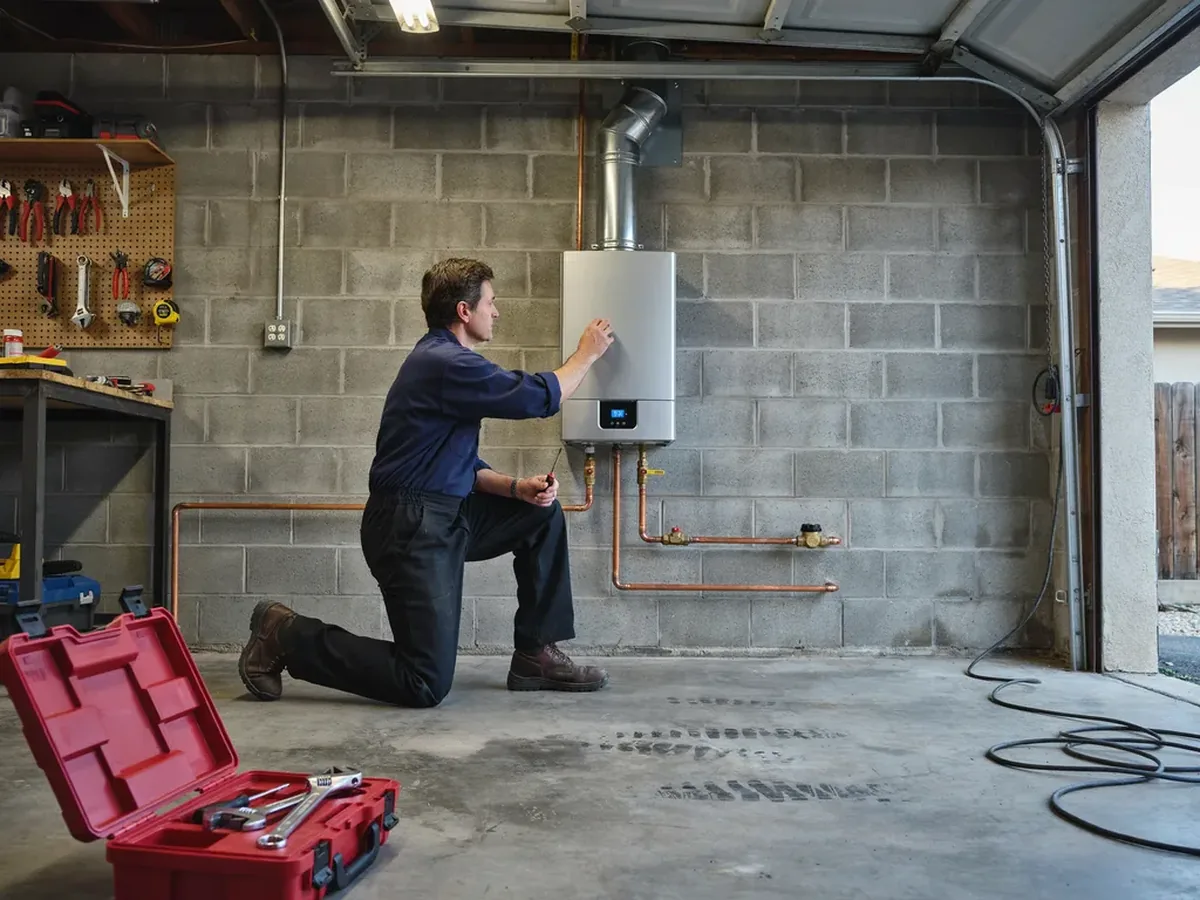
A tankless water heater does not store hot water. It heats it as it flows, which means you cannot run out, there is no tank sitting full and losing heat all day, and there is no tank to eventually corrode through and flood your utility room. Units typically last 15 to 20 years against 8 to 12 for a standard tank.
The catch is that it demands more of the installation. A gas tankless unit needs far more gas input than a tank heater, so the existing gas line is often undersized. It needs its own dedicated venting, usually stainless or PVC depending on the unit. And in water as hard as ours, it needs descaling every year or the heat exchanger scales up and the unit starts throwing flow errors.
None of that is a reason to avoid tankless. It is a reason to have it installed by someone who prices the gas and venting work honestly up front, rather than quoting the unit and discovering the rest halfway through. We survey first and give you one number.
The trade-offs
Tankless, straight
What is genuinely good
Hot water does not run out, ever. No standby heat loss, so lower running costs. No tank to leak. Roughly the footprint of a suitcase on a wall, which frees a corner of the garage. Typically 15 to 20 years of life.
What people are not told
Higher install cost, often much higher once gas line and venting are included. A short delay before hot water arrives at the tap. Output is limited by flow rate, so two showers plus a dishwasher can outrun an undersized unit.
The hard water factor
Descaling every year is not optional in this valley. Skip it and the heat exchanger scales, efficiency falls, and eventually the unit faults. A softener makes a real difference to tankless life.
Sizing
Getting the flow rate right
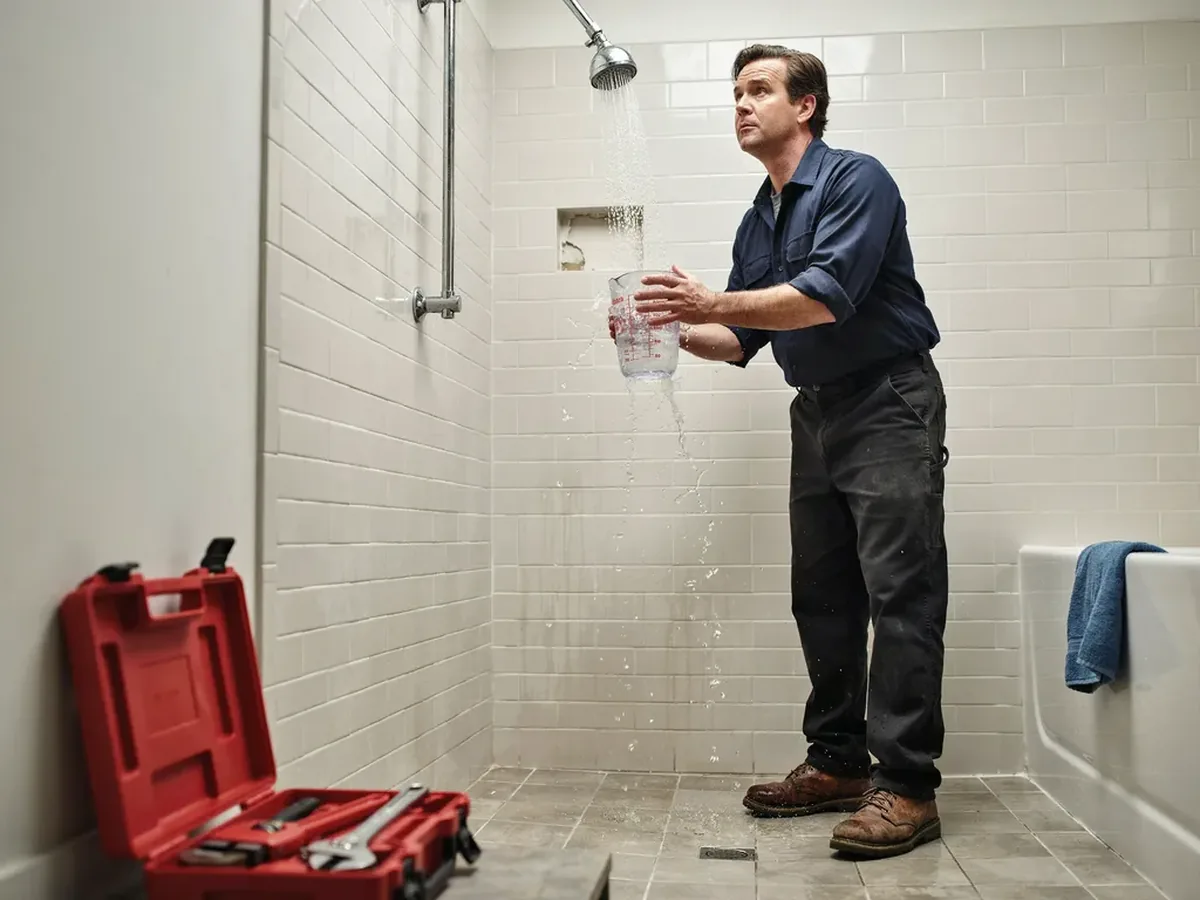
Tank heaters are sized on capacity. Tankless units are sized on flow rate and temperature rise — how many gallons per minute they can raise from incoming temperature to your set point.
That matters here because incoming water in a Utah winter is cold. A unit that comfortably delivers 7 gallons per minute in summer might manage only 4 in January, because it is doing far more work per gallon. Sizing off a summer figure is the single most common reason people are disappointed by tankless.
We size on winter incoming temperature and on realistic simultaneous demand: how many showers might run at once, whether the washing machine and dishwasher are typically running at the same time, and whether there is a high-flow shower system or a large tub.
For most three-to-four bathroom homes that means a unit in the 8 to 11 gallon per minute class, or two smaller units in parallel. For a smaller home it can be considerably less.
Installation
What a tankless conversion involves
Survey
Gas meter and line capacity, venting route, electrical supply, mounting location, and your actual hot water demand.
Gas and venting
Upsizing the gas line where required, and running dedicated venting and combustion air to the unit.
Mount and connect
Unit mounted, water and gas connected, isolation valves with service ports fitted so future descaling is straightforward.
Commission and test
Gas pressure verified under load, temperature set, combustion checked, then permitted inspection.
Costs
Tankless costs in West Valley City
| Job | Typical range | Notes |
|---|---|---|
| Tankless replacing existing tankless | $2,800 – $4,800 | Gas and venting already in place. |
| Tank to tankless conversion | $3,500 – $7,500 | Including gas line and venting work. |
| Gas line upsize | $600 – $2,200 | Depends on run length and meter capacity. |
| Dedicated venting | $500 – $1,600 | Stainless or PVC depending on the unit and route. |
| Annual descale and service | $180 – $340 | Essential in this water. See maintenance. |
| Recirculation pump added | $700 – $1,800 | Removes the wait for hot water at distant fixtures. |
| Tankless repair (typical) | $250 – $750 | Flow sensors, igniters, flame rods, control boards. |
Includes permit and inspection. Typical local ranges, not quotes — we survey and give you a fixed price.
Worth knowing
Getting the most out of a tankless unit
- Descale it annually. Genuinely. In Salt Lake Valley water this is the difference between 18 years and 8. We fit isolation valves with service ports so it is quick.
- Consider a softener. It reduces the descaling burden and helps every other fixture and appliance too. See water softeners.
- Add recirculation if runs are long. Tankless has a slight start-up delay, and a long pipe run adds to it. A recirculation loop removes the wait.
- Do not undersize to save money. The saving disappears the first winter morning two people want a shower at once.
- Mind very low flow rates. Units need a minimum flow to fire. A barely-open tap may not trigger heating on some models.
- Keep the filter screen clean. The inlet screen catches sediment. Two minutes during the annual service.
FAQ
Tankless Water Heaters: your questions answered
Is tankless actually cheaper to run?
Yes, though the saving is often smaller than people expect. You eliminate standby loss — the energy spent keeping 50 gallons hot around the clock — which is a meaningful but not enormous share of the bill. The bigger wins are unlimited hot water, the space, and the longer service life.
Will I really never run out of hot water?
Not from capacity, no. But output is limited by flow rate, so an undersized unit running two showers and a dishwasher at once will deliver all of them lukewarm. Correctly sized for winter incoming temperature, you will not notice a limit.
How long does a tankless unit last?
Typically 15 to 20 years, roughly double a tank heater, provided it is descaled annually. Without descaling in water this hard, expect considerably less.
Why is the conversion so much more expensive than a tank?
Because a gas tankless unit draws far more gas than a tank heater, so the existing line is frequently too small, and because it needs its own dedicated venting rather than sharing an existing flue. Those two items are most of the difference, and we survey and price them up front rather than discovering them mid-job.
Do I need a water softener with tankless?
Not strictly required, but strongly worth considering here. Hard water scales the heat exchanger, which is the component that determines the unit's life. A softener reduces that considerably.
Can you service a tankless unit you did not install?
Yes. We descale, repair and service all the common brands. If it does not have isolation valves with service ports fitted, we will add them, which makes every future service quicker and cheaper.
Thinking about going tankless?
We will survey your gas line, venting and actual hot water demand, then give you one honest number that includes all of it.