Water Treatment & Filtration in West Valley City, UT
Salt Lake Valley water is hard, and you can see it on your shower glass. Treatment is one of the few plumbing investments that pays back in appliance life as well as comfort.
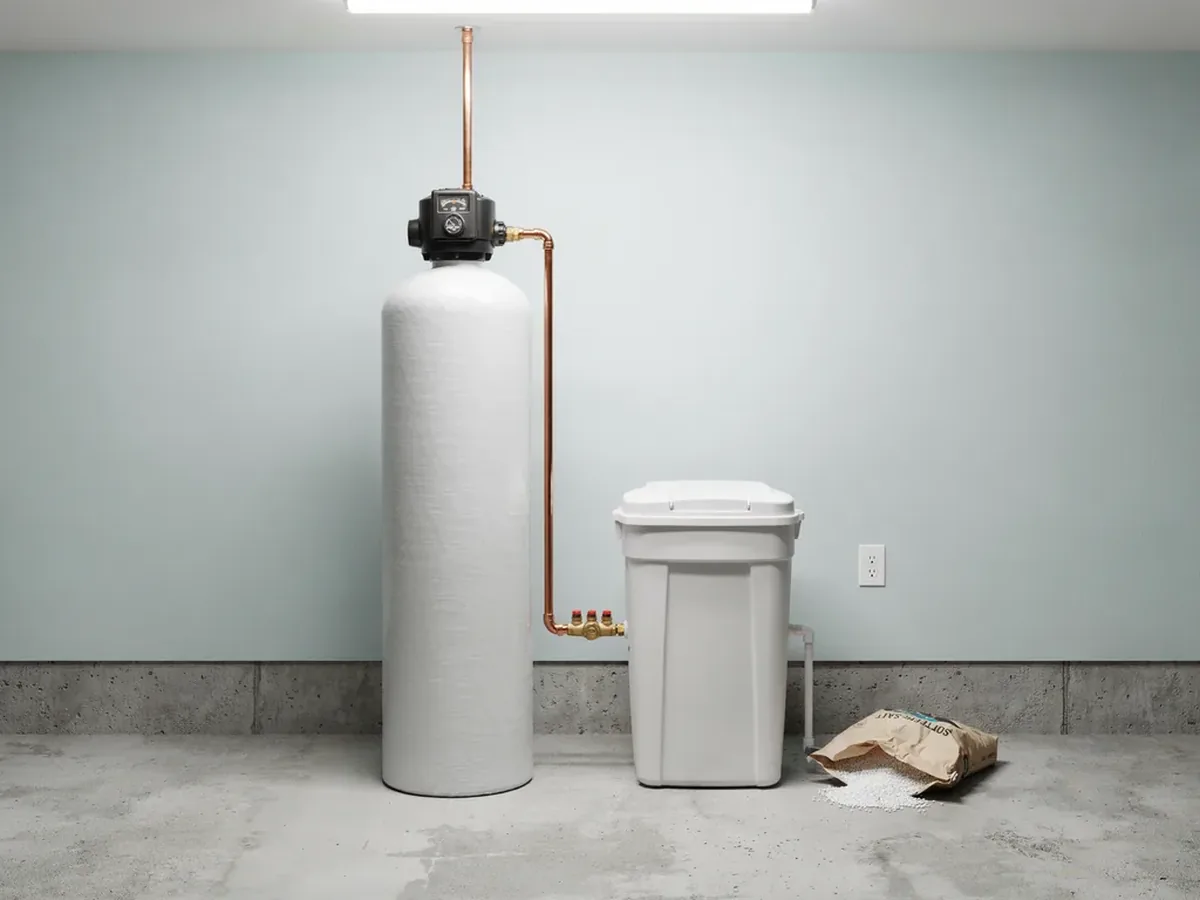
Hard water is not a health problem. It is a maintenance problem, and in the Salt Lake Valley it is a significant one. The dissolved calcium and magnesium in our culinary water is high enough that you can see the results: white film on shower glass within days of cleaning it, crusted faucet aerators, spotting on glassware, soap that will not lather properly.
What you cannot see is the same mineral doing the same thing inside your water heater tank, your dishwasher's heating element, your washing machine's valves, your faucet cartridges and your toilet fill valves. It is the single biggest reason those things need attention more often here than in a soft water region.
There are three different products that get lumped together as 'water treatment' and they solve different problems. A softener removes the hardness minerals and addresses everything above. A whole-home filter removes sediment, chlorine taste and odour, but does not touch hardness. A reverse osmosis system produces genuinely purified drinking water at one tap. Plenty of homes here benefit from more than one, and we will tell you honestly what your water actually needs.
Which one
Softener, filter or RO: what each actually does
| Water softener | Whole-home filter | Reverse osmosis | |
|---|---|---|---|
| Removes hardness (scale) | Yes | No | Yes, at one tap |
| Removes chlorine taste & odour | No | Yes | Yes |
| Removes sediment | No | Yes | Yes |
| Removes dissolved solids | No | Limited | Yes, most of them |
| Protects the water heater | Yes | Partially | No |
| Helps appliances and fixtures | Yes | Partially | No |
| Improves drinking water | Slightly | Yes | Substantially |
| Where it goes | Main supply | Main supply | Under one sink |
| Typical installed cost | $1,400 – $3,500 | $900 – $3,000 | $550 – $1,400 |
Many homes here fit a softener plus an under-sink RO system, which covers both the scale problem and drinking water quality.
Water treatment
Water treatment we install
Three different jobs that often get confused with each other. Here is what each one actually does, and what it costs.
Local water
What is actually in Salt Lake Valley water
Culinary water across the Salt Lake Valley comes from a mix of mountain surface water and deep wells, and both carry a substantial mineral load picked up from the limestone and dolomite in the surrounding geology. Hardness varies by source and by season, but it is consistently at the high end of what water utilities describe as hard.
The water is treated and safe, and the utilities publish annual quality reports that are worth reading. What treatment does not do is remove hardness, because hardness is not a health concern — it is a nuisance and an equipment issue, and dealing with it is left to the property owner.
Beyond hardness, the things people most commonly want addressed are chlorine or chloramine taste, occasional sediment after main works, and total dissolved solids, which is what makes water taste flat or mineral. Each has a different answer.
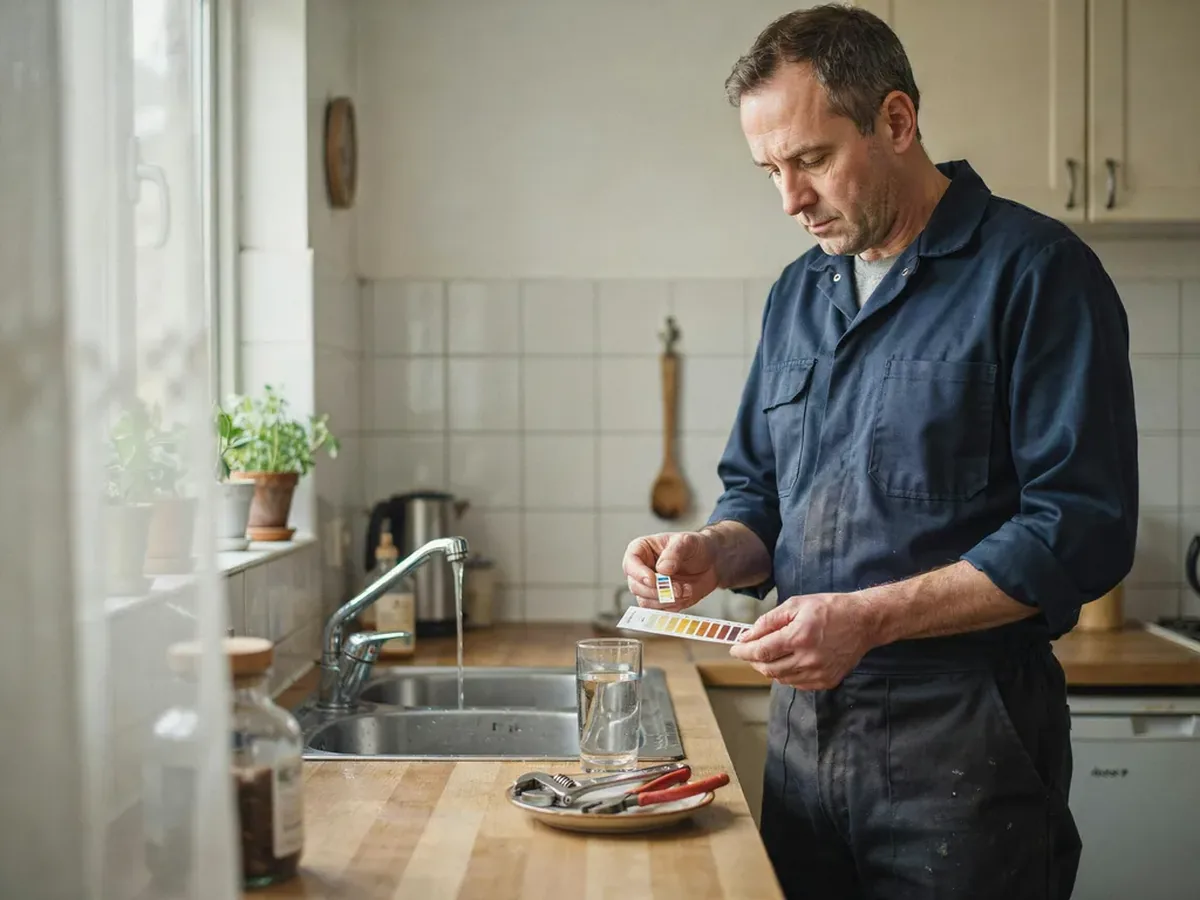
We test on site before recommending anything: hardness in grains per gallon, total dissolved solids, pH and chlorine. That takes a few minutes and it means the system we specify matches your water rather than a generic assumption.
Signs
Signs your water needs treatment
- White film on glass and tile that comes back immediately. Classic hardness. It is calcium carbonate.
- Crusty deposit on faucet aerators and shower heads. Same mineral, restricting flow.
- Soap and shampoo that will not lather. Hardness minerals bind with soap instead of foaming.
- Spotting on glassware out of the dishwasher. Even with rinse aid, hard water leaves deposits.
- Skin and hair feeling dry or filmy. Soap scum residue rather than the water itself.
- A water heater that rumbles. Sediment on the tank floor. See maintenance.
- Chlorine taste or smell. Residual disinfectant. A carbon filter removes it easily.
- Appliances failing earlier than they should. Dishwashers, washing machines and coffee makers all suffer in hard water.
Our process
How we specify a system
Test your water
Hardness, total dissolved solids, pH, chlorine and iron, measured on site rather than assumed.
Understand the household
Occupancy, fixture count and peak demand, which is what sizes a softener properly.
Check the plumbing
Where the main enters, available drain and power, space, and whether there is a loop already installed.
Recommend and price
Options with honest pros and cons, including doing nothing where that is the right answer.
The payback
What treatment actually saves you
Water heater life
Sediment is what shortens water heater life here. Softened water meaningfully extends it, and reduces the flushing burden. On a tankless unit the effect is even larger, because the heat exchanger is what scales.
Fixture and appliance life
Faucet cartridges, toilet fill valves, shower valves, dishwasher heating elements and washing machine valves all last noticeably longer in softened water.
Soap, detergent and energy
Softened water lathers with far less product, and a scale-free heating element transfers heat more efficiently. Modest savings individually, but they compound.
FAQ
Water Quality: your questions answered
How hard is the water in West Valley City?
Hard, and at the high end of the scale for a US municipal supply. The exact figure varies with source and season, and your water provider publishes an annual water quality report with current numbers. We test on site because your specific hardness is what determines softener sizing.
Do I really need a water softener?
You do not need one in any safety sense; the water is treated and safe to drink. Whether it is worth it depends on how much the scale bothers you and how much you value the appliance and fixture life. In this valley most people who fit one say they would do it again.
Is softened water safe to drink?
Yes. Ion exchange softening swaps calcium and magnesium for a small amount of sodium — roughly comparable to what is in a slice of bread per glass. If you are on a strict sodium-restricted diet, a potassium chloride softener or an RO tap for drinking water solves it.
What is the difference between a filter and a softener?
A filter removes things suspended or dissolved in the water that affect taste, odour and clarity — sediment, chlorine, some organics. A softener removes the calcium and magnesium that cause scale. They solve different problems and neither substitutes for the other.
Do I need reverse osmosis if I have a softener?
Many homes here have both, and they are complementary. A softener protects the plumbing and appliances; RO produces genuinely purified drinking water at one tap. Softened water still contains the dissolved solids that make water taste mineral.
Are salt-free conditioners as good as a softener?
They work differently. Template-assisted crystallisation conditioners change the form of the hardness minerals so they are less likely to stick to surfaces, but the minerals are still in the water. They reduce scale in pipes and heaters and need no salt or drain, but they do not deliver the soft-water feel, the soap lathering or the spot-free glassware. We will explain the trade-off honestly.
How often does a softener need servicing?
Salt topped up every one to two months depending on use and household size, and a professional service annually to check the valve, clean the brine tank and verify the regeneration cycle. Resin typically lasts 10 to 15 years.
Related plumbing services
Tired of scale on everything?
We will test your water on site and tell you honestly what would actually help, including when the answer is nothing.