
Grease Trap Services in West Valley City, UT
A grease trap that is not serviced on schedule stops being a trap and starts being a delivery system for grease into your drain line.
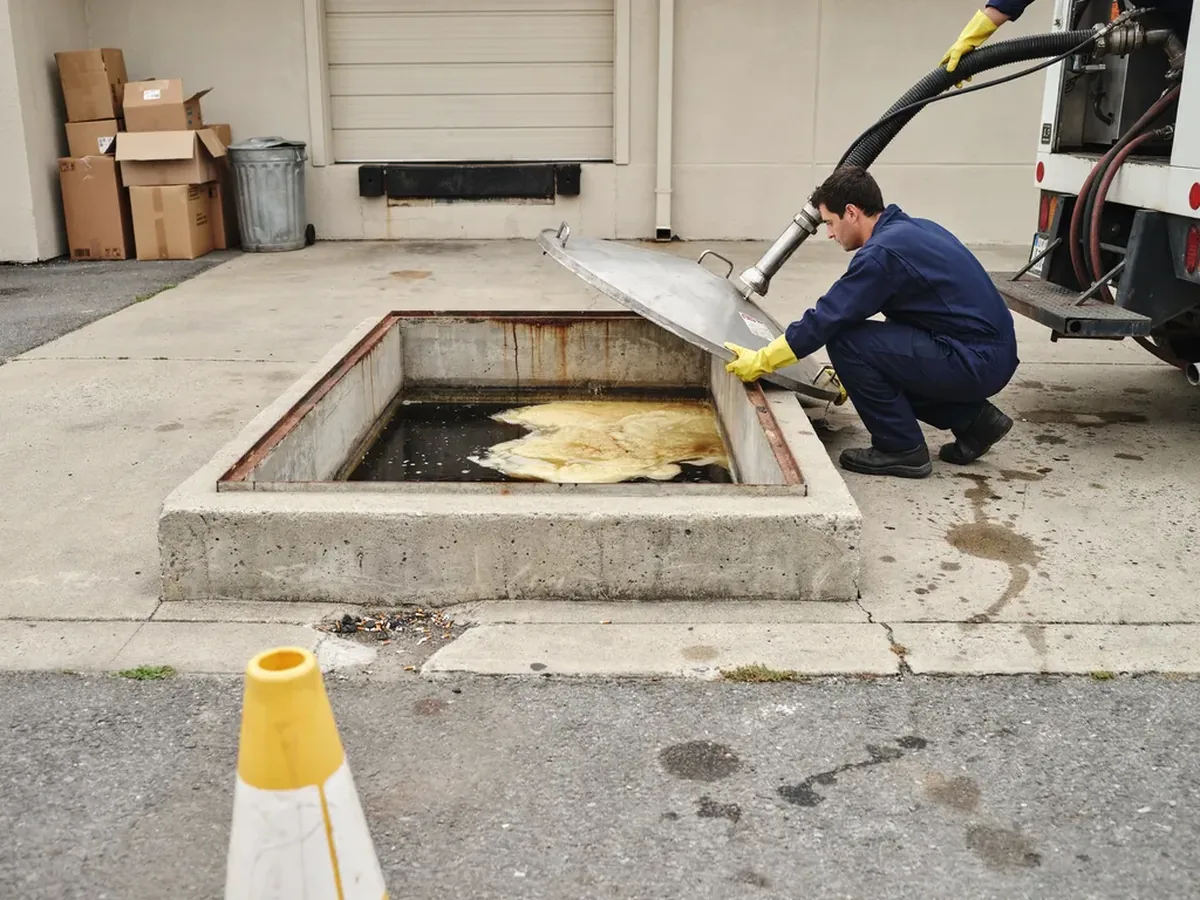
A grease interceptor works on a simple principle: waste water from the kitchen slows down as it passes through a chamber, fats and oils float to the top, solids settle to the bottom, and relatively clean water passes out the middle to the sewer. It works well, right up until the accumulated grease layer gets deep enough that it starts carrying over into the outlet.
At that point the trap is not just failing to protect your line, it is actively concentrating grease and pushing it downstream. The line then blocks faster than it would have with no trap at all, and any discharge sampling would show it.
Which is why servicing interval matters more than trap size. Food service premises are generally expected to maintain their interceptors and keep records demonstrating it. We handle the cleaning, provide the manifest and service documentation, and advise on a realistic interval based on what we actually find in your trap rather than a generic figure.
Services
What we do with grease traps
Cleaning and pump-out
Full removal of accumulated grease and solids, not just skimming the surface layer. Baffles cleaned and inspected, and the trap refilled correctly before it goes back in service.
Records and manifests
Dated service documentation for every visit, which is what you need to demonstrate compliance if it is ever questioned.
Scheduled programs
A fixed interval based on your actual accumulation rate, scheduled outside trading hours.
Repair and replacement
Damaged baffles, failed lids and covers, cracked interceptors and corroded fittings.
New installation
Sizing and installing interceptors for new premises or a fit-out, including under-sink units and larger in-ground interceptors.
Assessment and sizing
Where an existing trap is undersized for the kitchen it serves, which is a common finding when a business has grown into a space.
Getting it right
Why interval matters more than size
An interceptor separates grease because water passing through it slows down enough for the fat to float. That depends on the volume of clear space inside. As grease accumulates at the top and solids at the bottom, the effective volume shrinks, the water moves through faster, and separation stops working.
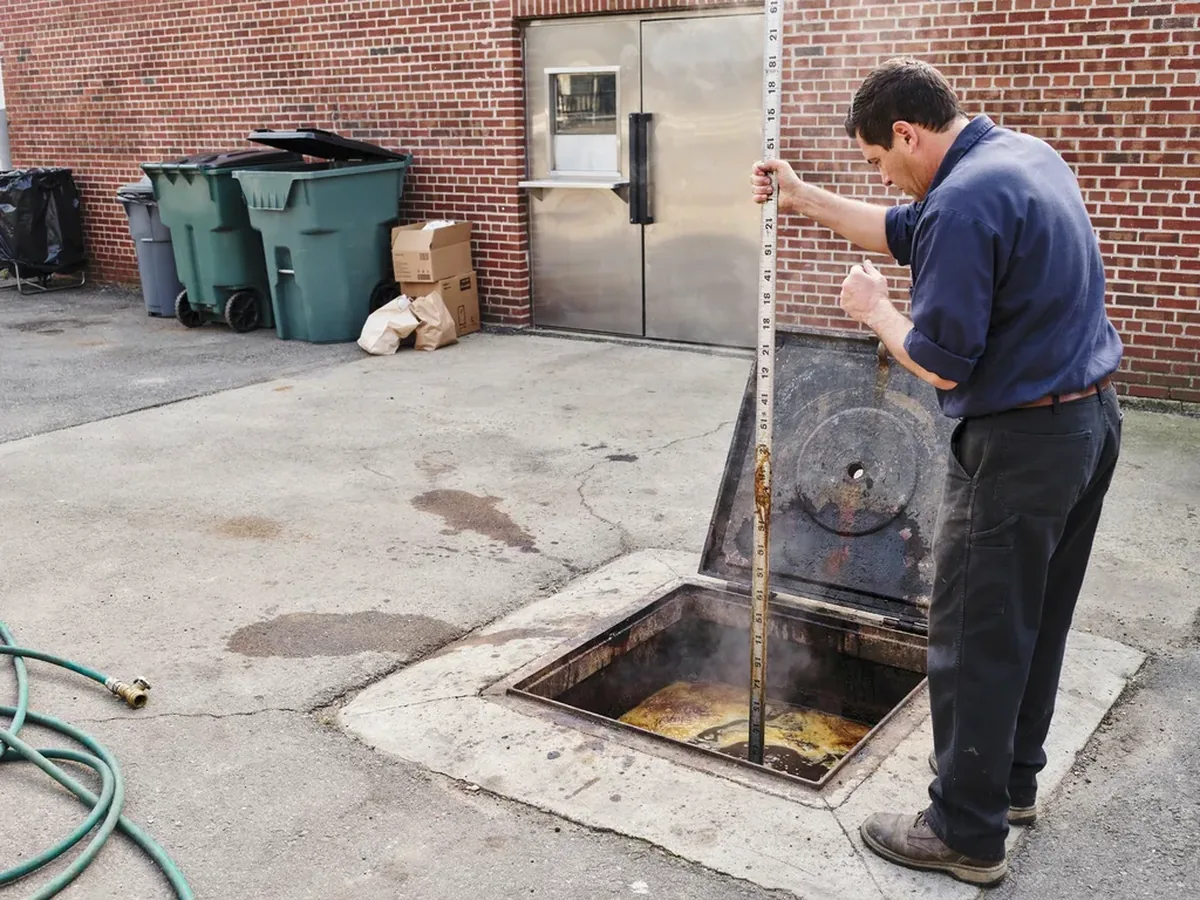
The common rule of thumb is that a trap should be serviced before accumulated grease and solids reach about a quarter of its total depth. Past that, carry-over into the outlet starts.
What that means in practice is that a small trap serviced frequently outperforms a large trap serviced rarely. It also means the right interval is specific to your kitchen, not a number from a chart. We measure the accumulation on the first couple of visits and set the schedule from that.
One more thing worth saying: additives that claim to dissolve or digest grease in a trap generally emulsify it instead, which means it passes through and deposits further down the line. They are not a substitute for pumping.
Intervals
Typical servicing intervals
| Premises | Under-sink unit | In-ground interceptor |
|---|---|---|
| High-volume, heavy frying | Every 2–4 weeks | Every 1–3 months |
| Standard restaurant | Every 4–8 weeks | Every 3–6 months |
| Cafe or bakery | Every 2–3 months | Every 6 months |
| Bar with light food | Every 3 months | Every 6–12 months |
| Institutional kitchen | Every 4–8 weeks | Every 3–6 months |
Indicative only. The right interval comes from measuring your actual accumulation, and local requirements may specify a minimum.
Costs
Grease trap service costs
| Service | Typical range | Notes |
|---|---|---|
| Under-sink trap clean | $180 – $400 | Per unit, with records. |
| In-ground interceptor pump-out | $350 – $850 | Depends on capacity and access. |
| Large interceptor (1,000 gal +) | $650 – $1,500 | Includes disposal and manifest. |
| Baffle repair or replacement | $300 – $900 | Common on older units. |
| Lid or cover replacement | $250 – $800 | Including traffic-rated covers. |
| New under-sink trap installed | $700 – $2,000 | Sized for the fixtures it serves. |
| New in-ground interceptor | $4,000 – $15,000 | Excavation, install and connection, permitted. |
| Scheduled program | contract pricing | Lower per-visit rate, fixed schedule. |
Typical local ranges, not quotes. Disposal and manifest included on cleaning services.
Best practice
Keeping a trap working between services
- Scrape and dry-wipe before washing. Everything that does not go down the drain is grease the trap does not have to catch.
- Never pour fryer oil into the sink. Used oil should go to a rendering collection, not the trap.
- Use solids strainers on every sink. Solids settle in the trap and reduce its capacity as surely as grease does.
- Skip the additives. Emulsifiers move the problem downstream rather than solving it, and they can complicate a discharge question.
- Keep the lid accessible. Storage stacked over an interceptor lid turns a routine service into a production.
- Keep the paperwork. Service records and manifests filed and available. It is the cheapest part of compliance.
FAQ
Grease Trap Services: your questions answered
How often does a grease trap need cleaning?
The general standard is before accumulated grease and solids reach about a quarter of the trap's depth. For a small under-sink unit in a busy kitchen that can be every two to four weeks; for a large in-ground interceptor it may be quarterly. We measure your accumulation on the first visits and set a realistic interval from that, and local requirements may set a minimum.
What happens if we do not service it?
The trap stops separating and starts passing concentrated grease into your drain line, so the line blocks faster than it would with no trap at all. It also creates a compliance exposure, because food service premises are generally expected to maintain interceptors and keep records.
Do you provide manifests and records?
Yes. Every service comes with dated documentation covering what was removed and where it went. That is exactly the paperwork you want on file.
Do grease trap additives work?
Not in the way they are usually marketed. Most emulsify the grease so it passes through the trap, which means it deposits further down the line instead. They are not a substitute for pumping the trap out.
Can you install a grease trap for a new kitchen?
Yes, from under-sink units through to in-ground interceptors, sized for the fixtures they will serve and installed to code with the necessary permits. This is normally part of a fit-out and needs coordinating with your other trades early.
Is our trap the right size?
It is worth checking, especially if the business has changed since the trap was fitted. Undersized interceptors are a common finding when a cafe has become a full kitchen. We can assess it and tell you whether a shorter service interval or a larger unit is the better answer.
Related plumbing services
Grease trap overdue?
We will clean it properly, give you the manifest, and set an interval based on what is actually accumulating in yours.