
Pipe Replacement in West Valley City, UT
Sometimes the answer is bigger than a repair but smaller than a repipe. Replacing the run that keeps failing, while leaving sound pipe alone, is often the best value on the table.
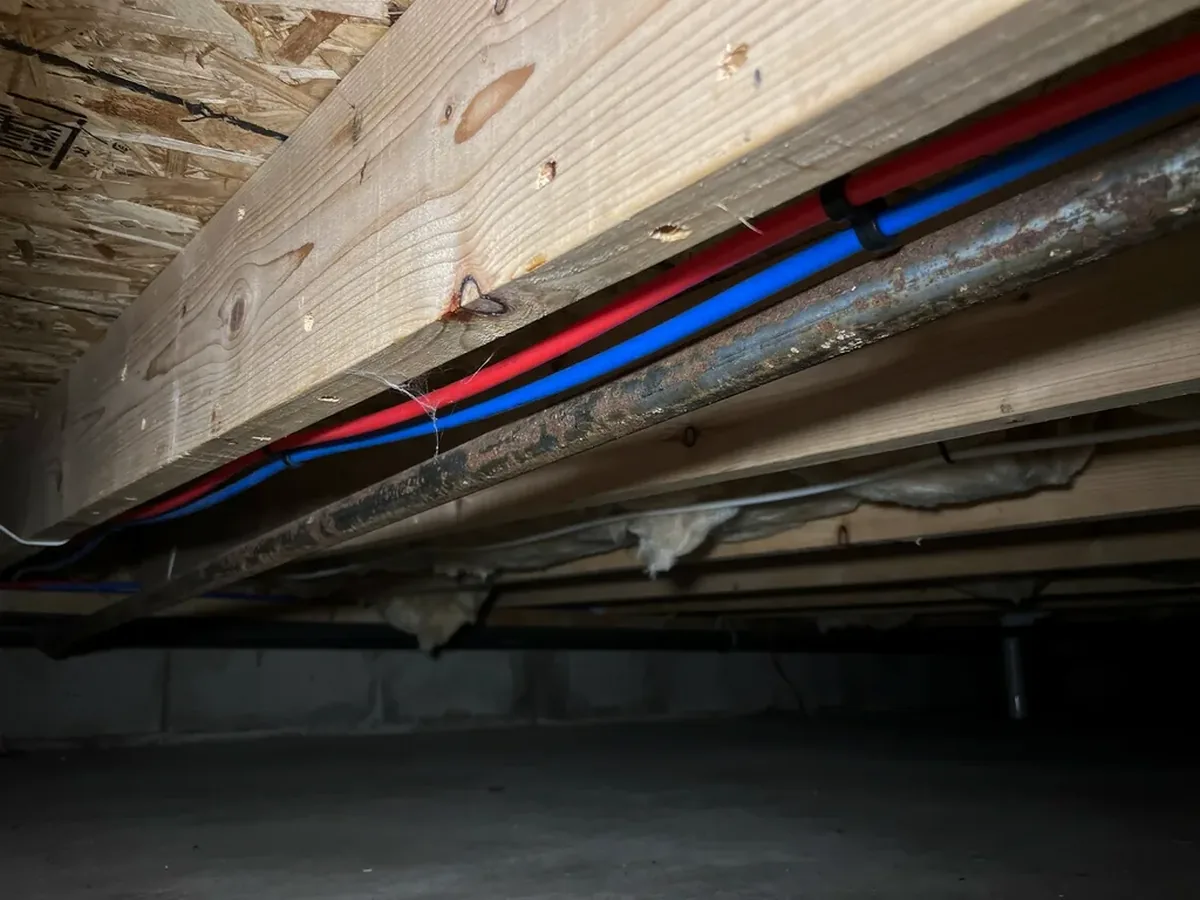
Whole-home repiping gets talked about as though it is the only alternative to patching leaks, and it is not. Plenty of houses have one bad run — a length of original galvanized that was never replaced when the rest was updated, a hot line under a slab, the branch feeding an addition — while the rest of the system is in perfectly good shape.
Sectional replacement targets that. We replace the run or branch that is causing problems, transition properly where it meets the existing material, and leave the sound pipe where it is. Done thoughtfully, it can solve the actual problem for a fraction of a full repipe.
The judgement call is whether the rest genuinely is sound. That is not something to guess at, so we assess it before recommending anything: static and flowing pressure, visible pipe condition at accessible points, the material and age, and what the inside of any cut-out section looks like. If the honest answer is that the whole system is at the same point in its life, we will tell you that too.
When it makes sense
Good candidates for sectional replacement
- A partial previous update. Very common in older West Valley City homes: the visible basement pipe was replaced years ago and the runs inside walls were left.
- One problem branch. A bathroom or kitchen run that has failed repeatedly while the rest of the house has been trouble-free.
- A slab run being abandoned. Rerouting one under-slab line overhead is a sectional replacement in everything but name.
- An addition on different material. Extensions and converted garages are often plumbed in whatever was cheapest at the time, including polybutylene.
- Exposed runs in an unheated space. Garage and crawlspace lines that keep freezing are often better rerouted than insulated again.
- Prepping for a remodel. If the wall is open for a bathroom renovation anyway, replacing what is behind it costs a fraction of doing it later.
When it does not
When sectional replacement is false economy
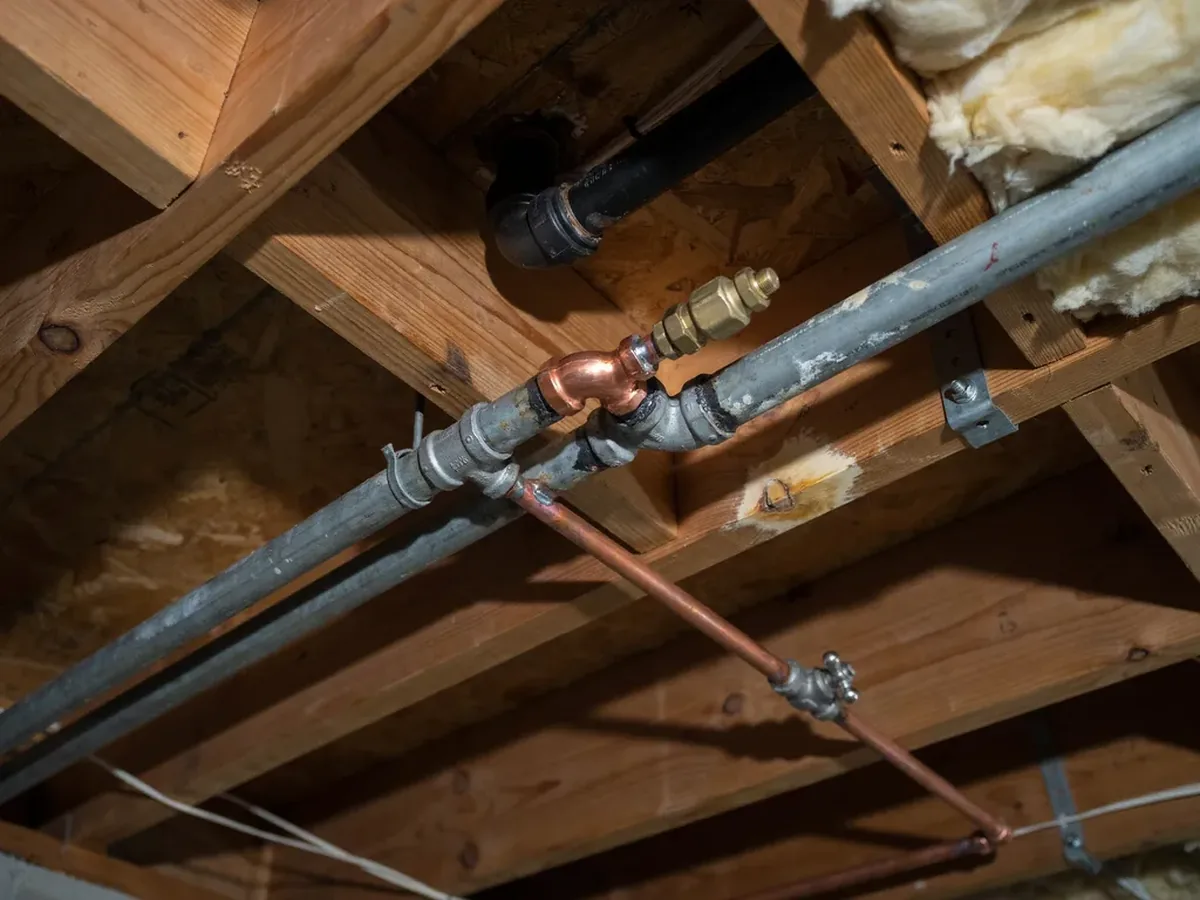
Replacing one section of a system that is uniformly at the end of its life just moves the next failure somewhere else. Some clear signals that a full repipe is the better buy:
Original galvanized throughout. If it is all the same age and the same material, it is all at the same point. Replacing a third of it means paying mobilisation, access and patch costs three times over the next few years.
Pressure that has declined house-wide. That is the whole system narrowing, not one bad run.
Discoloured water at multiple fixtures. Same conclusion.
Polybutylene anywhere in the house. It is worth getting all of it out at once rather than in stages.
The practical point is that most of the cost of pipe work is labour, access and making good, not the pipe. Doing it once is usually much cheaper than doing it three times.
The job
How a sectional replacement runs
Assess and scope
Pressure test, material check, and a clear line drawn around what is being replaced and what is not.
Plan the route
Using cabinets, closets, unfinished ceilings and existing cavities to keep access holes to a minimum.
Replace and transition
New PEX or copper with proper dielectric transitions where it meets existing steel, and correct support throughout.
Test, inspect, make good
Pressure held and watched, inspected where a permit applies, then access holes closed up.
Costs
Sectional pipe replacement costs
| Scope | Typical range | Notes |
|---|---|---|
| Single branch, one bathroom | $1,200 – $3,200 | Hot and cold runs to that group of fixtures. |
| Kitchen run replacement | $900 – $2,600 | Including the disposal and dishwasher supplies. |
| Reroute a slab run overhead | $2,200 – $6,000 | See slab leak repair. |
| Replace exposed basement or crawl runs | $1,400 – $4,500 | Much cheaper where nothing has to be opened. |
| Whole home repipe | $6,500 – $18,000 | For comparison. Often better value past about half the house. |
Drywall patching and painting usually quoted separately. Typical local ranges, not quotes.
Get it right
Things that go wrong on a badly done replacement
- Steel joined directly to copper. Dissimilar metals in contact corrode galvanically. It needs a dielectric union, every time.
- Undersized replacement pipe. Matching the reduced bore of the corroded pipe instead of the original design size leaves you with the pressure problem you were trying to solve.
- Unsupported runs. PEX in particular needs correct spacing and protection where it passes through framing, or it sags, rubs and eventually chafes.
- No protection plates at studs. A pipe run through framing without a nail plate is a leak waiting for someone to hang a picture.
- Ignoring pressure. New pipe on a system running at 95 psi is new pipe with a shortened life.
- Skipping the permit. Unpermitted plumbing work shows up when you sell, and it is far more expensive to resolve at that point.
FAQ
Pipe Replacement: your questions answered
How do I know whether I need a section or the whole house?
The deciding factors are material, uniformity and pressure. If your house is all original galvanized, it is all the same age and full replacement is usually the better value. If a previous owner replaced part of it, or one branch is the only thing giving trouble, sectional is often exactly right.
Can you mix PEX with my existing copper?
Yes, with the correct transition fittings. It is done constantly and it is completely sound. What matters is that the joint is made with the right fitting rather than improvised.
Do I need a permit for sectional replacement?
Usually yes for anything beyond a straightforward repair, and the work is inspected. We pull the permit and meet the inspector as part of the job.
How much disruption should I expect?
Less than a full repipe. Water off during working hours, access holes in the areas we are working, and typically one to two days rather than a week.
Will replacing one section improve my water pressure?
If that section was the restriction, noticeably. If the pressure loss is spread across the whole system, replacing part of it produces a disappointing improvement, which is exactly why we measure before we recommend.
Is it worth replacing pipe while a wall is already open?
Almost always. The expensive part of pipe work is access, and you have already paid for it. Replacing a run during a bathroom remodel costs a fraction of coming back to do it in three years.
Related plumbing services
One run causing all the trouble?
We will assess the whole system and price sectional replacement against a full repipe, so you can see which one actually makes sense.