
Water Leak Detection in West Valley City, UT
Hidden leaks get found the same way every time: confirm it at the meter, isolate the system that is losing water, then listen until we can mark the spot.
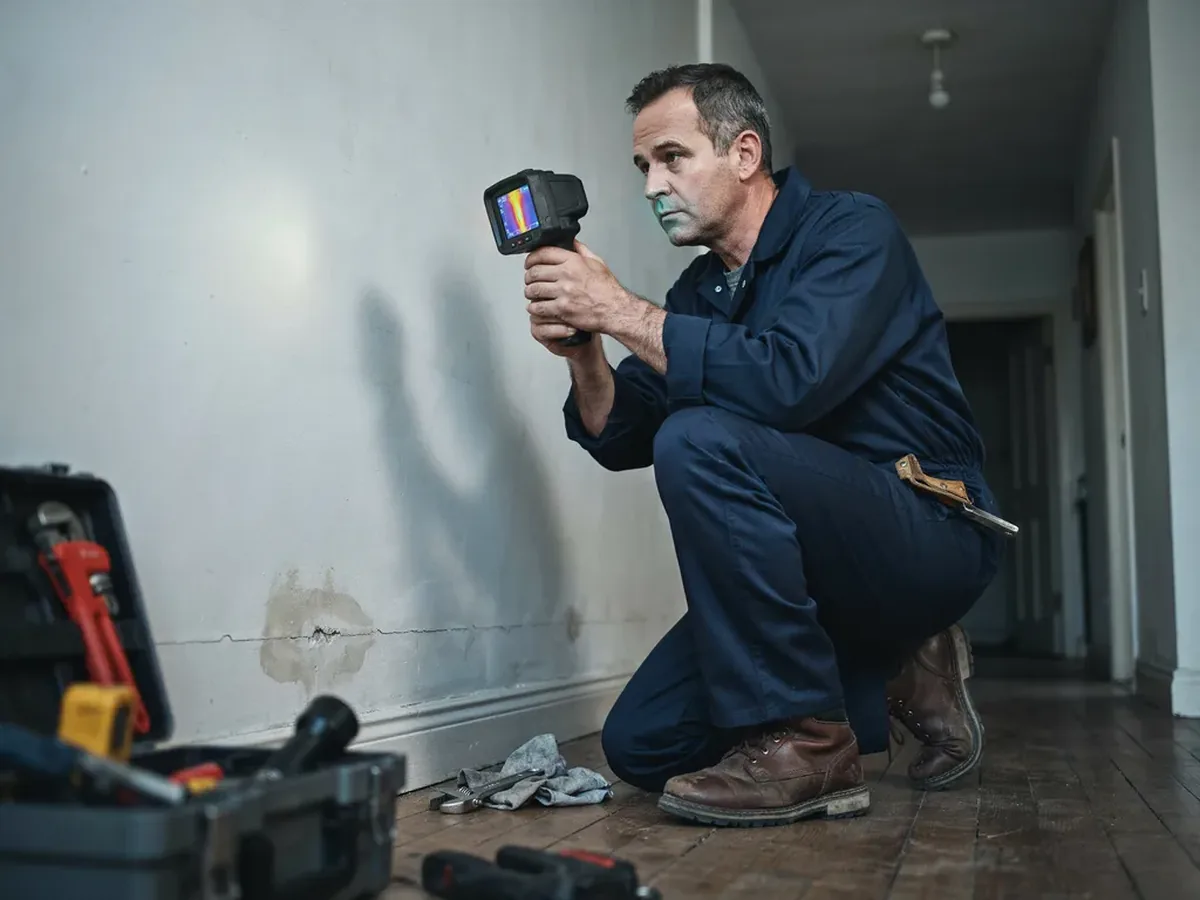
A hidden leak is one of the few household problems that gets steadily more expensive while you think about it. The water is metered whether you see it or not, and everything it soaks — insulation, framing, subfloor, drywall — is on a 24 to 48 hour clock before mould becomes part of the job.
The thing that makes hidden leaks hard is that water travels. It runs along the top of a bottom plate, follows a joist bay, tracks down the outside of a pipe through a floor penetration, and surfaces at the first low point or seam it reaches. So the wet patch tells you almost nothing about where the pipe actually failed.
That is the entire reason leak detection equipment exists. Rather than cutting and looking, we listen, image and pressure test until we can put a mark on the floor. On a slab home that difference often decides whether concrete gets broken at all.
The survey
How we locate a hidden leak
Confirm at the meter
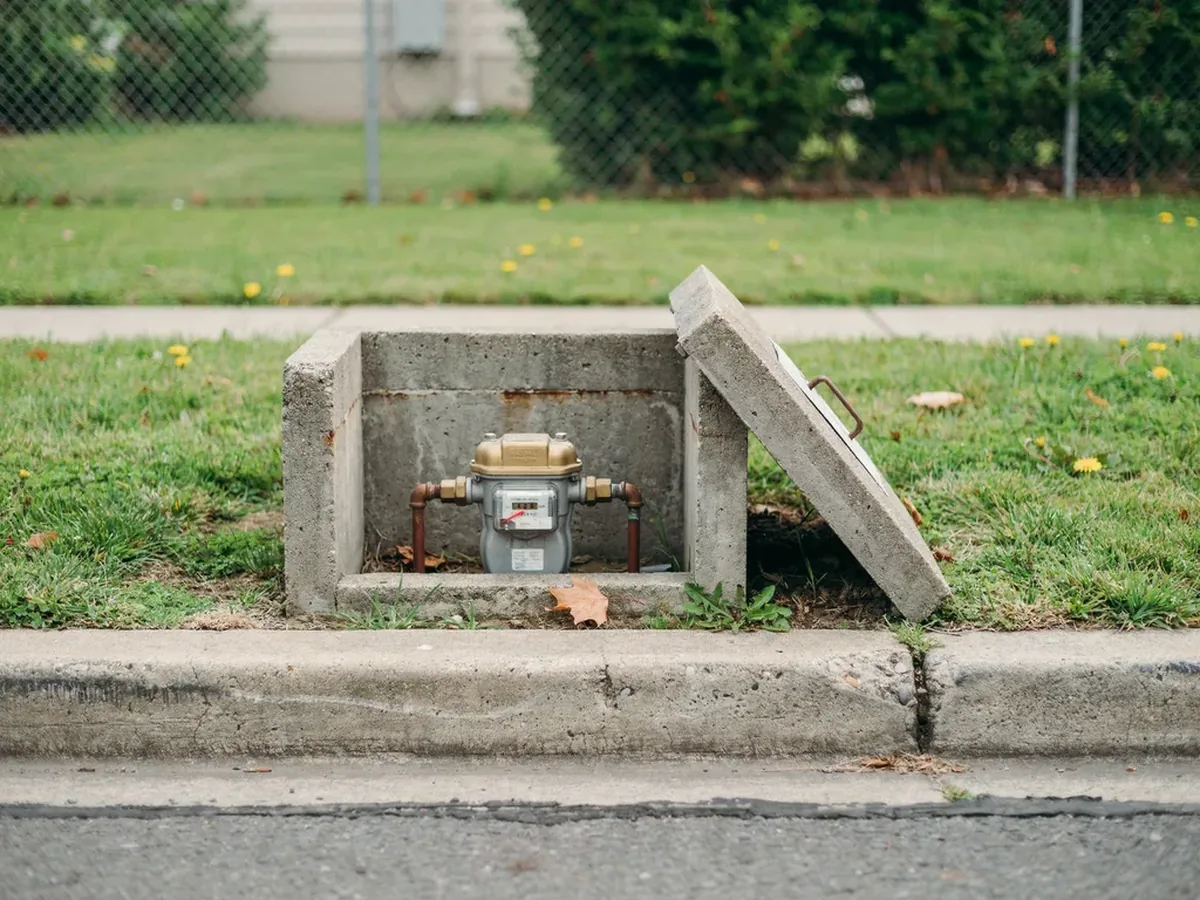
Everything off, including irrigation and the ice maker. If the low-flow indicator moves, there is a leak. If it does not, we look elsewhere and tell you so.
Isolate the systems
Hot, cold, irrigation and the service line tested separately under pressure. Whichever fails to hold is where we concentrate.
Listen and image
Ground microphones and contact probes over the suspect run, plus infrared to map where moisture has tracked.
Mark and quote
A physical mark on the floor or wall, a photo record, and a repair price with the options laid out.
What we look for
The five places hidden leaks usually are
Under the slab. Pressurised supply lines in or below the concrete. Tells: warm floor spot, sound of running water, rising bill, sometimes hairline cracks in flooring.
In wall cavities. Vertical risers and horizontal branches. Tells: staining, bubbling paint, soft drywall, musty smell, and a hot water line will show clearly on thermal.
Buried service line. Between meter and house. Tells: green patch or soft ground in the yard, low pressure throughout, and meter movement even with the house main closed.
Drain-side leaks. Not pressurised, so acoustic does not work. Found by camera in the line, or by flood testing a shower pan. Tells: only leaks when a fixture is used.
Irrigation. Zone valves and buried laterals. Tells: summer-only bill increase, a zone that never dries, and the meter moving only when the system is charged.
Before you call
Two tests you can do yourself in ten minutes
- The meter test. Shut every fixture, appliance, ice maker and the irrigation controller. Note the meter reading, wait 30 minutes, read it again. Any change means a leak.
- The main valve test. Repeat with the house main closed. If the meter still moves, the leak is between the meter and the house, in the service line. If it stops, the leak is inside.
- The toilet dye test. A few drops of food colouring in each tank. If colour appears in the bowl within 15 minutes without flushing, that flapper is leaking, and a leaking flapper wastes a startling amount.
- Check the obvious connections. Under every sink, behind the washing machine, the fridge line, the water heater pan. Ten minutes with a torch rules out a lot.
- Note when it happens. Continuous means supply side. Only when a fixture runs means drain side or a shower pan. That single observation saves us a lot of time.
- Take photos of any staining. Including a date. It helps the diagnosis and it helps a claim.
Costs
Leak detection pricing
| Service | Typical range | Notes |
|---|---|---|
| Standard leak detection survey | $250 – $450 | Meter test, isolation, acoustic and thermal. |
| Large or multi-storey property | $400 – $700 | More isolation points and more area to cover. |
| Buried service line locate | $300 – $600 | Line tracing and acoustic across the yard. |
| Drain line camera and locate | $250 – $450 | For non-pressurised leaks. |
| Shower pan flood test | $180 – $350 | Confirms whether the pan liner or the valve is at fault. |
Detection is credited against the repair when we carry out both. Typical local ranges, not quotes.
FAQ
Water Leak Detection: your questions answered
How accurate is leak detection?
On a pressurised supply line under a slab, we can usually get within a foot or so, which is close enough to open a small, deliberate area. Buried service lines and drain-side leaks are typically pinned within a few feet, which is still the difference between one excavation and several.
Do I really need this, or should you just start looking?
You could open walls and look. On a slab home that means breaking concrete speculatively, and on any home it means multiple patches. Detection costs a few hundred dollars and routinely saves several thousand in unnecessary access and restoration.
Can you detect a leak in a drain pipe?
Not acoustically, because drain lines are not pressurised, so there is no escape noise to listen for. Drain leaks are found with a camera in the line, with dye testing, or with a flood test on a shower pan.
How long does a detection visit take?
Most residential surveys are 1 to 3 hours. A large property, an unclear picture at the meter, or a leak that only occurs intermittently can take longer.
What if you cannot find a leak?
Sometimes the meter test comes back clean and the real answer is a running toilet, an irrigation fault or a billing error, and we will tell you that rather than inventing a leak. If we genuinely cannot locate a confirmed leak, we will say so and discuss what comes next rather than guessing.
Does a leaking toilet really show up on the bill?
Yes, dramatically. A flapper that no longer seals can pass hundreds of gallons a day silently. It is the single most common cause of a mysterious bill increase, and the dye test takes two minutes.
Related plumbing services
Bill climbing with no leak in sight?
Run the meter test, then call us. We will confirm it, pinpoint it and give you a repair price before anything gets opened up.