
Water Heater Maintenance in West Valley City, UT
Maintenance is not a big deal anywhere with soft water. In the Salt Lake Valley it is the single biggest factor in whether your heater lasts eight years or fifteen.
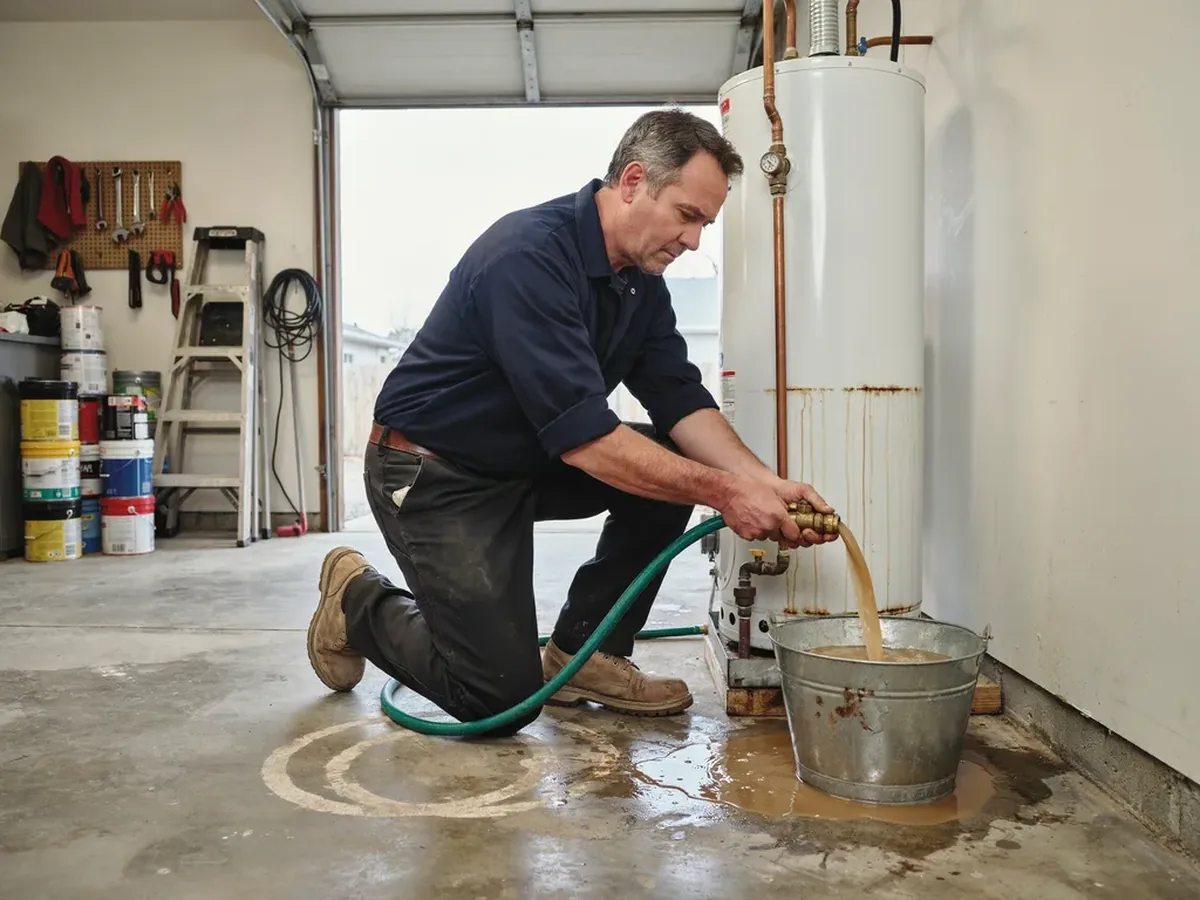
Ask a manufacturer how often a water heater should be flushed and you will get an answer written for average water. Salt Lake Valley water is not average. It is hard enough that the scale is visible on your shower glass within days of cleaning it, and every gallon of it passes through your water heater.
That mineral drops out of solution as the water heats and settles on the tank floor. Left alone, the layer thickens year on year. It takes up capacity, so you run out of hot water sooner. It insulates the water from the burner, so the steel bottom of the tank runs hotter than designed and the glass lining degrades. And it makes that popping, rumbling noise as water trapped underneath flashes to steam.
The other half of the story is the anode rod. It is a sacrificial component — a magnesium or aluminium rod whose entire purpose is to corrode instead of the tank. In hard water it is consumed faster, and once it is gone, the tank starts corroding. Replacing a $180 rod at the right moment can add years to a $2,000 appliance.
What we do
What an annual service covers
- Full tank flush. Drained and flushed until it runs clear, removing the sediment layer rather than just the loose material at the drain.
- Anode rod inspection. Pulled and assessed. If it is more than about 75 percent consumed we will tell you, and replacing it is cheap insurance.
- T&P valve test. Operated and checked. A T&P valve that has never been tested is a safety device nobody has verified.
- Thermostat and temperature check. Set point verified at the tank and at a fixture, and adjusted to 120°F if it has drifted.
- Burner and venting inspection. On gas units: burner condition, flame appearance, flue connection and draft.
- Pressure and expansion check. Static pressure measured, expansion tank charge verified. Both affect the life of the tank.
- Connections and pan. Flexible connectors, shutoff, drain valve and the pan discharge all checked.
Tankless
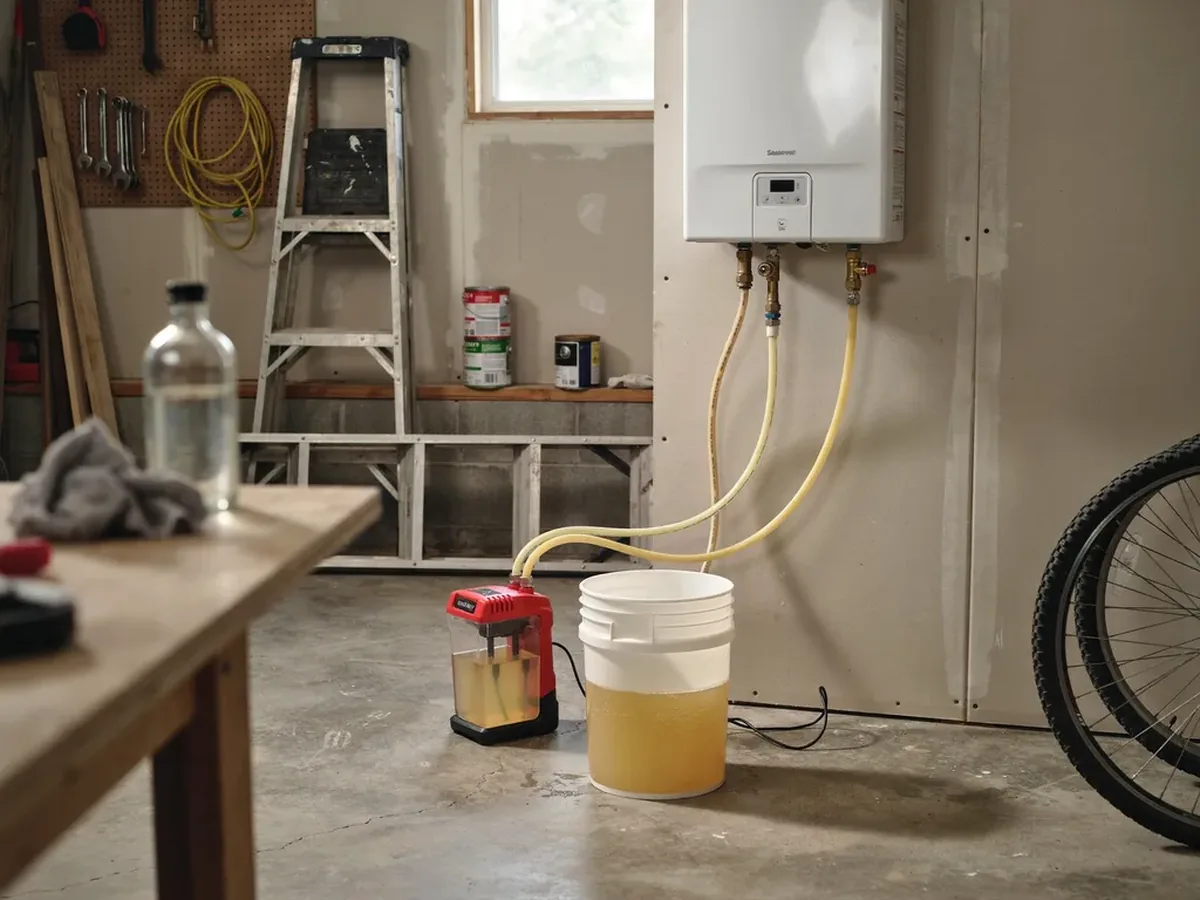
Descaling a tankless unit
Tankless units do not have a tank to accumulate sediment, but they have something more sensitive: a heat exchanger with narrow passages that the water flows through at high temperature. That is exactly the condition that deposits scale.
Descaling means circulating a descaling solution through the heat exchanger for an hour or so, then flushing it clear. If the unit has isolation valves with service ports — which every install of ours does — it is a straightforward annual job. If it does not, we fit them, once, and every future service is easier.
The inlet filter screen gets cleaned at the same time, the combustion is checked, and any stored fault codes are read off the control board, which often flags a developing problem before it becomes a call-out.
Skipping this in Salt Lake Valley water is the main reason tankless units fail early. It is not an upsell; it is the maintenance the manufacturer specifies, and here it matters more than most places.
Costs
Maintenance costs, and what they save
| Service | Typical range | What it prevents |
|---|---|---|
| Tank flush and full service | $140 – $260 | Lost capacity, overheating the tank base, premature failure |
| Anode rod inspection and replacement | $180 – $380 | Tank corrosion, which is the failure mode with no repair |
| Tankless descale and service | $180 – $340 | Heat exchanger scaling, flow faults, efficiency loss |
| Fit isolation valves with service ports | $280 – $520 | Makes every future descale quick and cheap |
| Expansion tank check or replacement | $220 – $420 | Dripping T&P valves and stressed joints |
| Annual plan, tank or tankless | from $160 / year | Scheduled, with priority booking |
Compare against $1,500 to $3,200 for replacement. Typical local ranges, not quotes.
Between services
What you can do yourself
Check the pan monthly
Thirty seconds with a torch. Any water in the pan is a signal, and catching it early is the whole game.
Listen to it
Rumbling and popping means sediment. Book a flush rather than getting used to the noise.
Keep the area clear
Nothing stored against a gas unit, and combustion air not blocked by boxes or shelving.
Know its age
The serial number on the label encodes the manufacture date. Past ten years, start planning.
FAQ
Water Heater Maintenance: your questions answered
How often should I flush my water heater in West Valley City?
Annually. Manufacturers often say every one to two years, but that guidance is written for average water hardness, and ours is well above average. In this valley, once a year is the right interval, and homes without a softener benefit the most.
Can I flush it myself?
You can, and it is a reasonable homeowner job: shut off the gas or breaker, connect a hose to the drain valve, and drain it. Two cautions. Old plastic drain valves often will not reseal once opened, and a heavily sedimented tank will clog the valve partway through, at which point you need a plumber anyway.
What is an anode rod and why does it matter?
It is a sacrificial metal rod inside the tank that corrodes preferentially so that your tank does not. Once it is consumed, the tank starts corroding, and tank corrosion is the failure with no repair. Checking it around year four and replacing it when needed is the best-value thing you can do for a water heater in hard water.
Is a maintenance plan worth it?
If it gets the work done on schedule, yes. The maths is straightforward: roughly $160 a year against $1,500 to $3,200 to replace the unit several years earlier than necessary. The plan also gets you priority booking, which matters when your heater fails in January.
My heater is already ten years old. Is maintenance still worth it?
Flushing, yes — it will improve capacity and reduce the noise. A new anode rod at that age is a more marginal call, and we will tell you honestly whether it is worth spending on the unit or better put toward replacement.
Does a water softener mean I can skip maintenance?
It reduces the sediment load a lot, which helps enormously, but it does not remove the need for the rest of the service: anode inspection, T&P testing, venting checks and pressure verification all still matter. Softened water can also consume some anode types faster, which is worth checking.
When was your water heater last flushed?
In this water, annual service is the difference between eight years and fifteen. Book a flush and full check, or ask about an annual plan.