
Toilet Repair & Installation in West Valley City, UT
Running, leaking, rocking or weak-flushing. Most toilet problems are a sub-$30 part, and the ones that are not are usually a straightforward replacement.
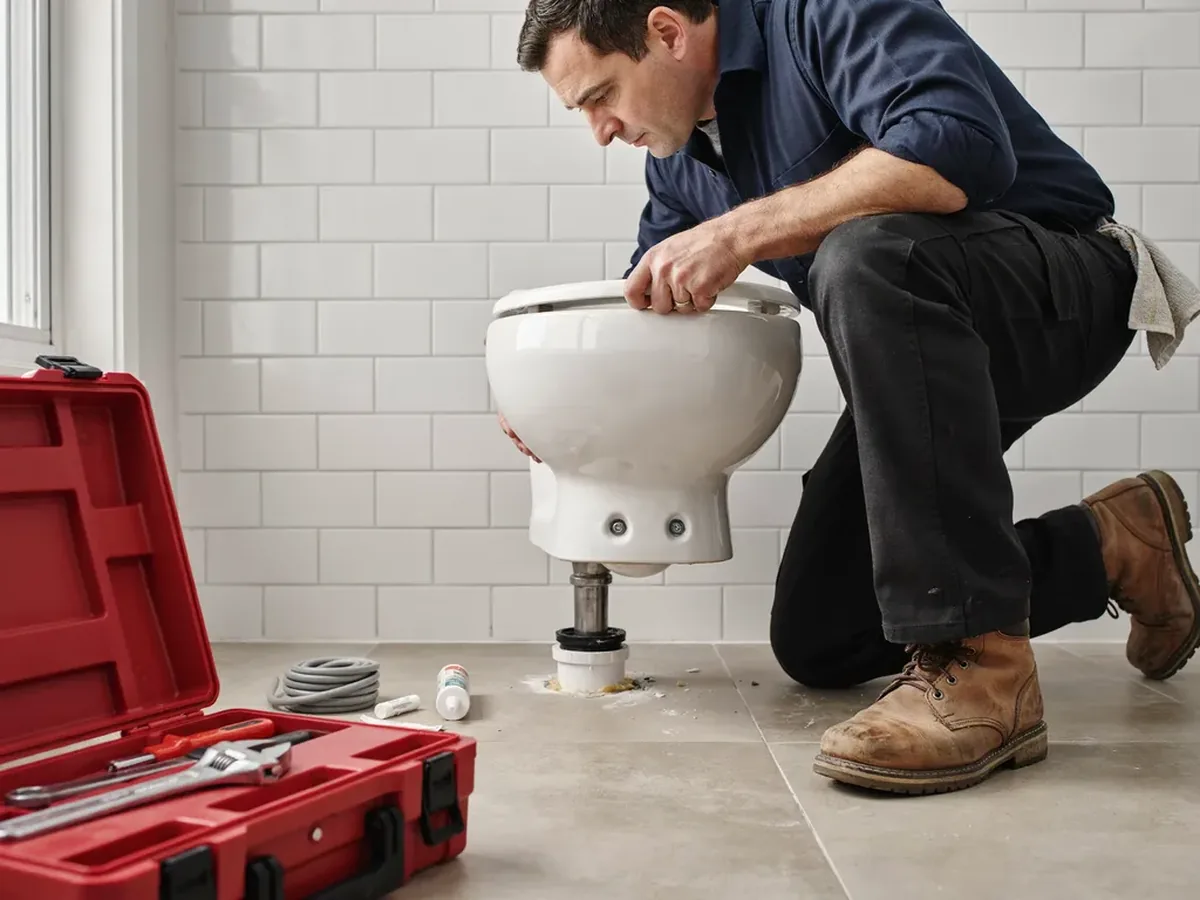
A toilet has about five parts that fail, and four of them cost less than thirty dollars. The fill valve that lets water into the tank, the flapper that seals the flush valve, the flush handle and chain, the wax seal at the base, and the supply line and angle stop feeding it. Almost every toilet complaint traces back to one of those.
The one that costs real money is the toilet itself, and there are only a few reasons to replace one: a crack in the porcelain, a chronically weak flush on an early low-flow model that no repair will fix, a bowl that no longer sits level on a damaged flange, or simply wanting a different height or style.
In this valley there is a hard water dimension too. Mineral builds up in the rim jets and the siphon jet at the bottom of the bowl, which gradually weakens the flush in a way that looks like the toilet is failing. That is often recoverable, and it is worth checking before anybody buys a new toilet.
What we fix
Common toilet faults and what causes them
Runs constantly or cycles on its own
The flapper has hardened or the seat has scaled, so it no longer seals and water trickles into the bowl. Also caused by a fill valve that will not shut off. Cheapest fix on this list, and the most wasteful problem to ignore.
Weak or incomplete flush
Usually mineral blocking the rim jets and siphon jet, which is recoverable. Sometimes a flapper closing too early, or a partial blockage in the trapway.
Rocks or moves when you sit
Loose closet bolts, a flange that has broken or sits below finished floor level, or rotted subfloor. Worth fixing quickly because the movement destroys the wax seal.
Sewer smell around the base
A failed wax seal letting gas past. Often accompanied by staining or soft flooring, which means water has been getting out too.
Leaks at the tank or supply
Tank-to-bowl bolts and gasket, the supply connection, or a weeping angle stop. All straightforward repairs.
Blocked or slow to clear
The trapway or the branch line. See overflowing toilets.
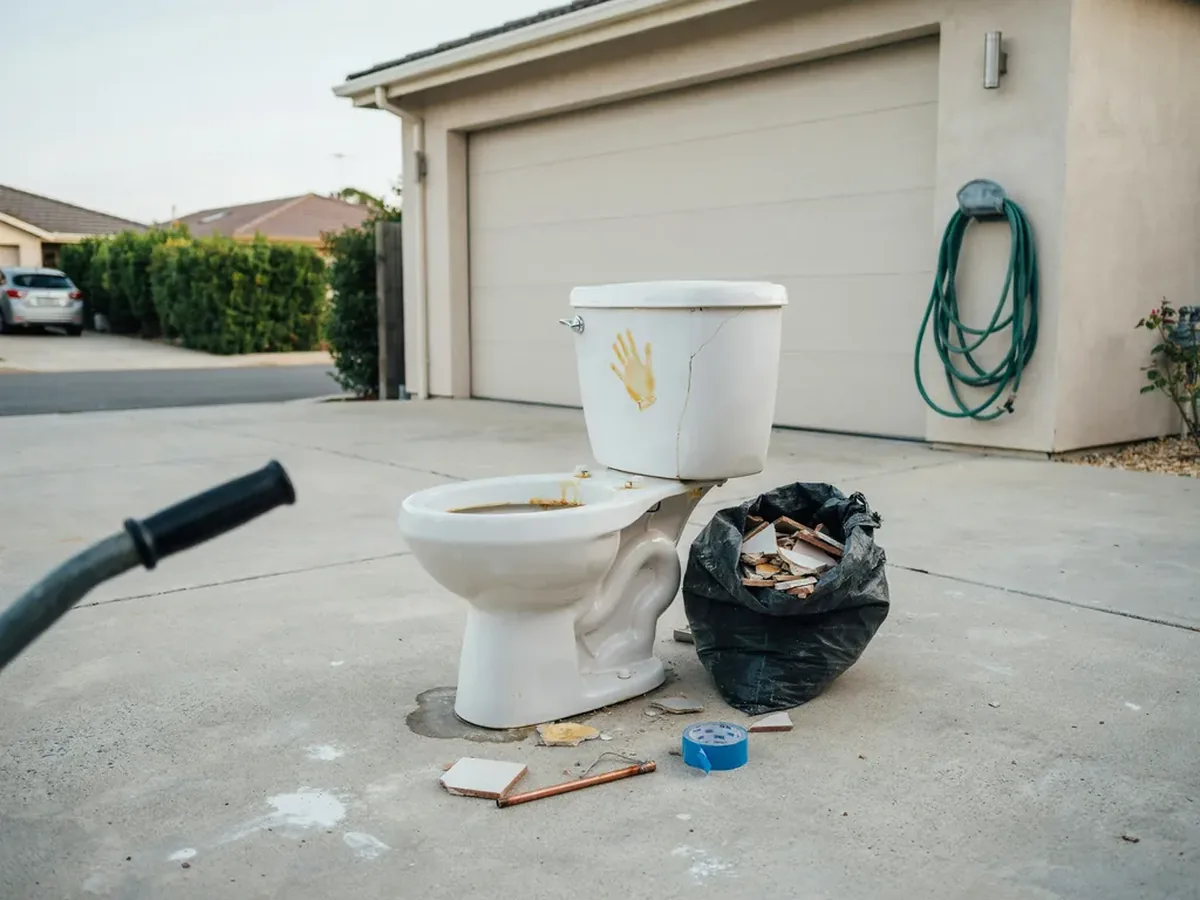
Repair or replace
When a toilet is worth replacing
Replace if the porcelain is cracked — there is no repair and it will eventually fail suddenly. Replace if it is a first-generation 1.6 gallon model from the early 1990s that has never flushed properly; those were genuinely poor and modern 1.28 gallon toilets outperform them easily while using less water.
Replace also if you want a comfort-height bowl, which most people find considerably easier to use, or if the bowl is so scaled internally that the flush cannot be recovered.
Repair in almost every other case. A running toilet, a leaking seal, a loose flange, a weak flush from mineral buildup, a broken handle — all of these are parts-and-labour jobs well under the cost of a new fixture.
One thing worth checking during any toilet work is the closet flange. It should sit level with or slightly above the finished floor. Where flooring has been laid over flooring — common in older homes here — the flange ends up recessed, and no amount of extra wax makes that seal reliably. It needs a flange extender, properly fitted.
Installation
How we install a toilet
Remove and inspect
Old unit out, and we look at the flange, the bolts and the subfloor underneath before anything new goes down.
Correct the flange
Extended, repaired or replaced so it sits at the right height. This is the step most often skipped.
Set the bowl
New seal, new bolts, set once and level. Shimmed only where the floor requires it, then sealed.
Connect and test
New angle stop and supply line, tank fitted, flush tested repeatedly and the base checked dry.
Costs
Toilet repair and installation costs
| Job | Typical range | Notes |
|---|---|---|
| Flapper or fill valve replacement | $150 – $290 | The fix for most running toilets. |
| Full tank rebuild | $200 – $380 | All internal components at once. |
| Wax seal replacement | $220 – $420 | Includes pulling and resetting the toilet. |
| Closet flange repair or extension | $280 – $650 | More if subfloor repair is needed. |
| Angle stop and supply line | $180 – $380 | Worth doing during any toilet work. |
| Toilet replacement, labour only | $280 – $520 | You supply the toilet. |
| Toilet supplied and fitted | $450 – $950 | Standard to comfort-height models. |
| Wall-hung or high-end unit | $1,200 – $3,000 | Including carrier frame where required. |
Old unit removal included. Typical local ranges, not quotes.
Choosing one
What to look for in a new toilet
- Comfort height, unless you have small children. Around 17 to 19 inches to the seat. Most adults strongly prefer it and it costs nothing extra.
- Check the rough-in first. The distance from the wall to the closet bolts, usually 12 inches but sometimes 10 or 14 in older homes. Buying the wrong one is the most common toilet-shopping mistake.
- A glazed trapway. Smoother inside, less prone to catching waste, noticeably better in hard water.
- A good MaP score. The independent flush performance rating. Anything above about 800 grams will handle real household use easily.
- One piece or two. One-piece units are easier to clean with no seam at the tank. Two-piece are cheaper and lighter to handle.
- Skip the exotic fittings. Unusual internal components on budget import models can be very hard to get parts for in three years.
FAQ
Toilet Repair & Installation: your questions answered
How much does it cost to replace a toilet?
Typically $450 to $950 supplied and fitted for a good standard or comfort-height model, or $280 to $520 for labour only if you buy the toilet yourself. That includes removing and disposing of the old one and fitting a new seal and supply line.
Why does my toilet keep running?
Almost always the flapper. Hard water hardens the rubber and scales the seat it closes against, so it stops sealing and water trickles from tank to bowl, which triggers the fill valve to top up. It is a cheap fix and worth doing promptly — a running toilet can waste hundreds of gallons a day.
My toilet rocks. Is that serious?
It is worth fixing quickly. The movement works against the wax seal, and once that seal fails, water and gas escape at floor level. Water under a toilet rots subfloor quietly for months. The cause is usually loose bolts or a flange problem, both straightforward.
Can I install a toilet myself?
It is one of the more approachable DIY plumbing jobs, with two caveats. Over-tightening the closet bolts cracks the base, and getting the flange height wrong means the seal will leak no matter how much wax you use. If your flooring has been built up over the years, get the flange checked.
What is a comfort height toilet?
A bowl with a seat height of roughly 17 to 19 inches rather than the traditional 15. It is easier to sit down on and get up from, which most adults prefer, and it is now the default on many models at no extra cost.
My toilet flushes weakly. Do I need a new one?
Not necessarily. In hard water the rim jets and the siphon jet at the bottom of the bowl clog with mineral, which chokes the flush. That is often recoverable. It is worth having checked before you buy a replacement, because the fix may be an hour's work.
Toilet running, leaking or rocking?
Most of it is a cheap part. Call and we will fix what can be fixed and tell you plainly if it cannot.