
Commercial Water Heaters in West Valley City, UT
Running out of hot water mid-service is a sizing problem, not bad luck. We size on peak demand and plan for the day the unit fails.
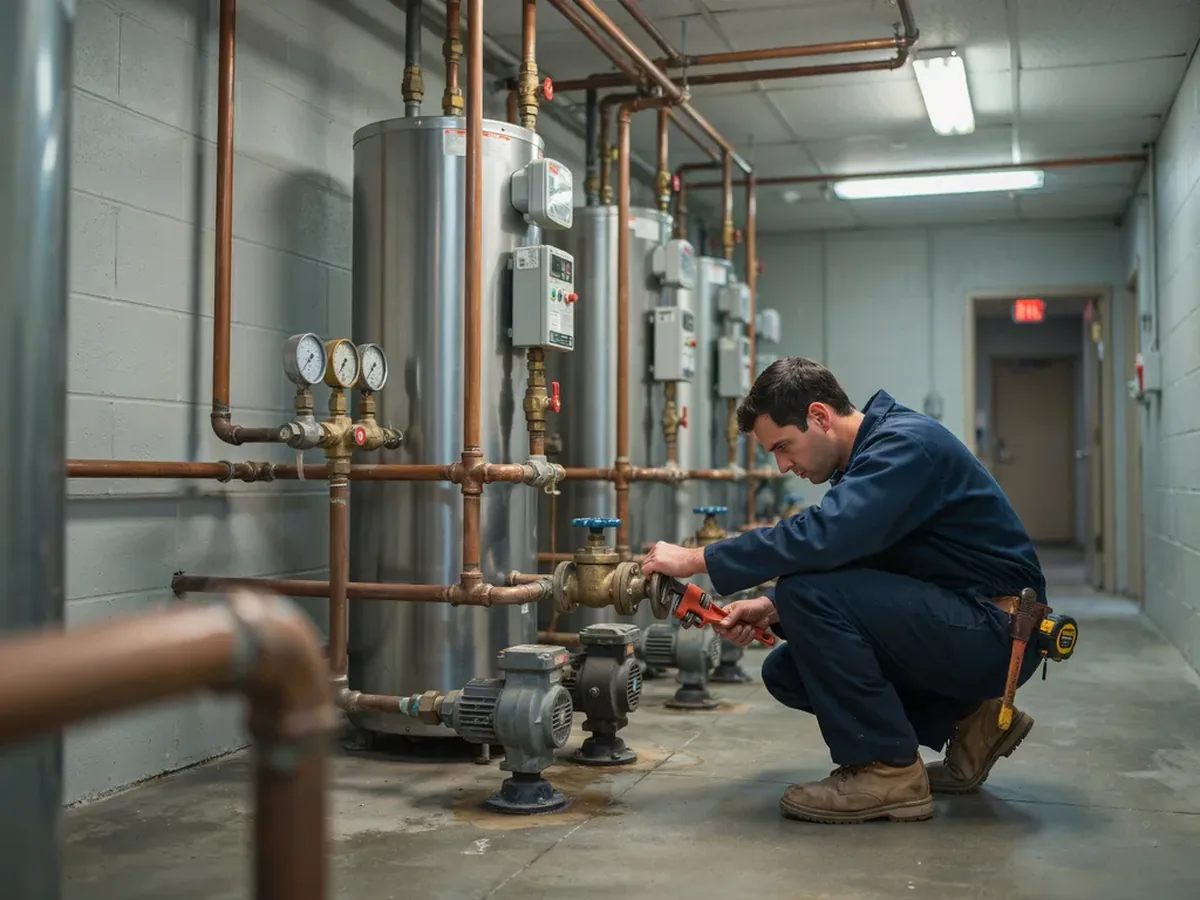
Commercial hot water systems fail in three ways: they run out during peak demand because they were undersized, they take too long to reach distant fixtures because there is no working recirculation, or they stop entirely and the business closes.
All three are addressable, and the first two are usually design problems inherited from a previous fit-out. It is extremely common for a business to grow into a space — more covers, more chairs, more members — while the water heater stays exactly as it was specified for the previous tenant.
The third one is why redundancy matters. A single large heater is cheaper to install than two smaller ones, but when it fails, everything stops. Two units in parallel, or a tankless bank, means a component failure reduces capacity rather than eliminating it. For a restaurant or a salon, that difference is worth real money.
Systems
Commercial hot water configurations
Commercial tank heaters
High-recovery gas or electric units from 50 gallons upward. Simple, robust and well understood. Recovery rate matters as much as capacity in a commercial setting.
Tankless banks
Multiple tankless units in parallel, giving continuous hot water with built-in redundancy. Higher install cost, and in this valley's water they need a descaling program.
Recirculation systems
A return loop and pump so hot water is available immediately at distant fixtures. Essential in larger premises and a common retrofit where fixtures run cold for a minute.
Booster heaters
For commercial dishwashers requiring higher sanitising temperatures than the main system supplies.
Storage plus instantaneous
A hybrid arrangement for premises with a sharp peak demand, combining stored volume with on-demand capacity.
Service and descaling
Scheduled flushing, anode inspection and descaling. In hard water this is what determines system life. See maintenance.
Sizing
Sizing for peak demand, not average use
Residential sizing works off household size. Commercial sizing works off the peak: the busiest twenty minutes of your busiest day, with every fixture that might run at once actually running.
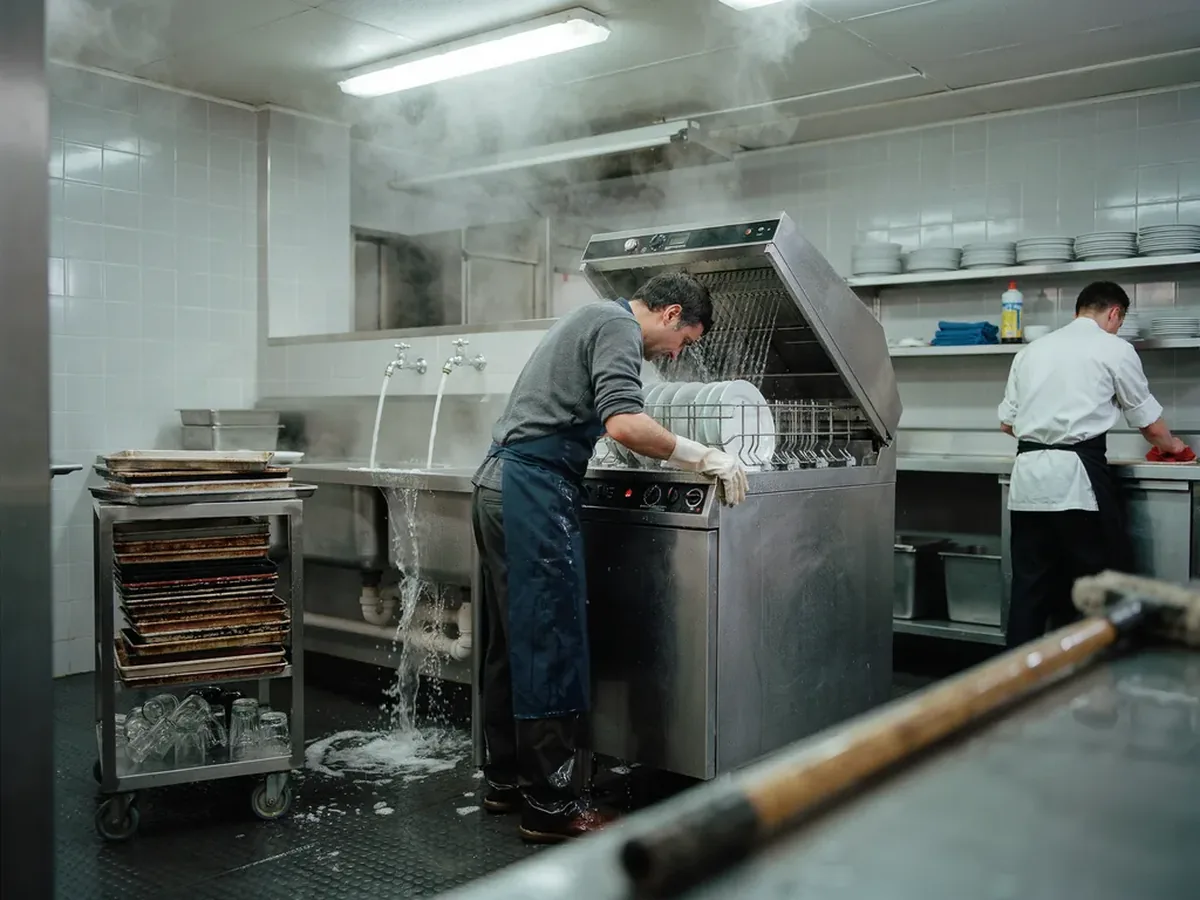
For a restaurant that is usually the end of service, with a dishwasher cycling, three-compartment sinks in use and hand basins running. For a salon it is a full row of wash stations. For a gym it is the after-work rush with every shower going.
Recovery rate is as important as storage. A large tank with poor recovery empties during a peak and then leaves you waiting. A smaller tank with high recovery may serve better and cost less.
Recirculation matters more than people expect. In a long building, a fixture at the far end can waste a minute of water and staff time on every use. A recirculation loop pays for itself in convenience alone.
And plan for failure. Two units instead of one costs more up front and means a fault reduces your capacity rather than closing you.
Costs
Commercial water heater costs
| Job | Typical range | Notes |
|---|---|---|
| Diagnostic and repair call | $180 – $600 | Depends on the fault and parts. |
| Commercial tank replacement (75–100 gal) | $3,500 – $8,000 | Supply, install, venting, permit. |
| Large or multiple tank system | $8,000 – $20,000 | Depends on capacity and configuration. |
| Tankless bank | $8,000 – $25,000 | Including gas upgrades and venting. |
| Recirculation loop retrofit | $1,500 – $6,000 | Depends on building layout. |
| Booster heater for dishwasher | $1,800 – $4,500 | Where sanitising temperature is required. |
| Annual service and descale | $300 – $900 | Per system, scheduled. |
Typical local ranges, not quotes. Commercial work is quoted after a site survey.
Maintenance
Keeping a commercial system alive in hard water
- Flush tanks on a schedule. Commercial tanks accumulate sediment fast in this valley, and sediment is what kills them.
- Descale tankless units annually, minimum. Twice a year in a high-volume kitchen. This is the single biggest factor in tankless system life here.
- Check anodes on tank systems. The sacrificial rod is consumed faster in hard water and it is the cheapest life extension available.
- Verify T&P valves and expansion. Safety devices that need periodic testing, and expansion control that is often missing on older installs.
- Consider softening the feed. A softener on the hot water supply meaningfully extends system life and reduces descaling frequency.
- Log everything. Service records for the system are useful for warranty claims and for any inspection.
FAQ
Commercial Water Heaters: your questions answered
Our hot water runs out during service. Is the heater faulty?
Usually not. It is far more often a sizing problem, either because the system was specified for a different use of the space or because the business has grown. We measure your actual peak demand and tell you whether the fix is more storage, better recovery, or a second unit.
How quickly can you repair a commercial water heater?
We respond 24/7, and we carry common commercial parts. Where a unit cannot be repaired immediately, we will look at temporary options to keep you trading — that conversation happens on the first call, not after the diagnosis.
Is tankless a good idea for a restaurant?
It can be excellent, particularly as a bank of units in parallel, which gives continuous hot water and built-in redundancy. The caveats in this valley are the gas supply capacity and the descaling schedule, which is non-negotiable in water this hard.
Do we need a recirculation loop?
If any fixture takes more than about twenty seconds to run hot, it is worth considering. In a commercial setting that wait is repeated dozens of times a day in wasted water and staff time, and it makes hand-washing compliance harder.
How long does a commercial water heater last?
Typically 8 to 12 years for a tank system, less in hard water without servicing, and 15 to 20 for tankless with proper descaling. Commercial units work harder than residential ones, so maintenance makes a bigger difference.
Do you handle permits and inspections?
Yes. Commercial water heater installation is permitted, inspected work, and we handle the permit, the inspection scheduling and the documentation.
Related plumbing services
Running out of hot water at the worst time?
We will measure your real peak demand and tell you whether it is a repair, a sizing problem or a redundancy problem.