
Leak Detection & Repair in West Valley City, UT
A leak you cannot see is still costing you money every hour. We find it with acoustic and thermal equipment, mark it precisely, and repair it — without opening three walls to go looking.
Most household water leaks never announce themselves. They run inside a wall, under a slab, beneath a lawn or above a ceiling, and the first sign is usually indirect — a water bill that climbed for no reason, a musty smell in one room, a patch of lawn that stays green through August, or a floor that is warm in one spot.
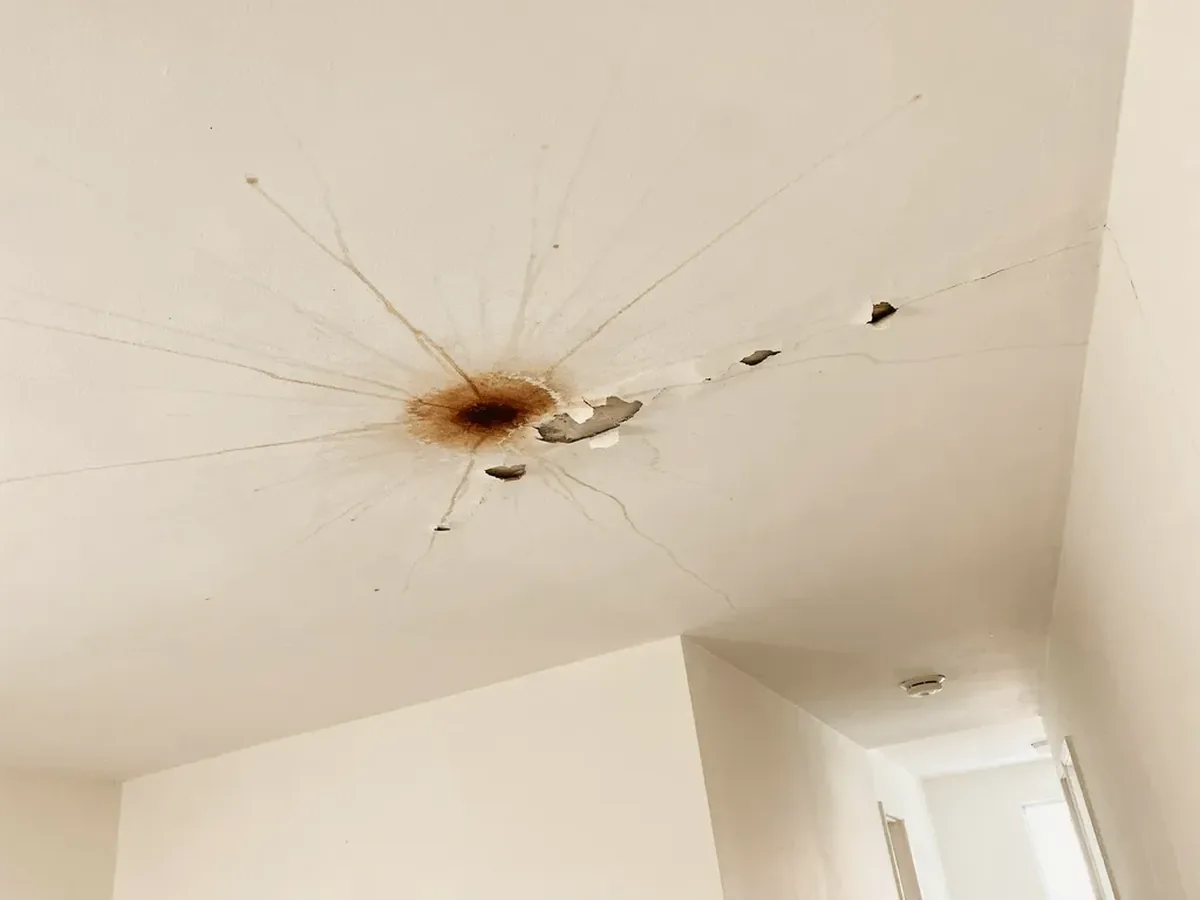
The temptation at that point is to start opening things up. That is expensive and it is usually wrong, because water tracks along framing and pipe runs and surfaces a long way from where it escaped. The stain on your ceiling is very often not underneath the leak.
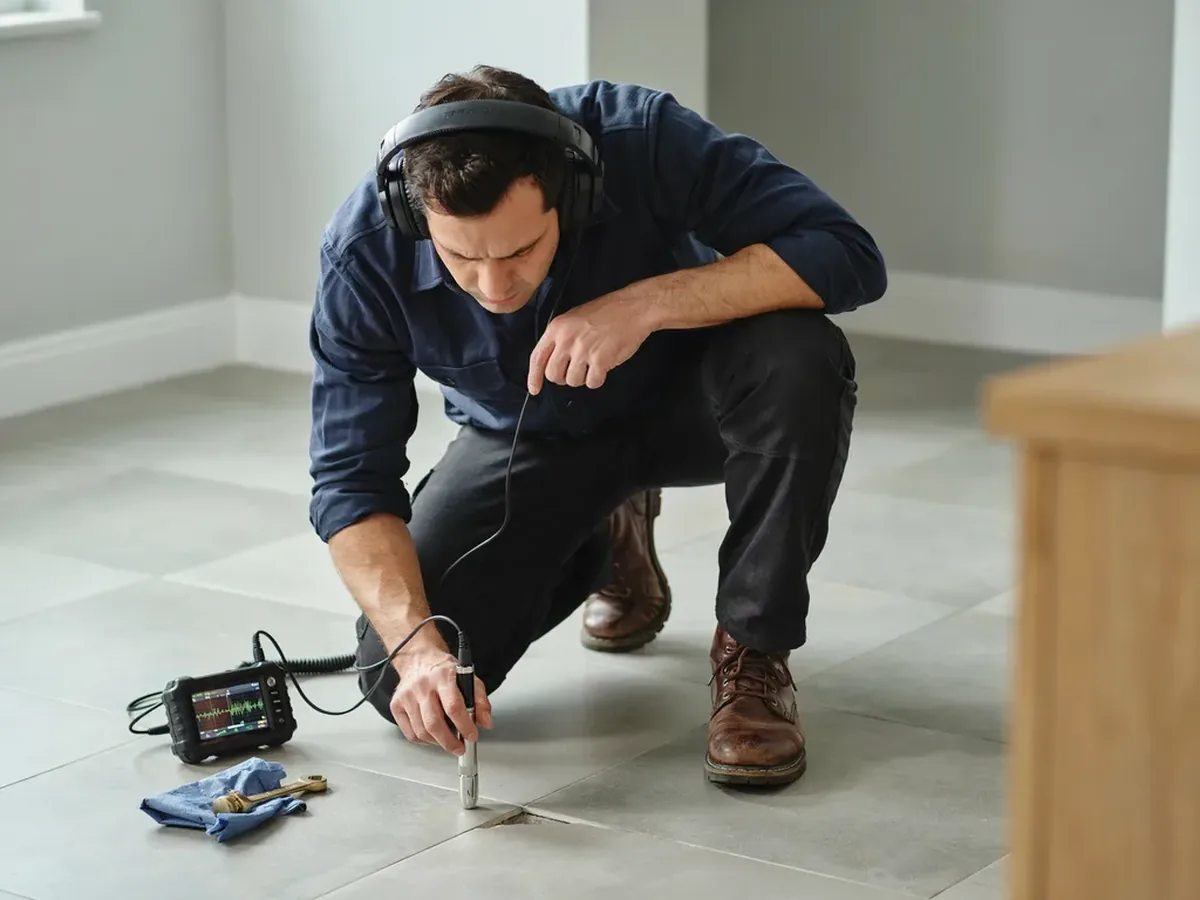
Leak detection is about narrowing it down before anything gets cut. Acoustic listening equipment picks up the specific sound of water escaping a pressurised line through concrete, tile and drywall. Thermal imaging shows where hot or cold water is tracking behind a surface. Pressure isolation tells us which line has lost integrity and which have not. Between them we can usually mark a spot on the floor and be right.
Signs of a hidden leak
How to tell you have a leak you cannot see
Any one of these on its own is worth checking. Two or more together is a leak until proven otherwise.
- Your water bill jumped with no change in usage. The most reliable early indicator there is. A small continuous leak adds up fast.
- The meter moves with everything turned off. Shut every fixture and appliance, then watch the low-flow indicator. Any movement means water is escaping.
- You can hear running water when nothing is on. A hiss or trickle in a wall, floor or ceiling.
- A warm or damp spot on the floor. On slab homes this usually means a hot water line has failed under the concrete.
- Musty smell, or mould in a corner or cupboard. Persistent damp behind a surface. Often the first clue in a crawlspace-adjacent room.
- Cracked or lifting flooring, or a stain that grows. Water getting into subfloor. By this stage the repair bill has two components: plumbing and restoration.
- An unexplained green patch in the yard. A buried water service line leaking. See water line repair.
- Low pressure across the whole house. Water going somewhere other than your fixtures.
Leak services
Leak detection and repair we handle
Whether it is a bill that has quietly doubled or water coming through a ceiling, the process starts the same way: find it precisely, then fix it.
- Water Leak DetectionAcoustic and thermal locating that finds hidden leaks precisely.
- Slab Leak RepairLeaks under the concrete located precisely, then repaired or rerouted.
- Pipe RepairRepairing the failed section once we have found it.
- Emergency Water Leak RepairActive leaks stopped and repaired the same visit, 24/7.
Our equipment
How we find a leak without demolition
Acoustic listening
Ground microphones and pipe contact probes amplify the distinctive high-frequency sound of pressurised water escaping. It works through concrete slab, tile and drywall, and it is how most slab leaks are pinpointed.
Thermal imaging
An infrared camera shows the temperature difference where water is tracking behind a surface. Especially effective on hot water lines and for mapping how far moisture has spread through a wall.
Pressure isolation testing
We isolate sections of the system and pressurise them independently. A section that will not hold pressure has the fault, which narrows the search area enormously before we listen at all.
Camera and line tracing
For drain-side leaks, a camera in the line finds the break directly, and a sonde locator marks its position and depth on the ground above.
Where they happen
Where leaks hide in West Valley City homes
Under the slab. Slab-on-grade construction is very common here, and supply lines run in or beneath that concrete. When one fails, you get a warm floor, a running-water sound and a rising bill long before you see moisture. See slab leak repair.
Inside walls. Vertical runs to upstairs bathrooms, and the horizontal branches feeding them. Copper pinholes and failed solder joints are the usual causes; on galvanized it is corrosion at the threads.
Under the yard. The water service line from the meter to the house. In older properties this may be galvanized steel or polybutylene, both of which fail with age.
Behind shower walls. Failed pan liners and shower valves leak only when the shower runs, which makes them easy to misdiagnose as something continuous.
At appliance connections. Ice maker lines, dishwasher supplies and washing machine hoses in a cabinet or behind an appliance where nobody looks.
Our process
From suspicion to a marked spot on the floor
Confirm there is a leak
Meter test with everything shut off. If the meter is still, we will tell you that and look for another explanation.
Narrow it by section
Isolate and pressure test hot, cold and irrigation separately to find which system is losing water.
Pinpoint it
Acoustic and thermal work over the suspect area until we can mark a specific location, not a general zone.
Repair or reroute
Fix in place where access is reasonable, reroute where breaking concrete would cost more than bypassing the run.
Costs
Leak detection and repair costs in West Valley City
| Job | Typical range | Notes |
|---|---|---|
| Leak detection survey | $250 – $500 | Meter test, isolation, acoustic and thermal locating. |
| Accessible pipe or fitting repair | $220 – $520 | Under a sink, in a basement, at the heater. |
| In-wall supply repair | $500 – $1,400 | Small access, repair, pressure test. |
| Slab leak, spot repair | $1,400 – $3,500 | Break, repair, patch concrete. |
| Slab leak, reroute | $2,200 – $6,000 | Abandon the failed run and re-plumb overhead or through walls. |
| Water service line replacement | $2,500 – $7,500 | Meter to house. Trenchless options available. |
Detection is often credited against the repair when we do both. Typical ranges for West Valley City, not quotes.
Why bother finding it precisely
What accurate location actually saves you
- One access hole instead of five. The difference between a small drywall patch and a room that needs re-finishing.
- No unnecessary concrete work. Knowing exactly where a slab leak is often shows that a reroute is cheaper than breaking the floor at all.
- Less drying, less restoration. Finding it early means the wet area is small, and small wet areas dry without a mould problem.
- A defensible insurance claim. Documented location, cause and photographs are what an adjuster needs to process a water damage claim.
- Confidence there is only one. A proper pressure test tells you whether the rest of the system is sound, which matters a great deal on older galvanized.
- An honest repair-or-repipe decision. If we find the third pinhole in the same copper run, you deserve to hear that before you pay for the third repair.
FAQ
Leak Detection & Repair: your questions answered
How do I know if I have a leak at all?
Turn off every fixture and appliance in the house, including the ice maker and any irrigation, then look at your water meter. Most have a small triangular or star-shaped low-flow indicator that spins with even a trickle. If it is moving with everything off, water is escaping somewhere.
Can you find a leak without breaking anything?
Finding it, yes — that is the whole point of acoustic and thermal equipment. Repairing it eventually requires access to the pipe, but accurate location means that access is one small, deliberate opening rather than exploratory demolition.
How much does leak detection cost?
Typically $250 to $500 for a full survey, depending on the size of the property and how much isolation testing is involved. When we go on to do the repair, that detection cost is usually credited against it.
Is a hidden leak covered by homeowners insurance?
Policies generally cover sudden and accidental damage, and generally exclude damage from a leak that has been seeping for months. The pipe repair itself is often excluded either way. Report it early, and give your adjuster the location documentation and photographs we provide.
My bill went up but I cannot see any water. Is that normal?
It is extremely common. A pinhole leak under a slab or in a buried service line can run for months into soil without ever surfacing. The meter test is the quickest way to confirm it.
Do you find leaks in irrigation and sprinkler systems too?
Yes. Irrigation is a frequent culprit for an unexplained summer bill increase, and it is one of the first things we isolate during testing, because it is easy to rule in or out.
Related plumbing services
Suspect a leak you cannot find?
We will confirm it at the meter, pinpoint it with acoustic and thermal equipment, and repair it — without opening walls on a guess.