
Bathroom Sink Installation in West Valley City, UT
New vanities, pedestal and vessel sinks fitted properly, and the slow leaks under existing ones found before the cabinet base gives up.
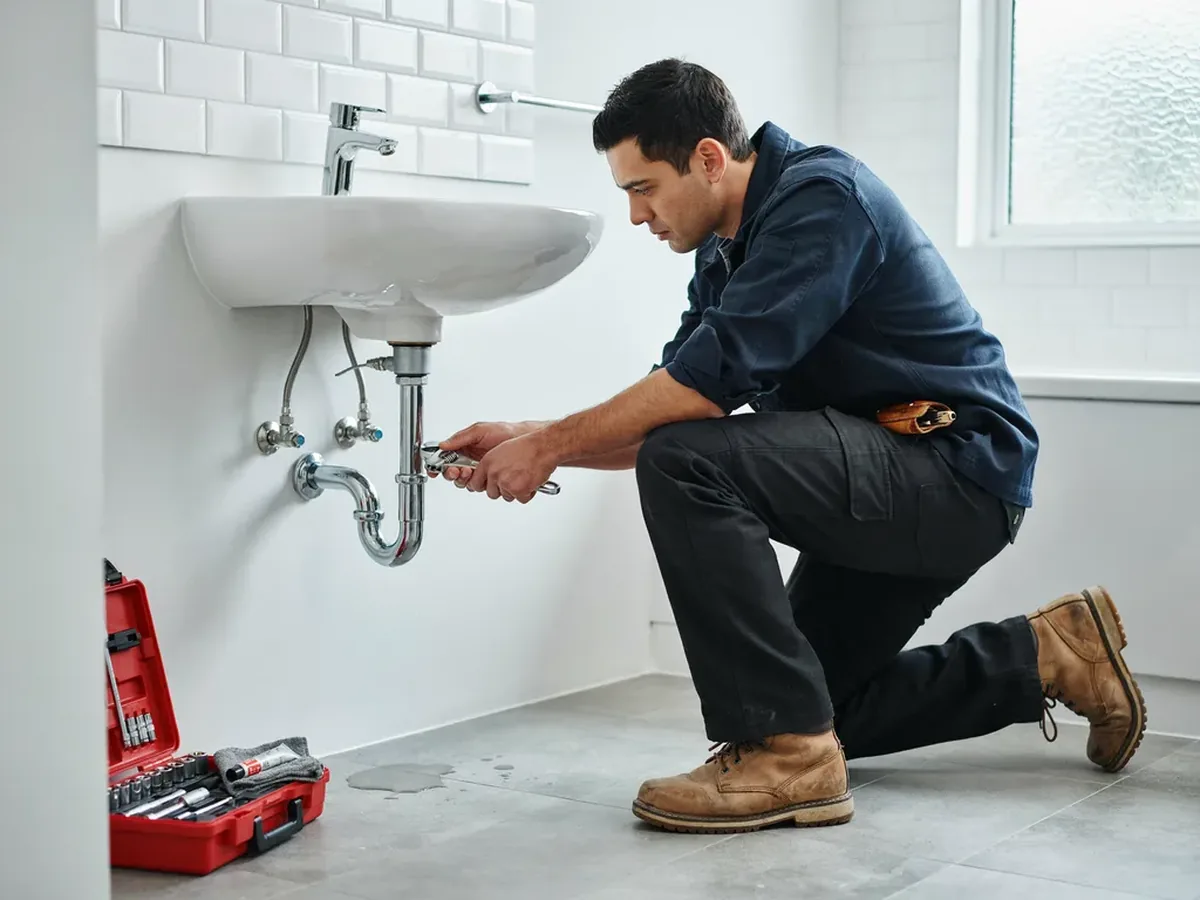
Bathroom sinks are simple, which is why the failures are almost always in the same four places: the P-trap and its slip joints, the tailpiece where the drain meets the trap, the pop-up assembly and its pivot rod, and the angle stops feeding the faucet.
All four are inexpensive and all four leak slowly rather than dramatically. That is the actual problem. A slip joint weeping a few drops a day into a particleboard vanity base does nothing visible for a year and then the bottom of the cabinet swells and delaminates. Checking under the sink with a torch twice a year prevents most of it.
On the installation side, the considerations are matching the sink to the rough-in, getting the trap arm at the right height for the drain type, and supporting the sink properly — especially for pedestal and wall-hung basins, which need real blocking in the wall rather than optimism.
Types
Sink types and what each needs
Vanity and drop-in sinks
The most common. Straightforward to fit, plenty of room for the trap, and easy access for future service. Watch the faucet hole spacing when buying.
Undermount sinks
Mounted beneath a stone or solid surface top. Cleaner look, needs correct support and a properly sealed rim.
Vessel sinks
Sit on top of the counter. They need a taller faucet and a specific drain, and the higher rim means the trap arm sits lower than usual.
Pedestal sinks
No cabinet to hide anything, so the trap, stops and supplies are all visible and need to be neat. The wall needs real blocking behind it to carry the weight.
Wall-hung basins
Same support requirement, plus the drain and supplies usually have to be moved to come out at the right height.
Repairs to existing sinks
Traps, tailpieces, pop-ups, stops and supply lines. Most bathroom sink calls are one of these.
Under the sink
What is quietly leaking in your vanity
- Slip joints on the P-trap. Washers harden and joints loosen. A weep here is the classic cabinet-base killer.
- The tailpiece connection. Where the sink drain meets the trap. Often disturbed when somebody stores things under the sink.
- The pop-up assembly. The gasket under the drain flange, and the pivot rod seal at the back. Both cheap, both common.
- Angle stops. Compression stops that weep at the stem, or that will not close when you need them to.
- Supply lines. Braided connectors have a service life. When they fail they do it suddenly and at full pressure.
- The faucet base. Water getting past the deck seal runs down inside the cabinet rather than across the counter, so it is easy to miss.
Installation
How we fit a bathroom sink
Check the rough-in
Drain and supply heights against the new sink and vanity. Vessel and wall-hung installs frequently need these moved.
Support properly
Blocking in the wall for pedestal and wall-hung basins, level and secure fixing for vanities.
Fit and connect
Faucet and pop-up fitted before the sink goes in where possible, new trap, new stops, new supply lines.
Test thoroughly
Fill and drain under observation, check every joint dry, and seal the counter or basin edge.
Costs
Bathroom sink costs
| Job | Typical range | Notes |
|---|---|---|
| P-trap or tailpiece repair | $150 – $300 | Most under-sink leaks. |
| Pop-up assembly replacement | $180 – $340 | Fixes leaks and stoppers that will not seal. |
| Angle stops replaced (pair) | $280 – $520 | Worth doing during any sink work. |
| Vanity sink install, labour | $280 – $600 | Like-for-like, you supply the sink and vanity. |
| Vessel sink install | $380 – $850 | Often needs drain height adjustment. |
| Pedestal sink install | $420 – $950 | Includes wall blocking where accessible. |
| Wall-hung basin install | $550 – $1,400 | Usually requires moving drain and supplies. |
| Double vanity conversion | $900 – $2,400 | Second drain and supply set added. |
Cabinet, counter and tile work usually separate. Typical local ranges, not quotes.
Advice
Getting a sink install right
- Check faucet hole spacing before you buy. Single hole, 4 inch centerset and 8 inch widespread are not interchangeable, and this is the most common shopping mistake.
- Plan for the trap on a vessel sink. The taller basin pushes everything down, and a standard trap sometimes will not fit without adjusting the drain.
- Do not store heavy things on the trap. Cleaning products stacked against a P-trap is how slip joints get knocked loose.
- Replace stops during the install. You have the water off and the space open. Doing it later means another call-out.
- Look under the sink twice a year. Thirty seconds with a torch catches almost every slow leak before it damages anything.
- Seal the basin edge properly. The joint between basin and counter is a water path, and silicone there is not optional.
FAQ
Bathroom Sink Repair & Installation: your questions answered
Why is the bottom of my vanity swollen?
A slow leak, almost certainly from the P-trap slip joints, the tailpiece or the pop-up gasket. Particleboard absorbs water invisibly and then swells. The plumbing repair itself is usually inexpensive; the cabinet may not be salvageable, which is why catching it early matters.
Can you fit a sink and vanity I bought?
Yes. Check the faucet hole spacing and, for vessel or wall-hung basins, be aware that the drain and supply heights may need to move. We will flag any issue before we start rather than halfway through.
How long does a bathroom sink installation take?
A like-for-like vanity sink is usually one to two hours. Vessel sinks, pedestal basins and wall-hung units take longer, typically two to four hours, because the rough-in usually needs adjusting.
My sink drains slowly. Is it blocked?
Usually the pop-up assembly rather than the pipe. The stopper mechanism collects hair right where you cannot see it, an inch below the drain. Pulling the pop-up and cleaning it fixes it more often than not.
Do pedestal sinks need special support?
Yes. The pedestal carries some weight but the basin is held by the wall, which needs solid blocking behind the drywall. Without it the basin works loose over time and eventually stresses the plumbing connections.
Should I replace the angle stops at the same time?
We would recommend it, especially in hard water. Old stops calcify and stop closing, and the moment you need to isolate that sink in a hurry is exactly the moment you find out. They are inexpensive when the water is already off.
Leak under the vanity?
Catch it before the cabinet base does. Most under-sink leaks are a cheap part and a single visit.