
Water Line Installation in West Valley City, UT
New service lines, upsized mains for houses that have outgrown their supply, and new runs out to garages, shops and accessory units. Permitted, inspected and correctly sized.
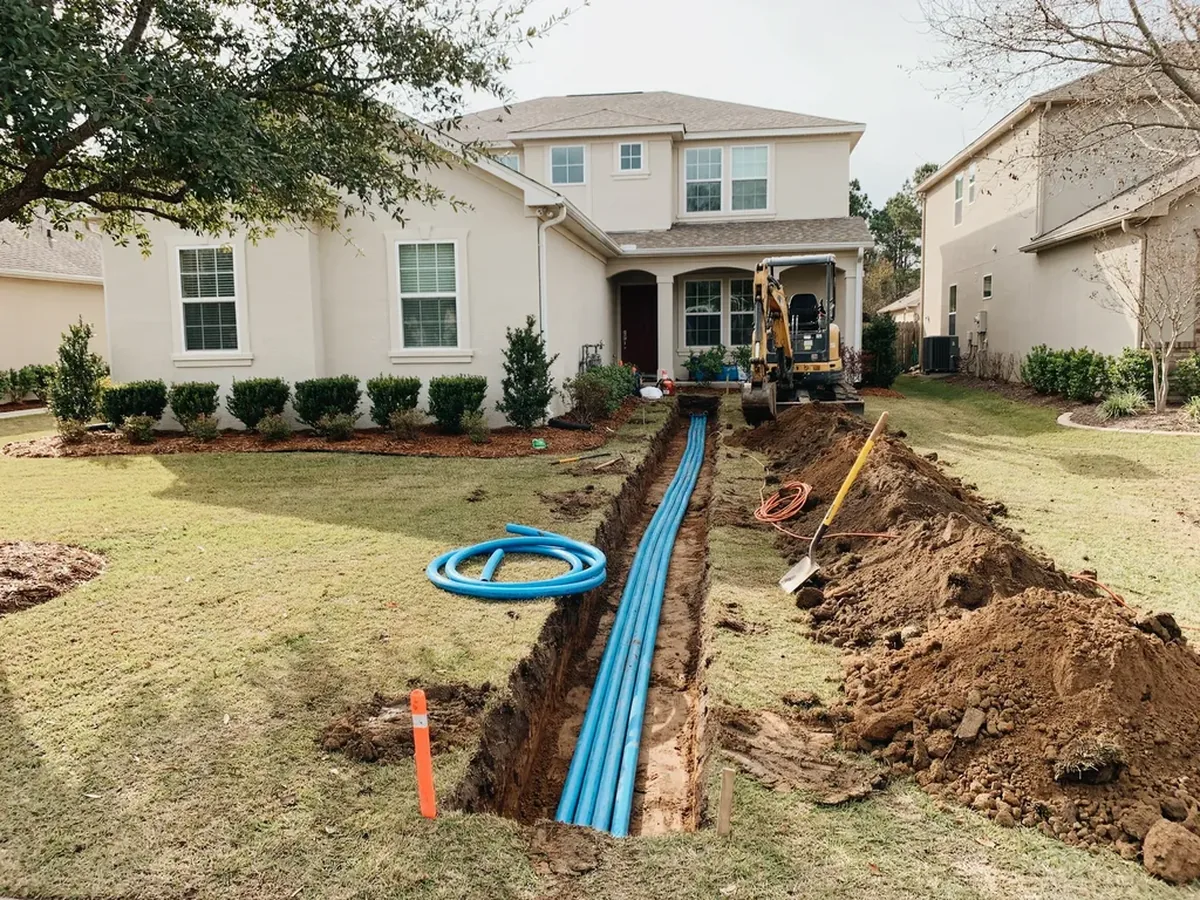
Water line installation covers a few different jobs that share the same skills: replacing a service line that has reached the end of its life, upsizing an undersized main so the house can actually deliver the pressure it should, and running new supply out to a detached garage, workshop, accessory dwelling or irrigation system.
The common thread is sizing. A surprising number of West Valley City homes are fed by a three-quarter-inch service line that was adequate for a 1960s house with one bathroom, and is not adequate for the same house after two bathrooms and a second kitchen were added. No amount of interior repiping fixes a supply line that is too small.
We calculate the demand properly — fixture units, simultaneous use, available street pressure and the run length — and specify the line accordingly. Then we install it to code, with the correct burial depth for this climate, tracer wire for future locating, and proper isolation at both ends.
What we install
The installations we take on
Service line replacement
Meter to house, in copper or polyethylene, replacing failing galvanized, polybutylene or an old undersized run. Open trench or trenchless depending on what is above it.
Upsizing for pressure and flow
Going from three-quarter to one inch, or larger, where the house has been extended or fixtures added. Often the missing piece when interior repiping did not fix the pressure.
Runs to outbuildings
Detached garages, workshops, ADUs and casitas. Includes proper isolation, freeze protection and, where required, backflow prevention.
Irrigation supply and backflow
A dedicated irrigation take-off with the correct backflow device, so lawn watering does not fight the house for pressure.
Hose bibbs and yard hydrants
New exterior supply points, installed frost-free and correctly isolated for winter.
Interior main relocation
Moving the entry point or the main shutoff somewhere accessible, which is worth more than people expect.
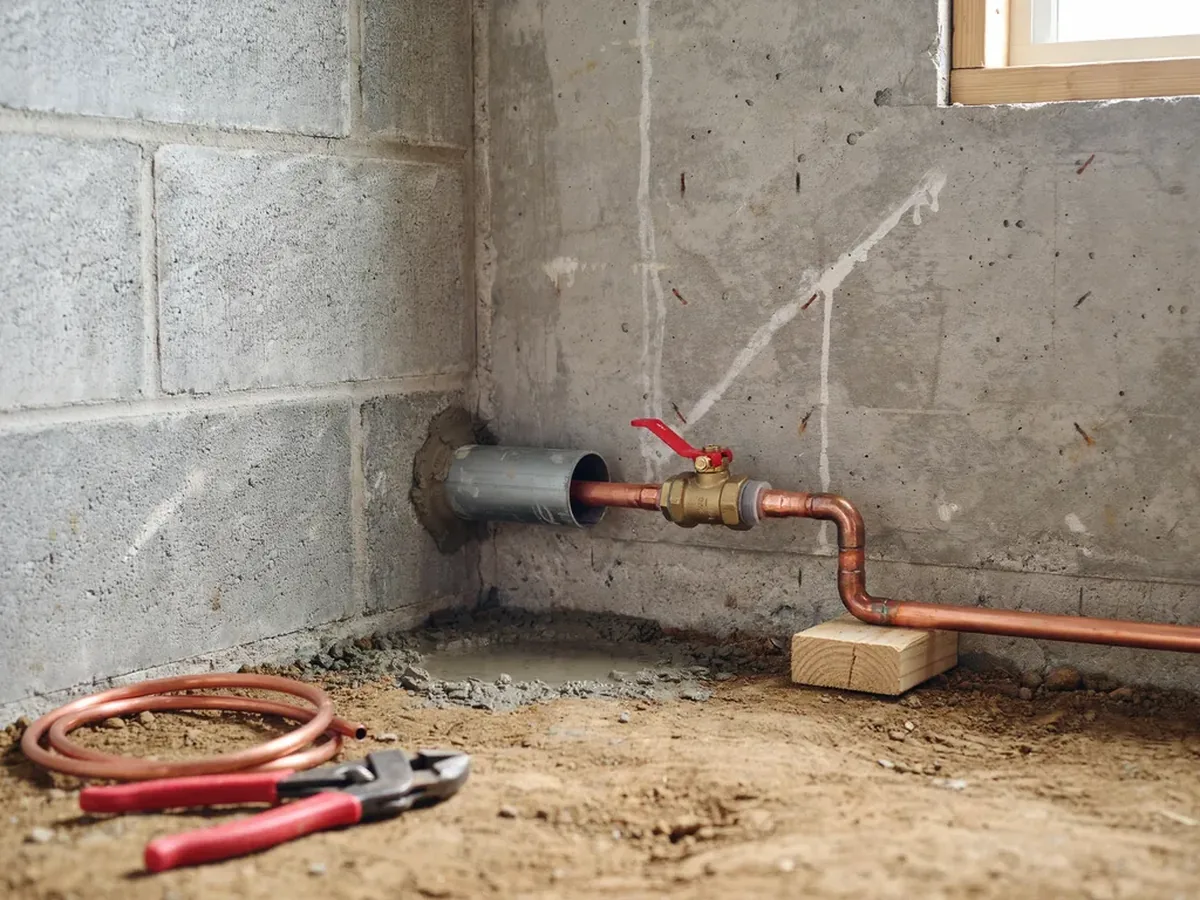
Getting it right
What proper sizing and installation involves
Sizing. We measure static and flowing pressure at the meter, count the fixture load, and factor in the run length. Undersizing costs you pressure forever; oversizing wastes money and leaves water sitting in the line.
Depth. Service lines here have to be deep enough to stay below the local frost line. Getting this wrong produces a line that freezes in a hard winter, and re-doing it means digging the whole thing again.
Material. Type K copper or high-density polyethylene for buried service. Both are appropriate; the choice depends on soil conditions, the route and whether we are pulling it trenchless.
Locatability. Plastic line gets tracer wire installed alongside it so it can be located in future without guesswork. It costs almost nothing now and saves a great deal later.
Isolation and regulation. A proper main shutoff somewhere you can actually reach, and a pressure reducing valve set correctly if street pressure warrants it.
The job
How a water line installation runs
Survey and design
Pressure and flow measured, demand calculated, route walked, and utility locates called in before anything is dug.
Permit
Pulled with the city, with the inspection scheduled. Service line work is inspected work.
Install
Trench or trenchless pull, line laid at depth with tracer wire, connected at meter and house.
Test, inspect, restore
Pressure tested and disinfected where required, inspected, backfilled and compacted, surface restored.
Costs
Water line installation costs
| Job | Typical range | Notes |
|---|---|---|
| Service line replacement, open trench | $2,500 – $6,000 | Typical suburban lot, meter to house. |
| Service line, trenchless pull | $4,000 – $9,000 | Where driveways or mature landscaping are in the way. |
| Upsize to 1 inch | add $400 – $1,200 | Material and connection cost over a like-for-like replacement. |
| Supply run to a detached garage or ADU | $1,800 – $5,500 | Depends on distance, depth and freeze protection. |
| Irrigation take-off with backflow device | $700 – $2,000 | Includes the required backflow prevention. |
| New frost-free hose bibb | $280 – $650 | Including the wall penetration and isolation. |
Permit and inspection included. Landscaping and hardscape restoration usually separate. Typical local ranges, not quotes.
Worth doing at the same time
Things to bundle while the trench is open
- Upsize rather than replace like for like. The incremental material cost is small; the excavation is the expensive part and you have already paid for it.
- Fit or replace the pressure reducing valve. High street pressure shortens the life of everything downstream.
- Add a proper accessible main shutoff. Somewhere you can reach in an emergency without a torch and a crawl.
- Run a conduit for future use. Low-voltage, irrigation control or a second line for an outbuilding, while the trench is open.
- Install tracer wire. Standard on our plastic installs. It makes any future locate quick and cheap.
- Sort out the irrigation take-off. A dedicated line with correct backflow prevention keeps sprinklers from stealing house pressure.
FAQ
Water Line Installation: your questions answered
Do I need a permit for a new water line?
Yes. Service line installation and replacement is permitted, inspected work in West Valley City. We pull the permit, arrange utility locates and meet the inspector.
Will upsizing my water line fix my low pressure?
If the service line is the bottleneck, yes, and dramatically. If the restriction is inside the house — corroded galvanized branches, a clogged pressure regulator, a partially closed valve — then no. That is why we measure at the meter and at fixtures before recommending anything.
How deep does the line have to be buried?
Below the local frost line, which in this part of Utah means a meaningful depth rather than a token trench. Getting it right is not optional, because a shallow service line will eventually freeze.
Can you run a water line to my detached garage or ADU?
Yes, and it is a common job. The considerations are burial depth, whether the building will be heated in winter, how the line is isolated and drained for the cold months, and whether backflow prevention is required.
How much of my yard gets torn up?
With an open trench, a strip along the route, which we backfill and compact. With a trenchless pull, two small pits — one at each end. Trenchless costs more per foot but is usually cheaper overall once a driveway or mature planting is involved.
How long will the new line last?
Type K copper and modern polyethylene both have expected service lives well beyond fifty years when installed at the right depth with proper bedding. This is a job you should only need to do once.
Related plumbing services
Planning new water line work?
We will measure your actual pressure and demand, specify the right size, and give you a fixed price including permit and inspection.