
Frozen Pipe Repair in West Valley City, UT
A frozen line is a two-part problem: getting water flowing again, and finding out whether the ice already split the pipe. We handle both before the thaw does the damage for you.
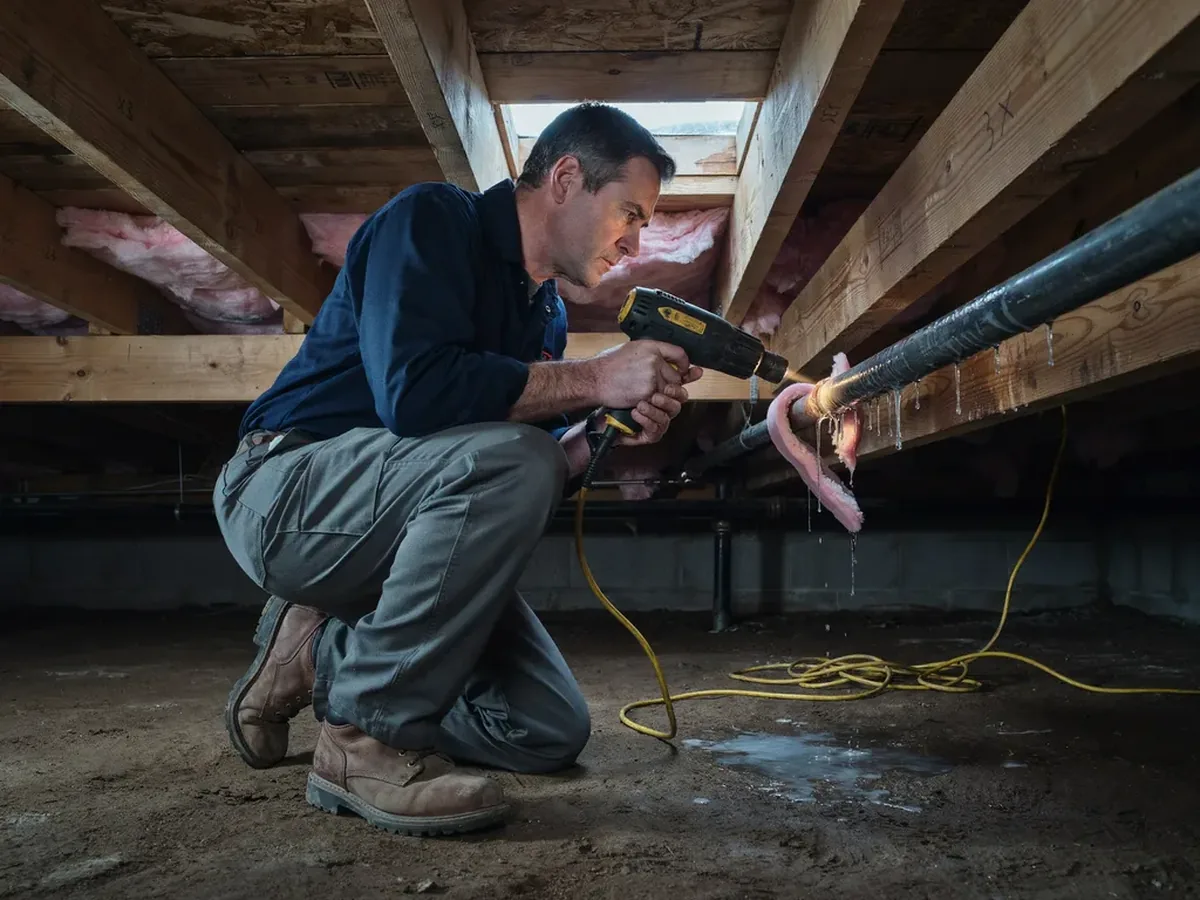
When a West Valley City cold snap drops overnight lows into the teens, the pipes that freeze first are always the same ones: runs through an unheated garage, lines in a crawlspace, anything in an exterior wall on the north side of the house, and hose bibbs that were left connected to a garden hose through the fall.
Here is the part people miss. The ice plug itself does not usually burst the pipe at the plug. As water freezes it expands and drives pressure down the line ahead of it, and the pipe fails at whatever point is weakest — often a fitting several feet away. That split is sealed shut by ice while the freeze lasts. It starts pouring water the moment things warm up.
Which is why a frozen pipe is worth a call even if nothing is leaking yet. Thawing it in a controlled way, with the ability to shut water off immediately, is a very different outcome from finding out at 3pm when the sun hits the garage wall.
Right now
What to do the moment a faucet stops flowing
Leave the faucet open
Open the tap the frozen line feeds, both hot and cold. It relieves pressure and tells you the instant flow returns.
Find your main shutoff
Before you thaw anything. If the pipe has split, you want to be able to close the water in seconds, not minutes.
Check the other fixtures
If nothing in the house runs, the freeze is likely at the service entry or meter. If it is one fixture, it is a local run.
Add heat gently
Warm the room, open cabinet doors under sinks, use a hair dryer or heat lamp on the pipe. Never an open flame.
Do not
Ways people turn a frozen pipe into a flooded house
- Blowtorch or propane torch. It boils the trapped water, and steam pressure in a sealed section of pipe is genuinely dangerous. It is also how a lot of house fires start in crawlspaces.
- Thawing with nobody at the shutoff. If the line split, the water starts the second the ice clears. Someone should be standing at the valve.
- Thawing from the far end. Always work from the faucet back toward the frozen section so melt water has somewhere to escape.
- Assuming it is fine because it flows again. Check every fixture and watch the meter for an hour. A hairline split in a wall may only show up as a slow drip at first.
- Leaving the hose connected outside. A connected hose keeps water trapped in the bibb and the wall stub, which is exactly where frost-free hose bibbs split.
- Turning the heat off while away. Setting back to 55°F costs a few dollars. A burst line while you are in St. George for the weekend costs considerably more.
After the thaw
Finding out whether the pipe already split
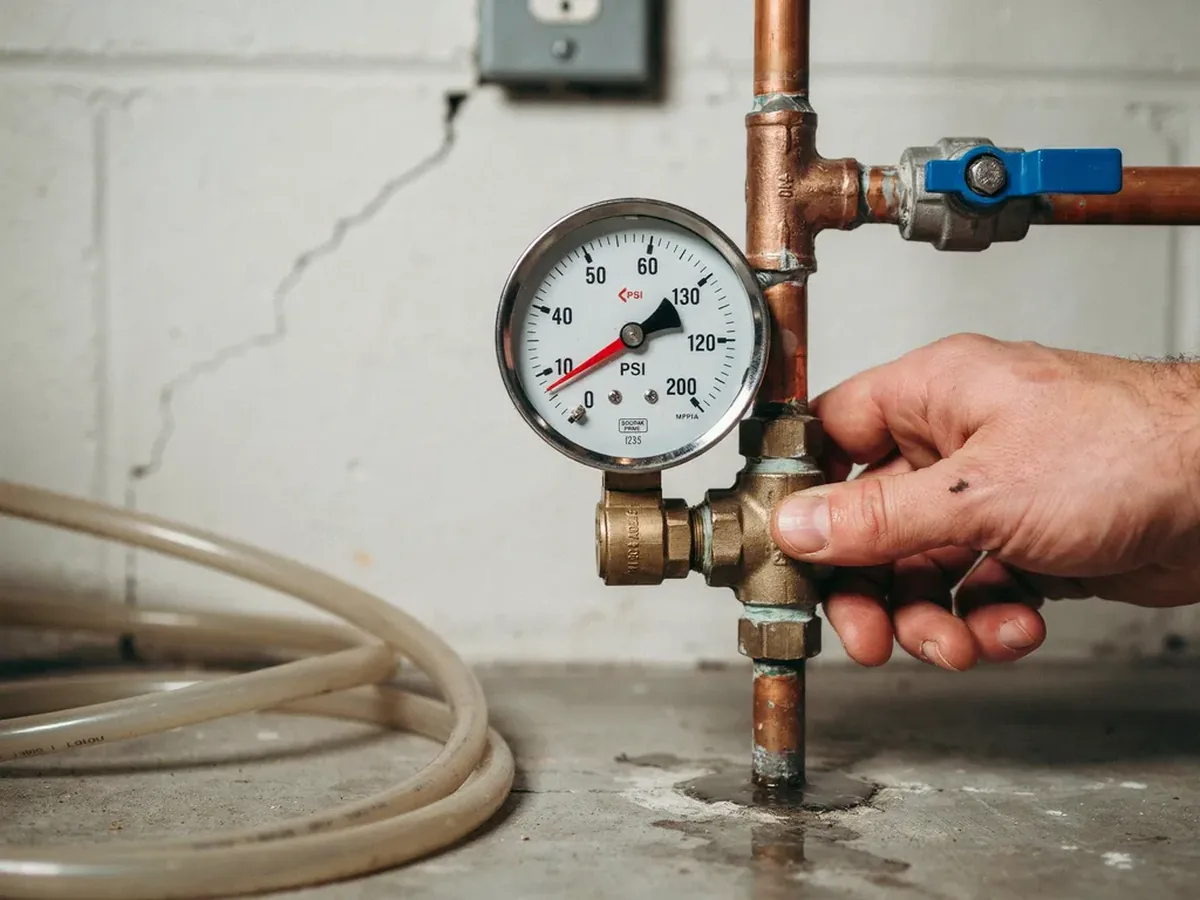
Once flow returns, we pressure test. That means isolating the section, bringing it up to normal working pressure, and watching whether it holds. A line that holds steady pressure is intact. A line that bleeds off has a failure somewhere, even if you cannot yet see water.
If it has failed, we locate the split — acoustically or thermally if it is inside a wall — and cut out the damaged section. Frozen copper very often splits lengthwise along the pipe rather than at a joint, and that split can be several inches long, so the whole affected length comes out.
We also check the fittings either side. Freeze pressure works solder joints loose without necessarily breaking them, and a joint that survived the freeze but is now weeping is a call-back waiting to happen.
Then we talk about the run itself. If a pipe froze once in a normal Salt Lake Valley winter, it will freeze again, and the answer is usually insulation, heat tape, or rerouting that section out of the cold entirely.
Prevention
Stopping it happening again next winter
- Disconnect garden hoses in the fall. Even a frost-free hose bibb cannot drain with a hose attached, and that is the single most common winter split we see.
- Insulate the runs that froze. Foam sleeve on garage, crawlspace and exterior-wall runs. It is cheap and it works, provided it covers the whole run including the fittings.
- Heat tape where insulation is not enough. Thermostatically controlled cable on crawlspace runs and long unheated sections. Fitted properly, not wrapped over itself.
- Seal the cold air path. Most freezes are caused by a draught, not by ambient cold. Foundation vents, gaps around the sill plate and an uninsulated garage door are all worth closing up.
- Open cabinet doors on cold nights. Sinks on exterior walls, especially kitchen sinks, benefit enormously from a bit of room air reaching the pipes.
- Set back rather than off when away. 55°F minimum, and shut the main off with the system drained if the house will be empty for weeks.
Costs
Frozen pipe costs in West Valley City
| Job | Typical range | Notes |
|---|---|---|
| Thaw an accessible frozen line | $180 – $450 | Controlled thawing plus a pressure test. |
| Thaw a line inside a wall or slab | $350 – $900 | Locating plus access if required. |
| Repair a split section | $300 – $850 | Cut out and replace, then pressure test. |
| Frost-free hose bibb replacement | $220 – $480 | Common winter failure. Includes the wall stub. |
| Insulate and heat tape a run | $180 – $700 | Depends on length and access. |
| Reroute a chronically freezing run | $900 – $2,800 | Moving the line out of the cold space permanently. |
After-hours call-out additional. Typical local ranges, not a quote.
FAQ
Frozen Pipes: your questions answered
How cold does it have to get for pipes to freeze?
The rule of thumb is around 20°F for a sustained period, but exposure matters more than the number. An uninsulated pipe in a draughty crawlspace can freeze at 28°F, while a well-insulated interior run will be fine in single digits. In West Valley City the risk window is basically December through February.
Should I leave my faucets dripping overnight?
On the coldest nights, yes, for the fixtures on exterior walls or fed by vulnerable runs. A slow trickle keeps water moving and relieves pressure buildup. It is not a substitute for insulating the run properly, but for one bad night it helps.
Can I thaw the pipe myself?
With a hair dryer or a heat lamp, working from the faucet back toward the freeze, with the faucet open and somebody near the main shutoff, yes. Never with a torch or any open flame. If the frozen section is inside a wall or under the slab, call instead.
How do I know if the pipe burst while it was frozen?
You often will not until it thaws. That is why we pressure test rather than assuming. Watch your water meter for an hour after flow returns with all fixtures off; if it moves, water is escaping somewhere.
My outside faucet froze. Is the damage outside or inside the wall?
Usually inside. Frost-free hose bibbs have a long stem that closes deep in the wall, and when a hose has been left on they split at that inner end. The leak then shows up in the wall or basement the first time you use it in spring.
Is freeze damage covered by insurance?
Usually yes, if the home was being heated and reasonable care was taken. Policies often exclude damage where the heating was switched off in an unoccupied property. Check your specific wording, and report it promptly.
Related plumbing services
Pipes frozen? Do not thaw them alone.
Call before the thaw starts. We will get flow back safely and pressure test the line so a hidden split does not flood the house this afternoon.