
Reverse Osmosis System Installation in West Valley City, UT
RO is the most thorough treatment available at a domestic scale. It goes under one sink, and it produces water that tastes nothing like what comes out of the tap next to it.
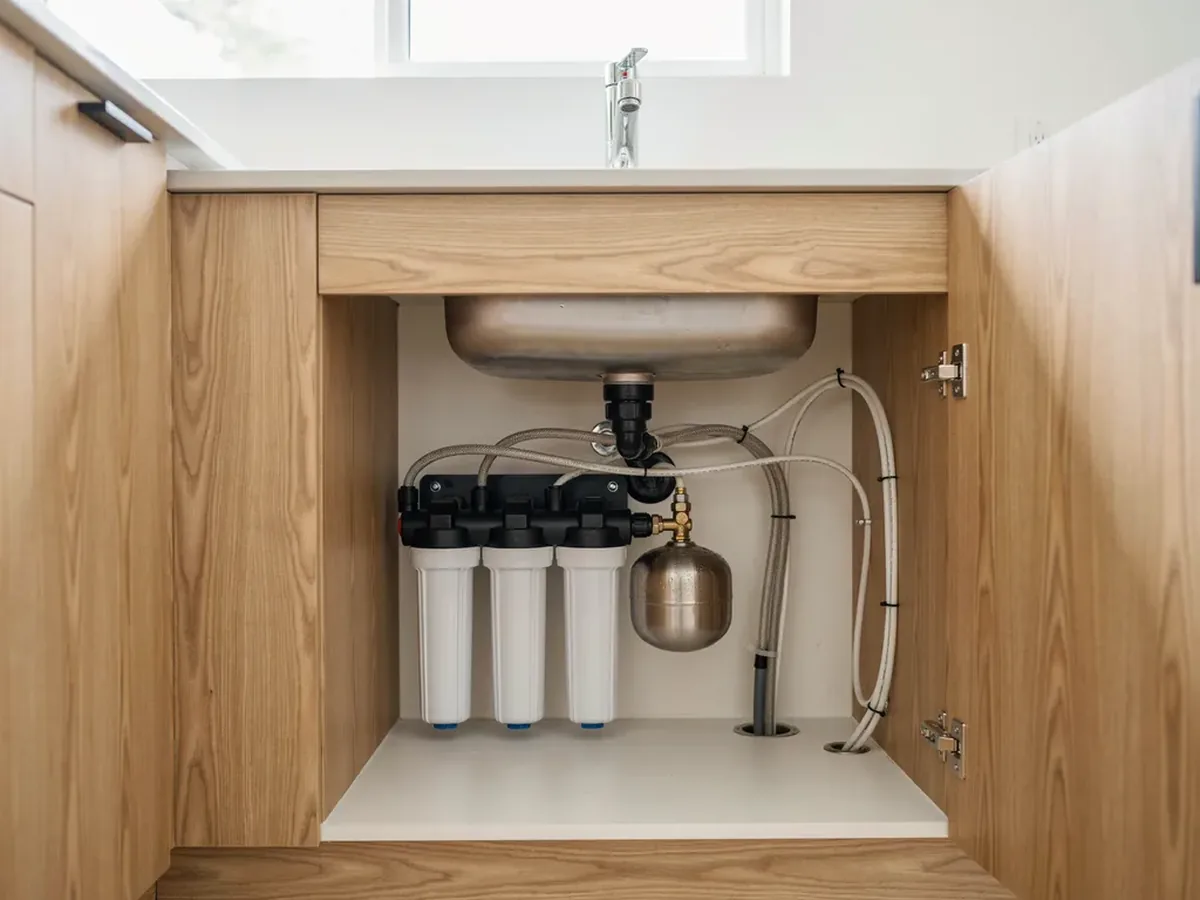
Reverse osmosis pushes water through a semi-permeable membrane whose pores are small enough to block dissolved solids, which is what separates it from every other domestic filtration method. Carbon removes taste, odour and chlorine. RO removes those plus the great majority of dissolved minerals, salts, nitrates, fluoride, lead and a long list of other contaminants.
In Salt Lake Valley water, where total dissolved solids are noticeable, the difference in taste is immediate. Coffee, tea and ice are all obviously different. It is the single most noticeable water improvement most people make.
The trade-offs are honest ones. RO is slow, which is why it produces into a storage tank rather than on demand. It sends some water to drain in the process, though modern systems are far more efficient than older ones. It takes up space under the sink. And it needs a dedicated faucet, which means a hole in the counter or an existing spare hole in the sink deck.
How it works
The stages of an RO system
Sediment pre-filter
Catches particulate before it reaches the carbon and the membrane. Cheap, and it protects the expensive parts.
Carbon pre-filter
Removes chlorine and chloramine, which would otherwise damage the membrane. This stage is the reason membranes last years rather than months.
The RO membrane
The stage that does the actual work, rejecting the great majority of dissolved solids. Typically lasts two to five years depending on feed water and pre-filter maintenance.
Storage tank and post-filter
Because RO produces slowly, a small pressure tank stores the output. A final carbon polish on the way to the tap removes any flatness from storage.
Installation
What fitting an RO system involves
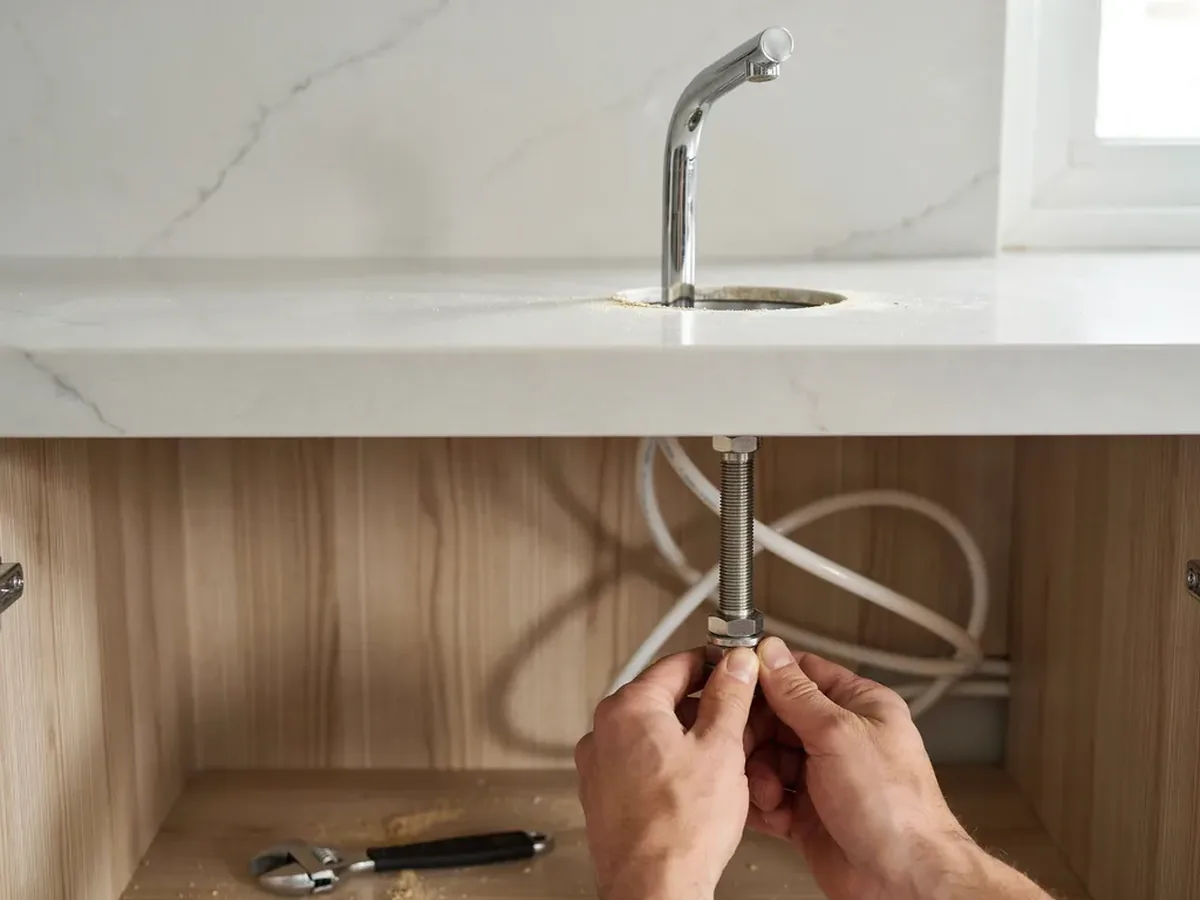
A dedicated faucet. RO water comes out of its own small tap, not the main kitchen faucet. If your sink has a spare hole — from a soap dispenser or a sprayer — that is ideal. Otherwise a hole has to be drilled, which on granite or quartz is a specialist job we can arrange.
A drain connection. The reject water goes to the sink drain via a saddle fitted above the trap. Positioned correctly it is silent; positioned badly it gurgles.
Space in the cabinet. The filter bank and the storage tank together take a meaningful chunk of under-sink space. Worth planning around, especially in a cabinet already holding a disposal and a dishwasher connection.
Optional fridge feed. Running RO water to the fridge gives you purified ice and cold water. It usually needs a small booster pump because the tank pressure alone is often not enough for the run. See ice maker lines.
Costs
Reverse osmosis costs
| Item | Typical range | Notes |
|---|---|---|
| Standard under-sink RO, fitted | $550 – $1,100 | Four or five stage, with dedicated faucet. |
| High-capacity / tankless RO | $900 – $1,800 | Faster output, less cabinet space. |
| Add remineralisation stage | $120 – $300 | Adds back a little mineral for taste. |
| Run RO to the fridge | $220 – $600 | Often needs a booster pump. |
| Drill a granite or quartz counter | $150 – $400 | Specialist, arranged where needed. |
| Annual filter change | $140 – $280 | Sediment and carbon stages. |
| Membrane replacement | $180 – $400 | Every 2 to 5 years. |
Typical local ranges, not quotes.
Worth knowing
Practical points about RO
- It is slow, and that is normal. A standard system produces a few gallons an hour into the storage tank. Filling a large pot means the tank draws down and refills.
- Some water goes to drain. Older systems were quite wasteful; modern ones are much better. Ask about the recovery ratio if it matters to you.
- A softener upstream helps a lot. Hard water shortens membrane life. In this valley an RO system downstream of a softener will get considerably more life out of each membrane.
- Change pre-filters on schedule. The pre-filters exist to protect the membrane. Skipping them to save money means replacing a much more expensive membrane early.
- Consider remineralisation. RO water is very pure, which some people find flat. A small remineralising stage adds back a trace of mineral for taste.
- Check the tank pressure occasionally. A storage tank that has lost its air charge produces a trickle at the tap. It is a five-minute check during a service.
FAQ
Reverse Osmosis Systems: your questions answered
Do I need reverse osmosis if I already have a softener?
They do different jobs. A softener removes hardness so your plumbing and appliances stop scaling; it does not remove the dissolved solids that make water taste mineral. Many homes here have both, and a softener upstream actually extends the RO membrane's life.
Does RO waste a lot of water?
Older systems sent several gallons to drain for each gallon produced. Modern systems are much more efficient, and tankless RO units better still. It is a fair question to ask about a specific system, and we will give you the recovery ratio.
Is RO water too pure to drink?
No. The minerals in drinking water contribute only a small fraction of dietary intake, and RO water is safe and widely used. If you dislike the flatter taste, a remineralisation cartridge adds back a trace of mineral, and it is an inexpensive addition.
How much space does it take under the sink?
A conventional system needs room for the filter bank, roughly the size of three large bottles side by side, plus a storage tank about the size of a basketball. Tankless RO units are considerably more compact if space is tight.
How often do the filters need changing?
Sediment and carbon pre-filters annually, sometimes more often depending on feed water. The membrane every two to five years. Keeping the pre-filters current is what makes the membrane last.
Can I get RO water to my refrigerator?
Yes. It usually needs a small booster pump, because the storage tank pressure alone is often not enough to push water the length of the run and through the fridge's internal valves. The result is noticeably better ice.
Will RO remove hardness?
At that one tap, yes — the membrane rejects hardness minerals along with everything else. But it treats only the water going to the RO faucet, so it does nothing for scale in your shower, water heater or dishwasher. That still needs a softener.
Related plumbing services
Want better drinking water?
An under-sink RO system makes an immediate difference to how water, coffee and ice taste here. Fitted in a single visit.