
Dishwasher Plumbing in West Valley City, UT
Most dishwasher drainage complaints are a plumbing connection, not a broken appliance. The knockout plug alone accounts for a startling number of them.
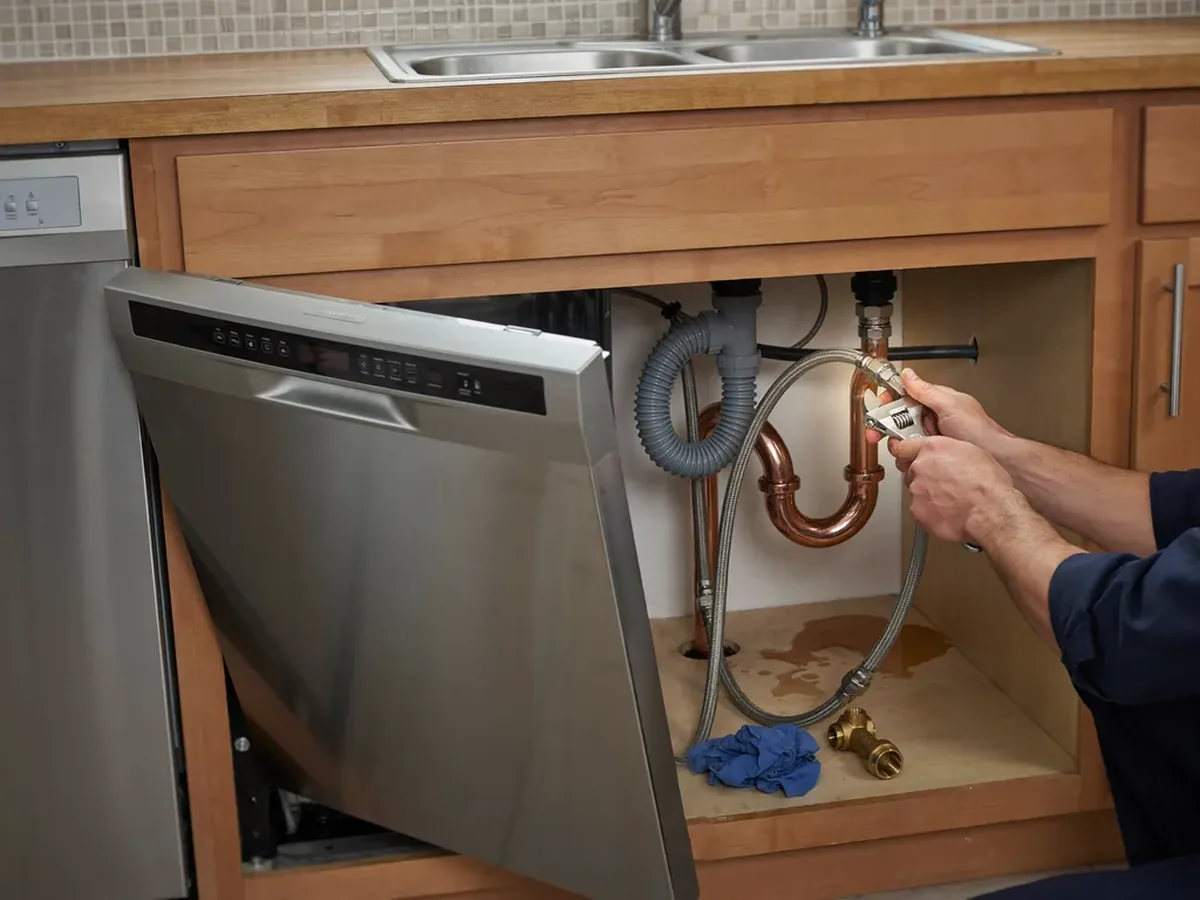
A dishwasher has two plumbing connections and both of them cause trouble. The supply is a hot water line from under the sink, usually on a dedicated stop, and it fails when the connector corrodes or the stop weeps. The drain runs from the appliance into either the garbage disposal or a wye on the sink drain, and it needs either an air gap on the counter or a high loop inside the cabinet to stop dirty water siphoning back into the machine.
By far the most common problem we are called for is a dishwasher that will not drain, and by far the most common cause is that the knockout plug inside the disposal's dishwasher inlet was never removed when the disposal was fitted. Every disposal ships with that plug in place. If nobody punches it out, the dishwasher drain hose is connected to a sealed port.
The second most common is a drain hose without a high loop, which lets waste water flow back in and leaves standing water in the tub. Both of those are quick fixes, and neither is a fault with the appliance.
Symptoms
Dishwasher problems that are actually plumbing
- Will not drain at all after a new install. Disposal knockout plug still in place. The single most common cause there is.
- Standing water left in the bottom. Missing high loop or air gap, letting water siphon back, or a partially blocked drain hose.
- Water backs up into the sink when it drains. The kitchen drain line is restricted. See drain cleaning.
- Water pooling under the cabinet. Supply connection, drain hose clamp, or the stop under the sink. Worth finding fast — it runs under the appliance where you cannot see.
- The air gap on the counter spits water. Blocked air gap or a restricted line downstream of it. Easy to clean, easy to diagnose.
- Dishes not clean, weak spray. Sometimes the appliance, but often low hot water supply or scale in the spray arms. Hard water is a real factor here.
- The stop under the sink will not close. Calcified. It needs replacing before you have a reason to need it.
Doing it right
Air gap or high loop
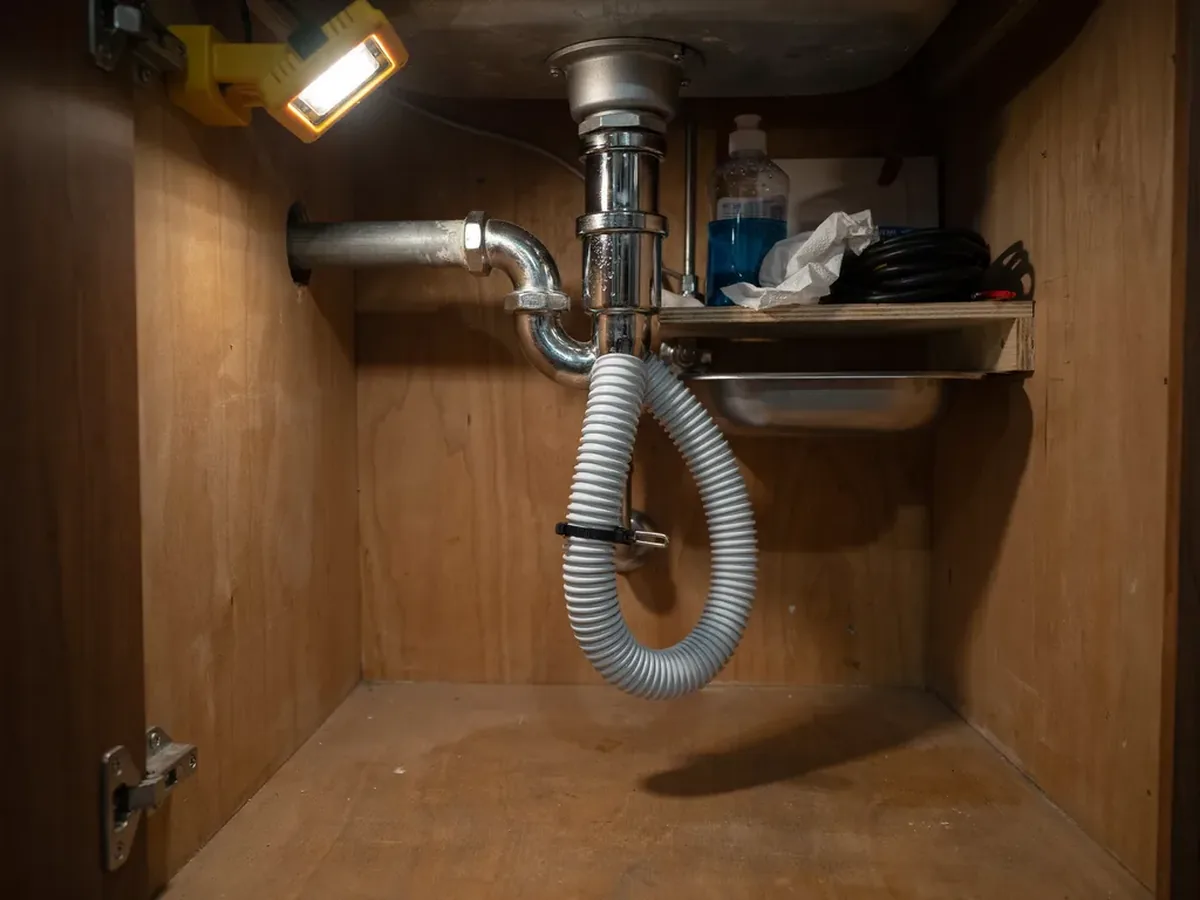
The reason this matters is straightforward. The dishwasher drain hose connects into the sink drain or the disposal. Without something to break the siphon, dirty sink water can be drawn back down the hose into the dishwasher tub.
An air gap is the small chrome cylinder on the counter behind the sink. The drain hose runs up into it and a second hose runs back down to the disposal. Because the water passes through open air, backflow is physically impossible. It is the more robust solution, and it also gives you an early warning — if it spits water, the line downstream is blocked.
A high loop secures the drain hose up under the countertop before it drops to the disposal. It relies on the height difference rather than an open break, but it works and it needs no counter penetration.
Either is acceptable in most situations, and we will fit whichever suits your setup. What is not acceptable is a hose running flat from the appliance to the disposal, which is what we find surprisingly often behind dishwashers that leave water in the bottom.
Installation
How we connect a dishwasher
Prepare the supply
Dedicated hot stop under the sink, new braided connector, and the line routed so it is not pinched behind the appliance.
Prepare the drain
Knockout removed from the disposal inlet, or a proper wye fitted on the sink drain if there is no disposal.
Fit air gap or high loop
Air gap through the counter if there is a spare hole, otherwise a properly secured high loop.
Test through a full cycle
Run it, watch the fill, watch the drain, and check every connection dry with the appliance pulled out.
Costs
Dishwasher plumbing costs
| Job | Typical range | Notes |
|---|---|---|
| Connect a new dishwasher | $220 – $480 | Supply, drain, air gap or high loop, tested. |
| First-time install (no existing connection) | $450 – $1,100 | New supply stop, drain connection, possibly cabinet modification. |
| Remove disposal knockout | $120 – $220 | Often bundled with another visit. |
| Fit an air gap | $180 – $380 | Including drilling the counter where a hole is available. |
| Replace supply stop and connector | $180 – $380 | Recommended if the stop no longer closes. |
| Diagnose a leak under the appliance | $140 – $300 | Credited against the repair. |
| Clear a blocked kitchen drain | $180 – $380 | Where the dishwasher backs up into the sink. |
Appliance repairs themselves are handled by an appliance technician. Typical local ranges, not quotes.
Advice
Keeping a dishwasher connection healthy
- Check under the sink twice a year. The dishwasher supply stop and connector are right there, and a failure at full pressure floods a kitchen.
- Clean the air gap if it spits. The cap and cover lift off. It usually just needs the debris clearing.
- Do not run the disposal mid-cycle. If the dishwasher drains into the disposal, make sure the disposal is clear before starting a wash.
- Use rinse aid in hard water. It genuinely helps with the film that mineral leaves on glassware here.
- Descale periodically. Spray arm jets clog with scale in this valley, which produces poor cleaning that looks like an appliance fault.
- Replace the supply connector when you replace the appliance. It is a few dollars and it is the part most likely to fail.
FAQ
Dishwasher Plumbing: your questions answered
My new dishwasher will not drain. What is wrong?
Nine times out of ten, the knockout plug inside the garbage disposal's dishwasher inlet was never removed. Every disposal ships with that plug sealed, and it has to be punched out before the drain hose is connected. It is a five-minute fix and has nothing to do with the appliance.
Do I need an air gap or is a high loop enough?
Both prevent backflow, and either is acceptable in most situations. An air gap is more robust and gives you a visible warning when the line downstream blocks. A high loop needs no counter hole. We will fit whichever suits your setup.
Why is there always water in the bottom of my dishwasher?
Usually a drain hose that has no high loop, so waste water siphons back in. Sometimes a partially blocked hose or a restricted kitchen drain line. All three are plumbing rather than appliance problems.
Can you install the dishwasher itself, or just the plumbing?
We do the plumbing connections and can set the appliance in place and level it. Internal appliance faults — pumps, control boards, door seals — are an appliance technician's work, and we will tell you when that is what you need.
Water is leaking under my dishwasher. Where from?
Common sources are the supply connector, the drain hose clamp, and the appliance's own door seal or pump. We can isolate whether it is the plumbing connections or the appliance, which saves you calling out the wrong trade.
Does hard water affect my dishwasher?
Considerably. Scale builds in the spray arm jets and on the heating element, which reduces cleaning performance and shortens the appliance's life. Rinse aid helps with the film, and a softener addresses the cause.
Related plumbing services
Dishwasher not draining?
Before you call an appliance repair company, let us check the connections. It is often a five-minute plumbing fix.