
Sewer Line Repair in West Valley City, UT
Most failing sewer lines have one bad section, not sixty feet of bad pipe. Finding out which you have is the difference between a few thousand dollars and fifteen.
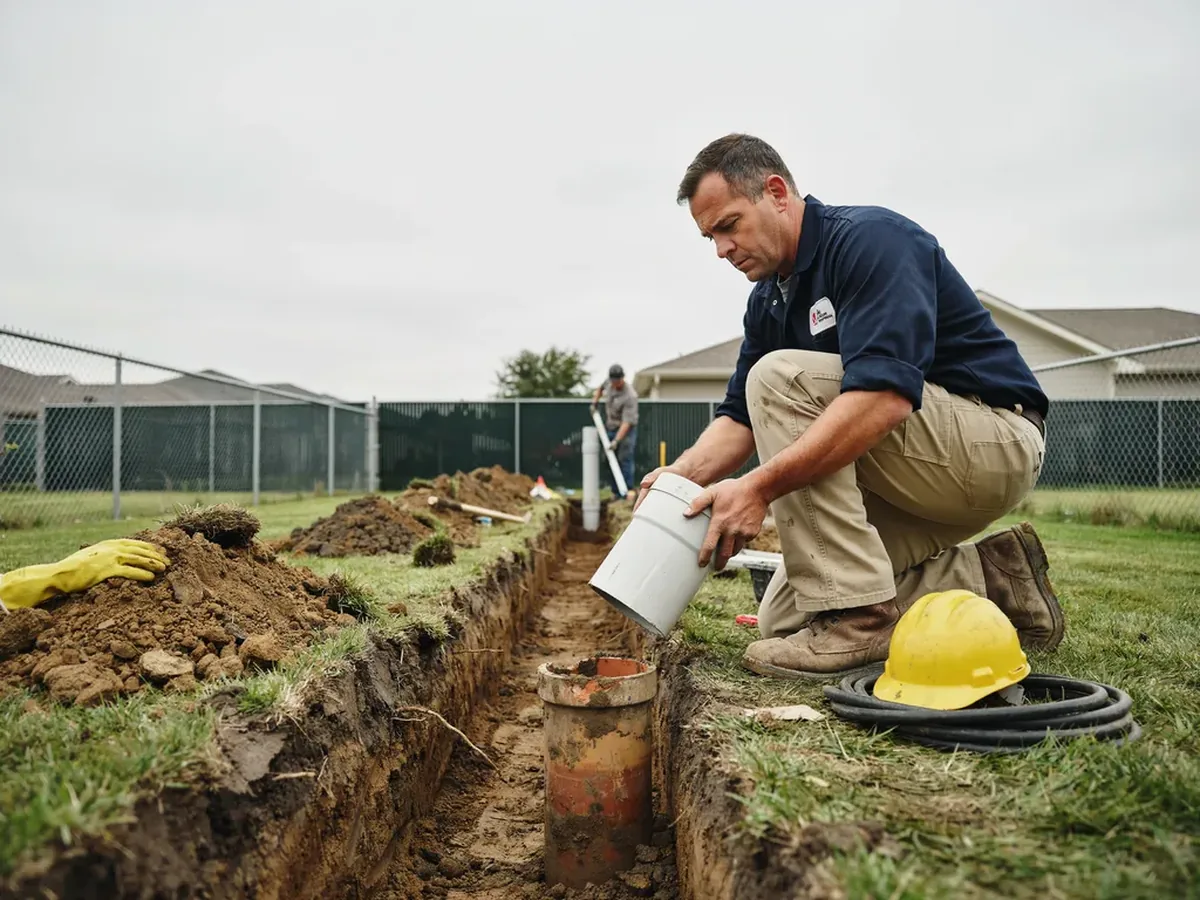
Sewer lines rarely fail uniformly. What usually happens is that one joint separates, one section cracks, or one length settles into a low spot, and everything else in the run is doing fine. The trouble is that from above ground it is impossible to tell that from a line that has failed along its whole length.
So the first thing we do is put a camera down it and locate any defects precisely, marking their position and depth on the ground above. That does two things. It tells us whether you are looking at a targeted repair or a full replacement, and it means that when we do excavate, we excavate in exactly the right place rather than following the pipe until we find something.
From there the options open up. A single defect at a reachable depth is a spot repair. Multiple joint problems along a structurally intact pipe is a lining job, which needs no trench at all. A collapsed section is a replacement, but even then, pipe bursting can often do it without opening the whole route.
Repair methods
Four ways to repair a sewer line
Spot repair (open cut)
Excavate at the located defect, cut out the failed section, install new PVC with proper couplings and bedding, backfill and compact. Best for a single defect at moderate depth.
Cured-in-place lining (CIPP)
A resin-saturated liner is inverted into the existing pipe and cured in place, forming a new jointless pipe inside the old one. No trench. See trenchless.
Sectional point liner
The same idea applied to a short length — a single bad joint sleeved without lining the entire run. Cost-effective for one or two defects.
Clean and monitor
Where the camera shows roots but a structurally sound pipe, jetting on a maintenance schedule is a legitimate strategy, and much cheaper. We will say so when it applies.
Diagnosis
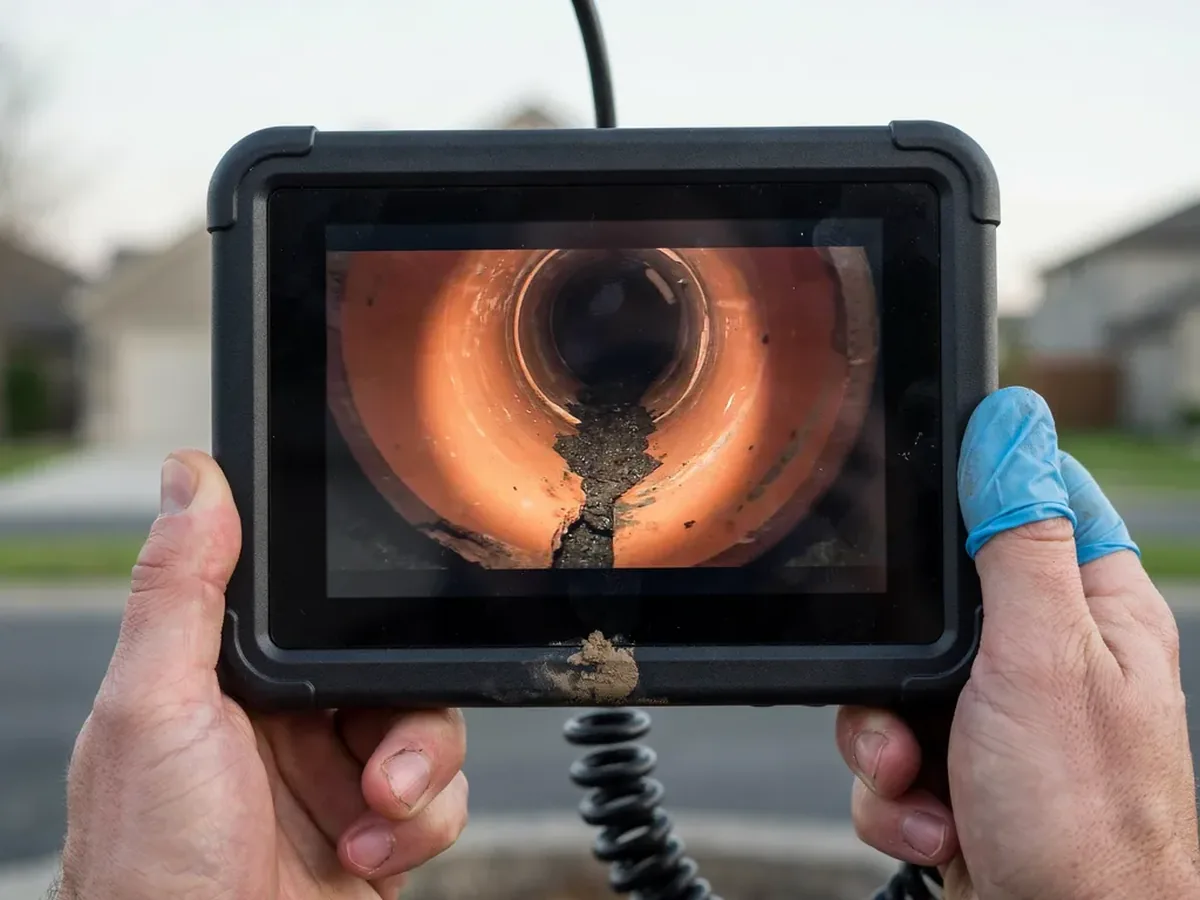
What the camera actually tells us
Root intrusion. Where the roots are entering, how many joints are affected, and whether the pipe around them is still sound. Fine roots at one joint is very different from a mass at four.
Cracks and breaks. Longitudinal cracks, circumferential breaks, missing pipe wall. We can see how far the damage extends either side.
Bellies. A low spot where standing water sits. The camera shows how deep and how long. Bellies cannot be lined out — lining follows the existing grade — so a significant belly means excavation.
Offsets. Where one section has shifted against the next. Small offsets can be lined; large ones stop the liner or the camera.
Material and diameter. Clay, cast iron, Orangeburg or PVC, and the actual inside diameter after decades of scale.
You get the footage. It is your pipe and your decision, and you should be able to see what you are deciding about.
The job
How a sewer repair runs
Camera, locate, mark
Defect position and depth marked on the surface. Photos and footage provided.
Permit and locates
City permit pulled, utility locates called in. Nothing gets dug until the other utilities are marked.
Repair
Excavate and replace the section, or line it from access pits. Site protected and made safe throughout.
Test, inspect, restore
Camera the finished repair, city inspection, then backfill, compact and restore the surface.
Costs
Sewer line repair costs in West Valley City
| Method | Typical range | Notes |
|---|---|---|
| Camera inspection and locate | $250 – $450 | First step. Often credited against the repair. |
| Spot repair, shallow (under 5 ft) | $2,500 – $5,000 | Single excavation, backfill, basic restoration. |
| Spot repair, deep or under hardscape | $4,500 – $9,000 | Shoring, concrete cutting and restoration add up. |
| Sectional point liner | $1,800 – $4,500 | One or two joints, no excavation. |
| Full-length CIPP lining | $85 – $200 per foot | Typical laterals run 40 to 90 feet. |
| Cleanout installation | $650 – $1,800 | Worth adding if the property has none. |
Permit, locates and inspection included. Landscaping and hardscape restoration usually separate. Typical local ranges, not quotes.
How we work
What we will and will not do on a sewer job
- We will not quote a replacement off a blocked drain. Until the line has been cleared and camera'd, nobody knows what is wrong with it. Anyone quoting a replacement before that is guessing.
- We will show you the footage. Every time, on the screen, with an explanation of what each defect means for the repair decision.
- We will tell you when cleaning is enough. Plenty of lines with roots are structurally fine and can be managed with scheduled jetting for years.
- We locate before we dig. Defect position and depth, plus utility locates. No exploratory trenching.
- We pull the permit. Sewer repair is permitted, inspected work. Unpermitted sewer work is a serious problem at resale.
- We camera the finished repair. So you can see the result, not just take our word for it.
FAQ
Sewer Line Repair: your questions answered
How do I know if I need a repair or a full replacement?
The camera. If there is one defect in an otherwise sound pipe, repair it. If the line has multiple failures, significant bellies, or is Orangeburg or badly deteriorated cast iron along its length, replacement or full-length lining is the better value.
Can a sewer line be repaired without digging?
Frequently. Cured-in-place lining creates a new jointless pipe inside the existing one and needs only small access pits. A sectional point liner does the same over a short length. Both need the host pipe to be structurally present, which is why the camera comes first.
How long does a sewer repair take?
A spot repair is generally a single day for the plumbing, plus restoration. A sectional liner is a few hours. Full-length lining is typically one to two days. You will be without drainage for part of that time and we will tell you exactly when.
Will roots come back after a repair?
Not through a repaired or lined section, because there is no longer a joint for them to enter. They can still enter elsewhere in the line, which is why we camera the whole lateral rather than just the failure, and tell you about any other joints that look vulnerable.
Is the repair guaranteed?
Yes, in writing, on both parts and workmanship. Lining products carry their own long-term warranty as well, and we will give you those details before you commit.
Can you repair a sewer line under a driveway or slab?
Yes, and it is exactly the situation where trenchless methods earn their extra per-foot cost. Lining or bursting under a driveway avoids cutting and replacing the concrete, which is often the single biggest line item on an open-cut job.
Related plumbing services
Sewer line problems?
Start with a camera inspection. It costs a few hundred dollars and it decides between a repair and a replacement.