
Trenchless Sewer Repair in West Valley City, UT
Trenchless methods rebuild your sewer lateral from two small pits. No trench across the lawn, no driveway cut, and the finished pipe is better than what came out.
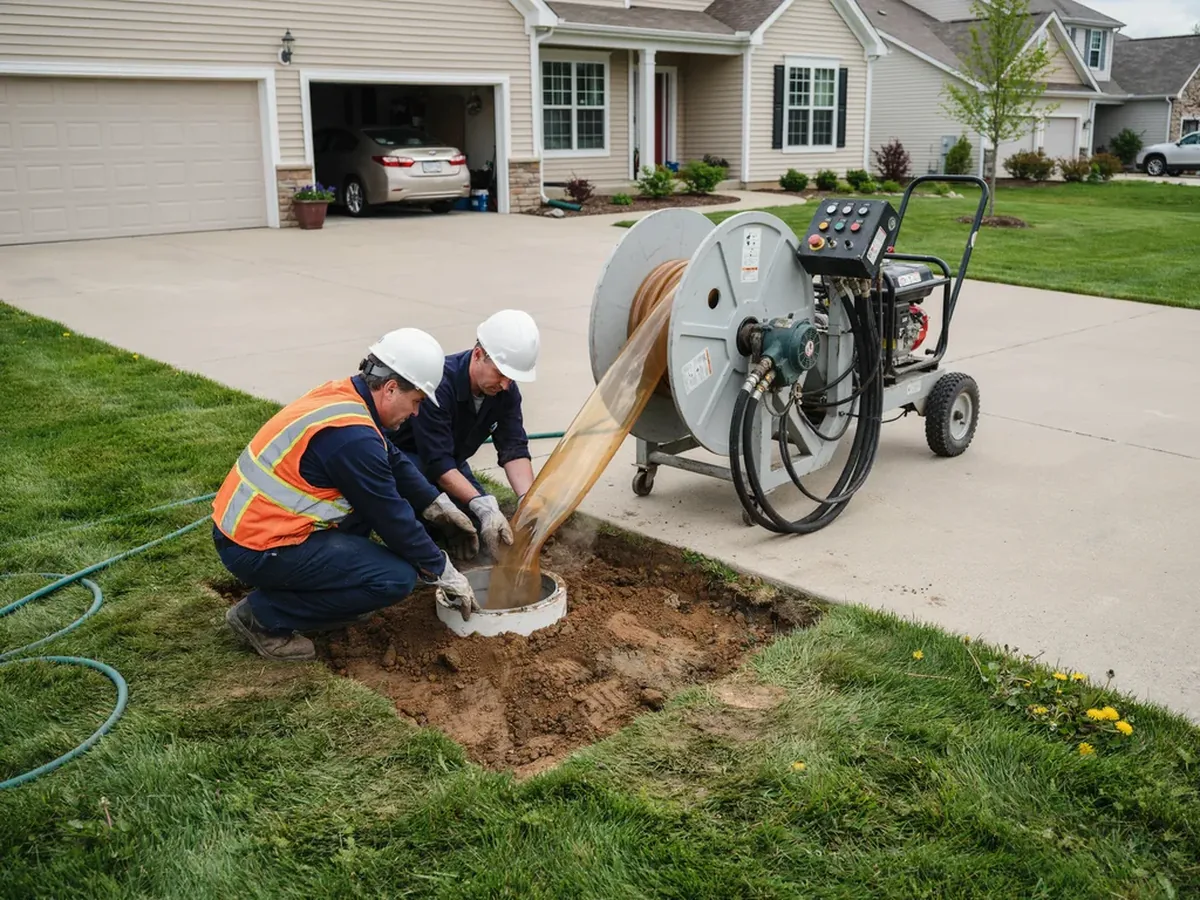
Trenchless is not a gimmick, and it is not always the cheaper option on paper. What it does is move the cost from surface restoration into the pipe work itself. If your lateral runs under an open lawn, an open trench may well be the better value. If it runs under a concrete driveway, a patio, mature trees or a finished basement floor, trenchless is usually cheaper overall and far less disruptive.
There are two main methods. Cured-in-place pipe lining pulls a resin-saturated felt liner into the existing pipe and cures it hard, forming a continuous jointless pipe inside the old one. Pipe bursting pulls a conical head through the old pipe, fracturing it outward into the surrounding soil while drawing a new HDPE pipe in behind it.
Lining needs the host pipe to still be structurally present, so it suits clay or cast iron with cracks, separated joints and root intrusion. Bursting works where the old pipe has collapsed or deformed, and it can also increase the diameter. The camera inspection tells us which one your line is a candidate for, and whether either is appropriate at all.
Two methods
Lining versus bursting
CIPP pipe lining
A felt liner saturated with epoxy resin is inverted or pulled into the pipe, inflated against the walls and cured. The result is a jointless pipe within a pipe, typically rated for 50 years. Slightly reduces the internal diameter, which is usually more than offset by the smoother surface.
Pipe bursting
A bursting head splits the old pipe outward through the soil while pulling fused HDPE in behind it. Handles collapsed and deformed pipe that cannot be lined, and can upsize the line, for example from 3 inch to 4 inch.
Sectional point lining
The same lining technology applied to a short length. Where the camera shows one or two bad joints in an otherwise sound line, this repairs just those, at a fraction of the cost of a full liner.
Suitability
When trenchless works, and when it does not
Good candidates for lining: clay or cast iron with cracks, separated joints or root intrusion, where the pipe is still round and continuous; runs under driveways, patios, mature trees or finished floors; and lines at depths that make excavation expensive.
Good candidates for bursting: collapsed sections, Orangeburg, badly deformed pipe, and any situation where you want to increase the diameter.
Not suitable: lines with a significant belly, because lining follows the existing grade and cannot correct it; severe offsets where the liner cannot pass; and runs with multiple sharp bends. Bursting also needs enough clearance from other buried utilities, which the locates will establish.
We will tell you plainly if your line is not a trenchless candidate. Selling a liner into a bellied pipe would produce a smooth new pipe that still holds standing water, and you would be back within a couple of years.
The process
How a trenchless job runs
Camera and assess
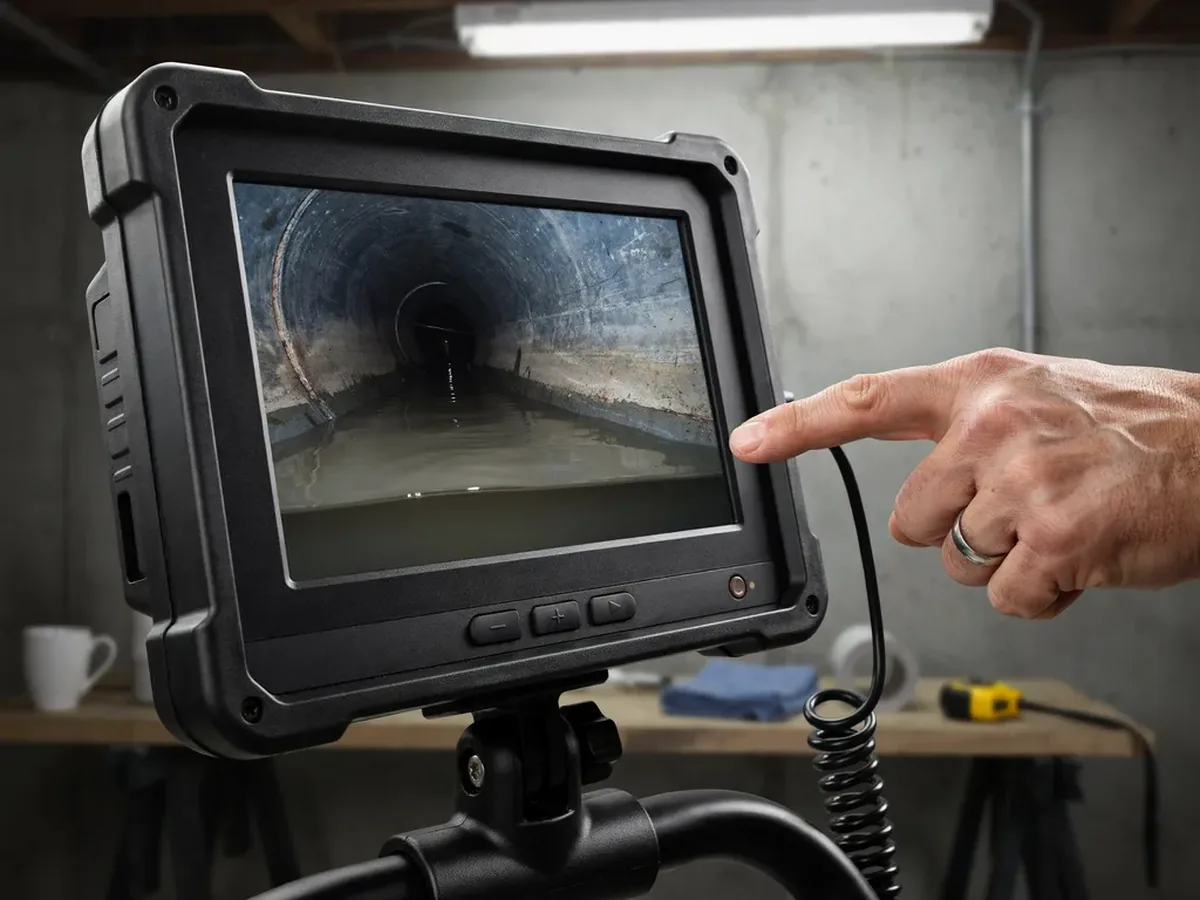
Full survey, locating and measurement. Suitability confirmed before anything is quoted.
Clean and prepare
The host pipe is jetted and any roots or scale removed, because a liner only bonds to a clean pipe wall.
Install
Liner inverted and cured, or the bursting head pulled through with new HDPE behind it. Access pits only.
Reinstate and inspect
Any branch connections reopened robotically, final camera run, city inspection, pits backfilled.
Costs
Trenchless costs, and how they compare
| Method | Typical range | Best for |
|---|---|---|
| Sectional point liner | $1,800 – $4,500 | One or two defective joints |
| Full-length CIPP lining | $85 – $200 per foot | Multiple joint defects, roots, cracked but intact pipe |
| Pipe bursting | $100 – $250 per foot | Collapsed, deformed or undersized pipe |
| Access pits | $800 – $2,500 | Entry and exit excavation |
| Open trench, for comparison | $6,000 – $18,000 | Cheaper per foot, expensive to restore |
| Driveway avoided | saves $2,000 – $6,000 | The usual reason trenchless wins on total cost |
Typical West Valley City ranges, not quotes. We price trenchless and open trench side by side including restoration, so you can compare the real totals.
Advantages
Why homeowners choose trenchless
- Your yard survives. Two access pits rather than a trench the length of the property.
- Driveways and patios stay intact. Which is frequently the largest single cost on an open-cut job.
- Mature trees are not lost. Excavating through a root zone often kills the tree a year or two later.
- It is faster. Many lining jobs are completed in a day; open-cut replacement is typically two to four.
- The finished pipe is jointless. No joints means nothing for roots to enter through, which is the root cause of most lateral failures here.
- Long warranties. Quality liner systems carry 50-year material warranties, and we back the installation.
FAQ
Trenchless Sewer Repair: your questions answered
Is trenchless cheaper than digging?
Per foot, no. In total cost, often yes, because it eliminates the surface restoration. If your lateral runs under open lawn, open trench usually wins. If it runs under a driveway, patio or mature landscaping, trenchless usually does. We quote both.
How long does a liner last?
Quality CIPP systems are rated for around 50 years and carry material warranties to match. The lined pipe is jointless and smooth-bored, so it is genuinely a better pipe than the clay it replaced.
Does lining reduce my pipe diameter?
Slightly, typically a few millimetres of wall thickness. In practice flow usually improves rather than declines, because the liner is far smoother than decades-old scaled clay or cast iron and there are no joint lips to catch waste.
Can every sewer line be lined?
No. Lines with a significant belly cannot, because the liner takes the shape of the existing pipe including the low spot. Severe offsets, collapsed sections and very tight bends also rule it out. That is what the camera survey establishes before anything is quoted.
What happens to my branch connections?
Where a lateral has branch connections, they are reopened after curing using a robotic cutter, so nothing is left blocked. This is checked on the final camera run.
How long will my drains be out of service?
Usually most of one working day for a full-length liner, less for a sectional repair. We will give you a specific window so you can plan.
Do you need a permit for trenchless work?
Yes, and the work is inspected the same as open-cut replacement. We handle the permit, the utility locates and the inspection.
Related plumbing services
Want your sewer fixed without losing the driveway?
Book a camera survey and we will tell you honestly whether your line is a trenchless candidate, and price both options.