
Ice Maker Water Line Installation in West Valley City, UT
A fridge water line is a small job with an outsized risk: it runs behind an appliance nobody moves, and when it fails it does so quietly for a long time.
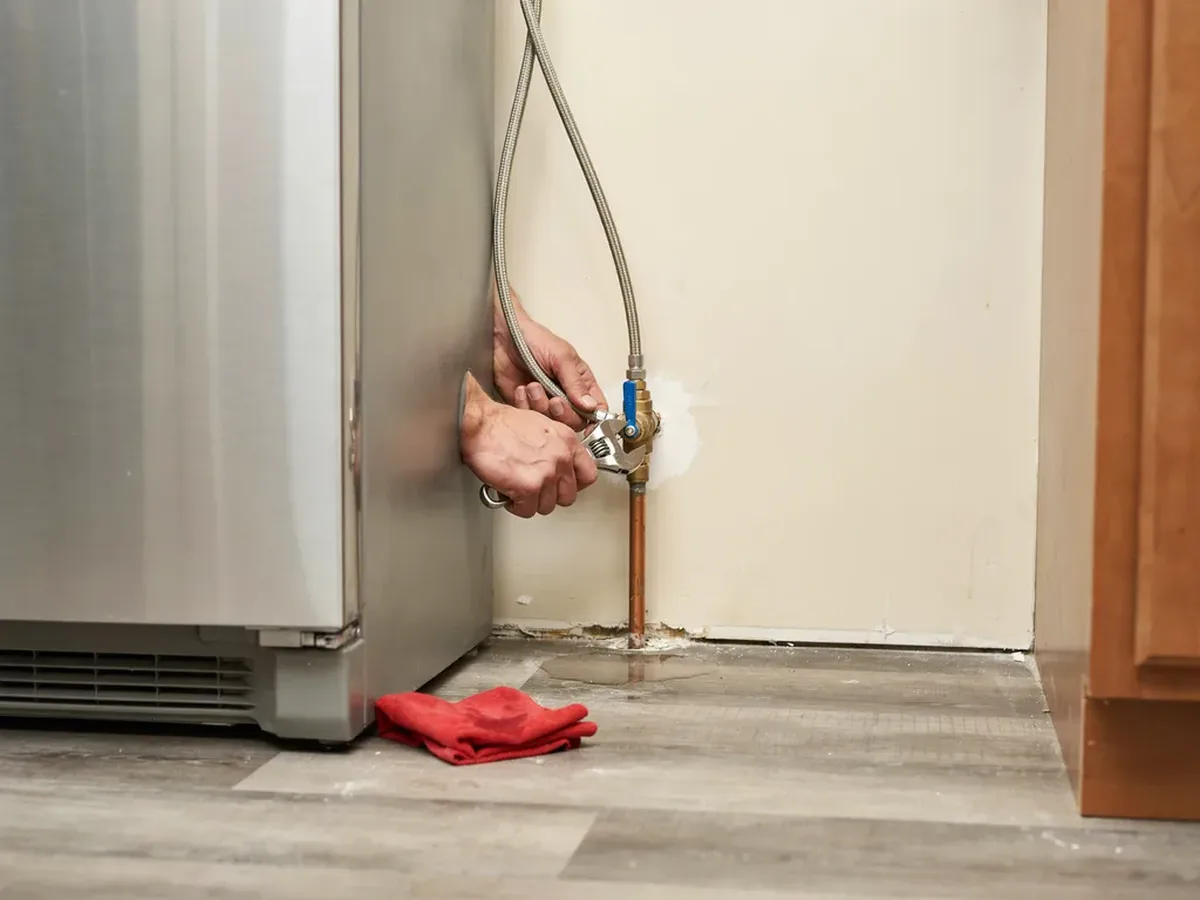
Refrigerator water lines cause more water damage per dollar of installation than almost anything else in a house. The reason is simple: the line runs to an appliance that sits against a wall and never moves, so a slow leak has months to work into the flooring and the subfloor before anybody notices.
The single biggest culprit is the saddle valve. It is a small clamp-on fitting with a needle that pierces the copper pipe, sold as a quick way to tap a water line without cutting it. They are notorious for two things: the tiny orifice clogs with mineral so the ice maker slows and stops, and the rubber seal against the pipe fails, usually years later and usually inside a cabinet.
We do not fit saddle valves, and where we find one we recommend replacing it with a proper tee and a quarter-turn shutoff. It is a modest job and it removes a real risk.
What we install
Doing a fridge line properly
A proper tee and shutoff
Cut into the cold supply with a soldered or press tee and a quarter-turn ball valve. Positive shutoff, full bore, and nothing relying on a rubber seal clamped against a pierced pipe.
Correct tubing
Copper or braided stainless from the shutoff to the appliance. Not the thin plastic tubing that gets kinked when the fridge is pushed back.
Accessible isolation
The shutoff somewhere you can actually reach without pulling the fridge out, so that isolating it in a hurry is possible.
Filtration if you want it
An inline filter on the fridge feed, or a connection from an under-sink RO system for genuinely better ice and water.
Problems
What goes wrong with fridge water lines
- Saddle valve clogged with mineral. The ice maker slows, then stops. Extremely common in hard water, and the usual reason a fridge stops making ice.
- Saddle valve seal failure. A slow leak behind the fridge or inside a cabinet, running for months before it surfaces.
- Kinked tubing. The fridge gets pushed back against the line and crushes it. Flow drops or stops entirely.
- Frozen fill tube. The small tube feeding the ice mould freezes solid, usually because flow is already restricted. Fixing the flow fixes the freeze.
- Connection failure at the appliance. Compression fittings work loose with vibration. Worth checking annually.
- No accessible shutoff. The valve is behind the fridge, so isolating it in an emergency means moving a full refrigerator first.
Installation
How we run a new line
Plan the route
From the nearest suitable cold line, usually under the sink or in a basement below, to the fridge location.
Tee and valve
Water isolated, a proper tee cut into the cold line and a quarter-turn shutoff fitted somewhere reachable.
Run the tubing
Copper or braided stainless, secured and protected where it passes through cabinets or framing, with a service loop at the fridge.
Connect and test
Appliance connected, line purged, first batch of ice discarded, and every joint checked dry.
Costs
Ice maker line costs
| Job | Typical range | Notes |
|---|---|---|
| New line from an adjacent cabinet | $240 – $450 | Tee, shutoff and tubing. |
| New line from a basement or longer run | $350 – $700 | Longer routing and possibly floor penetrations. |
| Replace a saddle valve properly | $220 – $450 | Strongly recommended if you have one. |
| Repair a leaking connection | $160 – $340 | At the valve or the appliance. |
| Add an inline filter | $140 – $320 | Plus the filter cartridge. |
| Connect fridge to an RO system | $220 – $500 | Where an under-sink RO unit is already fitted. |
Typical local ranges, not quotes.
Advice
Keeping a fridge line out of trouble
- Get rid of any saddle valve. If your fridge line taps a pipe with a small clamp-on valve, replace it. It is the highest-risk fitting in most kitchens.
- Know where the shutoff is. And make sure it is somewhere you can reach without moving the fridge.
- Leave a service loop. Enough slack that the fridge can be pulled out for cleaning without straining the line.
- Check behind the fridge annually. Pull it out, look at the connection and the floor. Ten minutes, once a year.
- Change the fridge filter on schedule. A clogged filter restricts flow, which is often mistaken for a supply problem.
- Shut it off if you go away for a long period. Same logic as the washing machine. A line that fails while nobody is home is the expensive version.
FAQ
Ice Maker Water Lines: your questions answered
What is a saddle valve and why is it a problem?
It is a small clamp that pierces a copper pipe with a needle to tap a water supply without cutting it. The tiny orifice clogs with mineral, which in hard water means the ice maker slowly stops working, and the rubber seal against the pipe eventually fails, which means a leak inside a cabinet. Replacing one with a proper tee and shutoff is a modest job well worth doing.
My ice maker stopped working. Is it the fridge or the water line?
Check the water line first, because it is the cheaper answer. A clogged saddle valve, a kinked tube or a frozen fill tube all produce exactly the same symptom as an appliance fault, and all three are plumbing fixes.
Can I run a water line to a fridge on an interior wall?
Usually yes. The route depends on what is below or adjacent — a basement, a crawlspace, or an adjoining cabinet. We will look at the layout and tell you the least invasive way to get there.
Should I filter the water going to the fridge?
Most modern fridges have their own filter, which handles taste adequately. If you want genuinely better water and ice, connecting to an under-sink reverse osmosis system produces a noticeable difference, particularly with water as mineral-rich as ours.
How long does the installation take?
A straightforward run from an adjacent cabinet is usually one to two hours. A longer run from a basement, or one that needs to cross a room, takes longer.
Why does my ice taste bad?
Usually an old fridge filter, or ice that has been sitting in the bin absorbing freezer odours. If the filter is current and the ice is fresh, it is the water itself, and an RO system is the answer.
Related plumbing services
Ice maker stopped, or worried about a saddle valve?
We will fit a proper tee and shutoff, and put the line somewhere you can actually isolate it.