
Slab Leak Repair in West Valley City, UT
A leak under the slab is not a reason to break up your floor on a hunch. We find it exactly, then give you a straight comparison between spot repair and rerouting the line entirely.
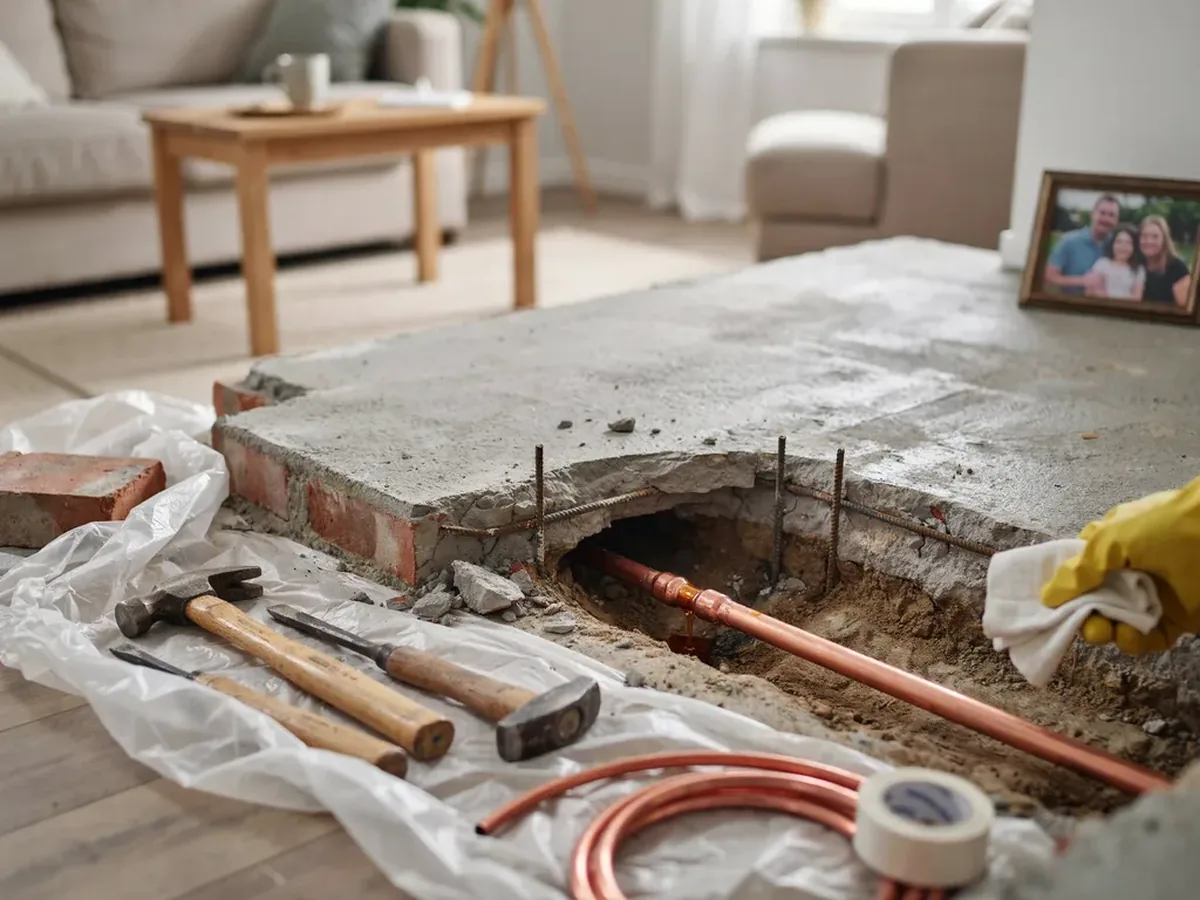
Slab-on-grade construction is everywhere in West Valley City, and it means the water supply lines for a good part of the house run in or beneath the concrete floor. When one of those lines fails, the water has nowhere obvious to go. It saturates the fill under the slab, works along the pipe trench, and eventually shows up as a warm patch, a damp edge of carpet, or simply a water bill that has doubled.
The classic tell is heat. If a hot water line has failed, one area of floor will be noticeably warmer than the rest, sometimes warm enough to feel through carpet. Add the sound of water running when every fixture is off, and you have a slab leak until proven otherwise.
The important decision on a slab leak is not how to fix it — it is whether to fix it in place at all. Breaking concrete, repairing and patching is often more expensive and more disruptive than abandoning that section of pipe and running a new line overhead or through walls. We will price both and explain which one makes sense for your house.
Signs
How to recognise a slab leak
- A warm spot on the floor. The single most reliable indicator, and it means the hot line rather than the cold one.
- Running water sound with everything off. Often heard best at night, and often described as coming from “under the house”.
- Water bill up with no change in habits. A slab leak runs continuously, so the increase is steady rather than spiky.
- Damp carpet or lifting flooring in one area. Usually at the edge of the affected zone rather than directly over the failure.
- Low water pressure through the house. Water escaping under the slab is water not reaching your fixtures.
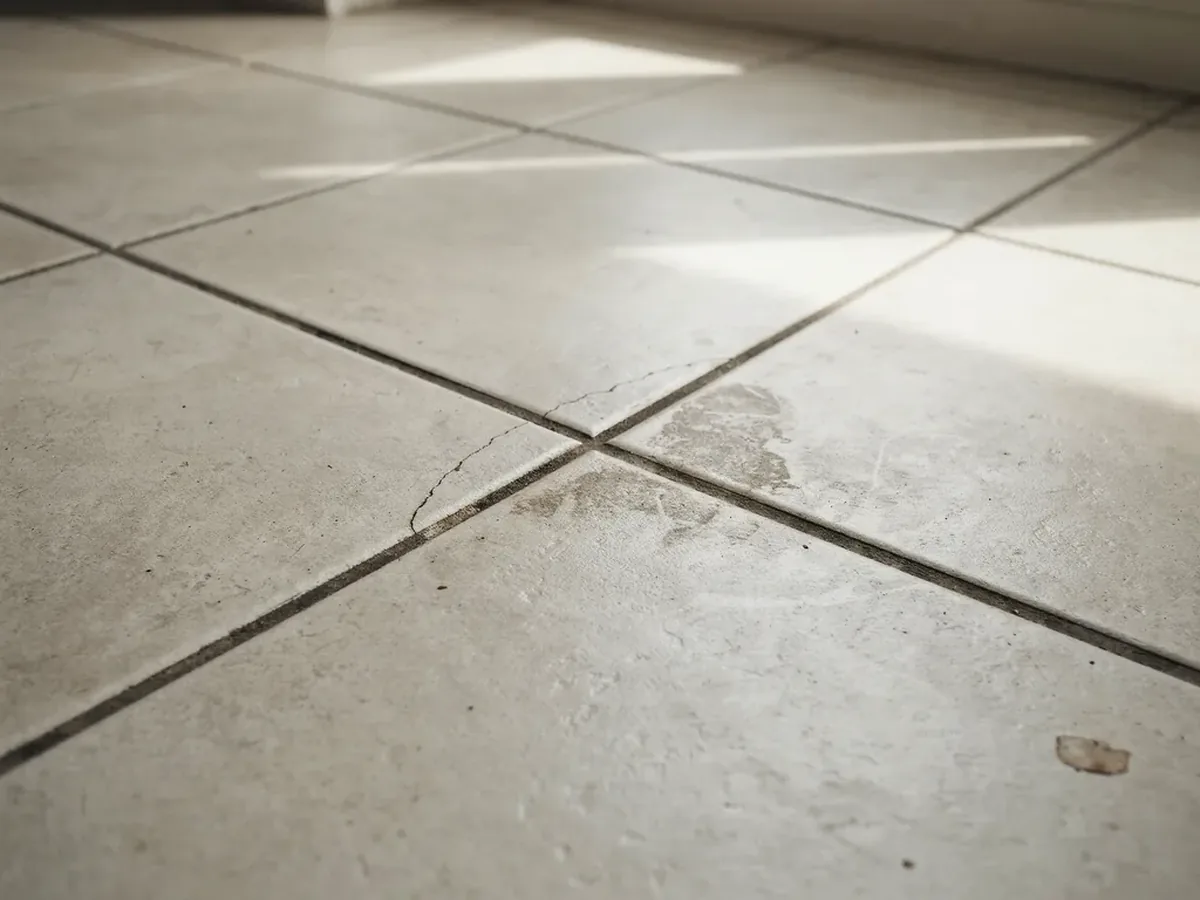
- New cracks in floor tile or the slab itself. Saturated fill loses bearing capacity, and the slab moves.
- A musty smell with no visible source. Moisture wicking up through the concrete into flooring and baseboards.
Why they fail
What causes slab leaks in this valley
Abrasion. Copper lines running through or against concrete rub as the pipe expands and contracts with hot water. Over decades that wears a hole through the wall of the pipe. This is the most common cause of a hot-side slab leak.
Corrosion. Soil chemistry and stray electrical current attack copper from the outside, producing pinholes. Hard water accelerates scaling and localised corrosion on the inside.
Soil movement. The Salt Lake Valley's clay soils swell and shrink with moisture content. That movement puts bending stress on lines fixed in concrete, particularly where a pipe passes from soil into the slab.
Poor original install. Lines laid without sleeving where they pass through concrete, or fittings buried in the pour, both of which shorten the pipe's life considerably.
High pressure. Sustained pressure above about 80 psi stresses every joint. A failed or missing pressure reducing valve shortens the life of everything downstream of it.
Your options
Three ways to deal with a slab leak
Spot repair through the slab
Break a small opening in the concrete over the leak, cut out the failed section, repair, then patch the slab and flooring. Best when the pipe is otherwise sound and the location is accessible. Cheapest up front, most disruptive to flooring.
Reroute the affected line
Abandon the buried section entirely and run a new line overhead through the attic, or through walls, to the same fixtures. No concrete broken. Usually the better answer when the leak is under finished flooring or in the middle of the house.
Repipe the house
When a slab leak is the second or third failure in the same original copper, spot-fixing is buying time at a poor rate. A full repipe above the slab ends the problem permanently.
Costs
Slab leak costs in West Valley City
| Approach | Typical range | What it involves |
|---|---|---|
| Detection and location only | $250 – $500 | Acoustic and thermal pinpointing, marked and documented. |
| Spot repair through slab | $1,400 – $3,500 | Break, repair, backfill, concrete patch. Flooring restoration separate. |
| Reroute one line | $2,200 – $6,000 | New run overhead or in walls, old line abandoned in place. |
| Whole home repipe above slab | $6,500 – $18,000 | Every supply line replaced. See repiping. |
| Pressure reducing valve fitted | $380 – $850 | Protects everything downstream if pressure is high. |
Concrete and flooring restoration is usually handled by a specialist and priced separately. Typical local ranges, not quotes.
What we do
How we handle a slab leak properly
- Locate before we cut. Always. No exploratory concrete breaking. If we cannot pinpoint it, we say so rather than guessing with a hammer drill.
- Price both options honestly. Spot repair and reroute, side by side, with the pros and cons of each for your specific layout.
- Check the rest of the system. A pressure test tells you whether this is a one-off or the first of several. That changes the right answer.
- Contain the mess. Concrete cutting produces dust. Plastic containment, negative air where needed, and floor protection through the route.
- Document for insurance. Photographs of the failed section, written cause, and the location record. Adjusters ask for all three.
- Tell you about drying. Saturated fill under a slab takes a long time to dry. We will be honest about when you need a restoration company involved.
FAQ
Slab Leak Repair: your questions answered
Is a slab leak an emergency?
Not usually in the sense of needing someone at midnight, because the water is going into the ground rather than across your floor. It is urgent in the sense that it runs continuously, it is metered, and saturated soil under a slab can eventually cause movement. Days, not weeks.
Should I repair it or reroute the line?
It depends on where the leak is and what the pipe's condition is. A leak near an exterior wall on a slab with no finished flooring above it is a straightforward spot repair. A leak in the middle of a tiled living area, or in a system that has already failed once before, is almost always better rerouted.
Will my insurance cover a slab leak?
Many policies cover the cost of accessing the leak — breaking and patching the concrete — and the resulting damage, while excluding the pipe repair itself. Cover varies a lot by policy. Report it promptly and use our documentation.
How long does the repair take?
A spot repair is usually one day for the plumbing, with concrete curing and flooring restoration afterwards. A single-line reroute is typically one to two days. A full repipe is three to five days depending on the size of the house.
Can a slab leak damage my foundation?
It can, over time. Continuously saturated clay soil under a slab swells, and when it eventually dries it shrinks, and that movement is what cracks slabs. It is a slow process, but it is a real reason not to leave one running for months.
Why does my floor feel warm in one spot?
Because a hot water line under the concrete is leaking and heating the slab above it. It is the most distinctive slab leak symptom there is, and it means the failure is on the hot side, which narrows our search immediately.
Related plumbing services
Warm spot on the floor?
That is a slab leak until proven otherwise. We will locate it precisely and price both the repair and the reroute so you can choose.