
Shower Plumbing & Installation in West Valley City, UT
Temperature swings, weak flow and mystery leaks all trace back to a small number of components. Most are fixable without opening the wall.
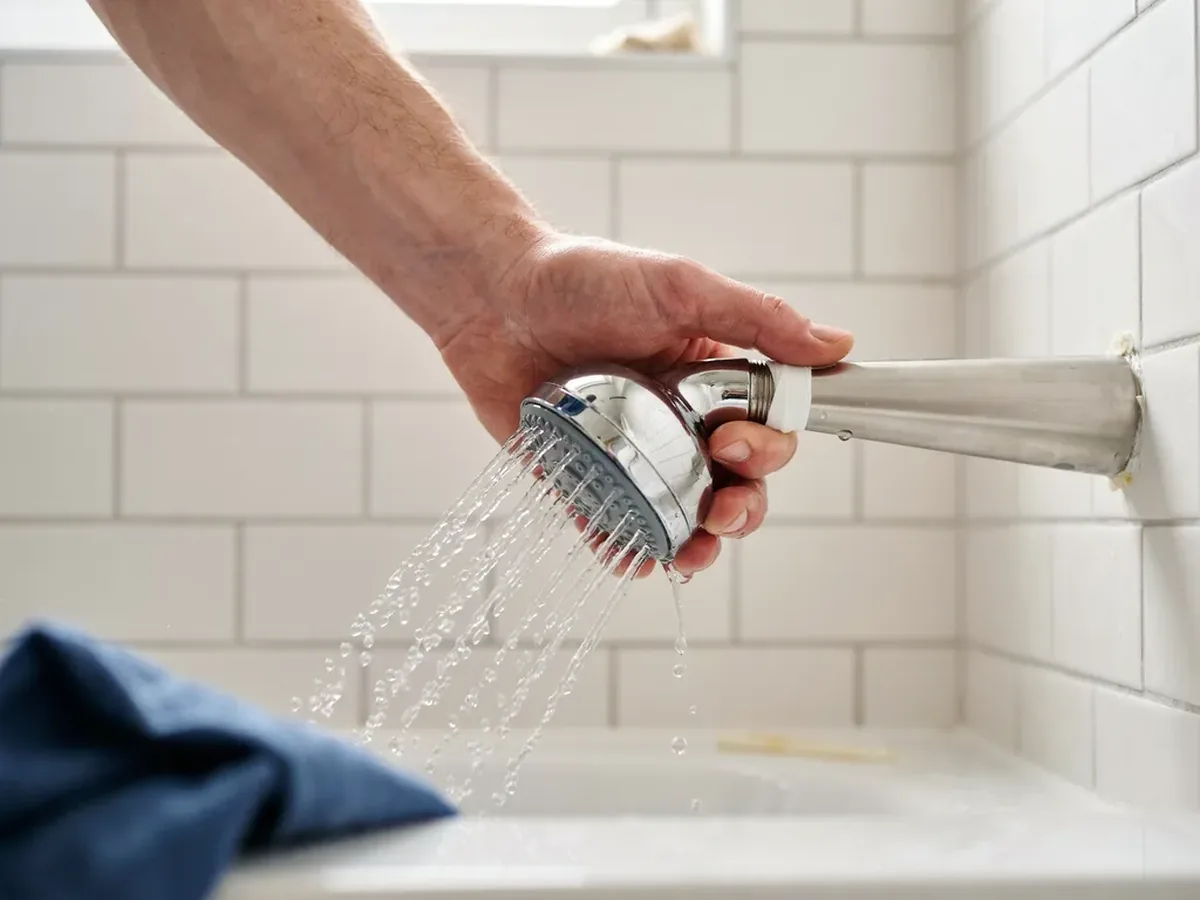
Showers combine three things that each cause trouble in their own way: a mixing valve that has to blend hot and cold safely, a waterproof floor that has to stay waterproof for decades, and a drain that has to handle a surprising volume of water quickly.
The most common complaint by far is temperature. A shower that swings hot when somebody flushes, or goes cold when the washing machine fills, usually has a pressure-balancing valve whose internal spool has scaled up and stopped compensating. In Salt Lake Valley water that happens on a predictable schedule, and replacing the cartridge fixes it without touching the wall on most modern valves.
The most expensive problem is the pan. A failed shower pan or a bad seal at the drain leaks only when the shower is used, which makes it slow to diagnose and easy to blame on a pipe. By the time it shows on a ceiling below, there is usually subfloor damage. That one is worth investigating properly with a flood test rather than guessing.
What we fix
Shower problems and what causes them
Temperature swings
Pressure-balancing cartridge scaled and sticking. Replaceable through the trim plate on most valves, no wall access needed. This is the single most common shower call we run.
Dribbles or will not shut off fully
Worn cartridge seals. Same repair. A shower that drips constantly also stains the pan and wastes a surprising amount.
Weak or uneven spray
Scale in the shower head. Soak it in vinegar. If that does not fix it, the valve or the supply is restricted.
Leak into the ceiling below
Pan liner, drain seal, or the valve connection. A flood test tells us which, and that determines whether it is a plumbing repair or a tile job.
Slow draining
Hair and soap in the trap and branch line. See drain cleaning.
New valve or full install
Replacing an old two-handle valve with a modern pressure-balancing or thermostatic unit, or plumbing a shower from scratch.
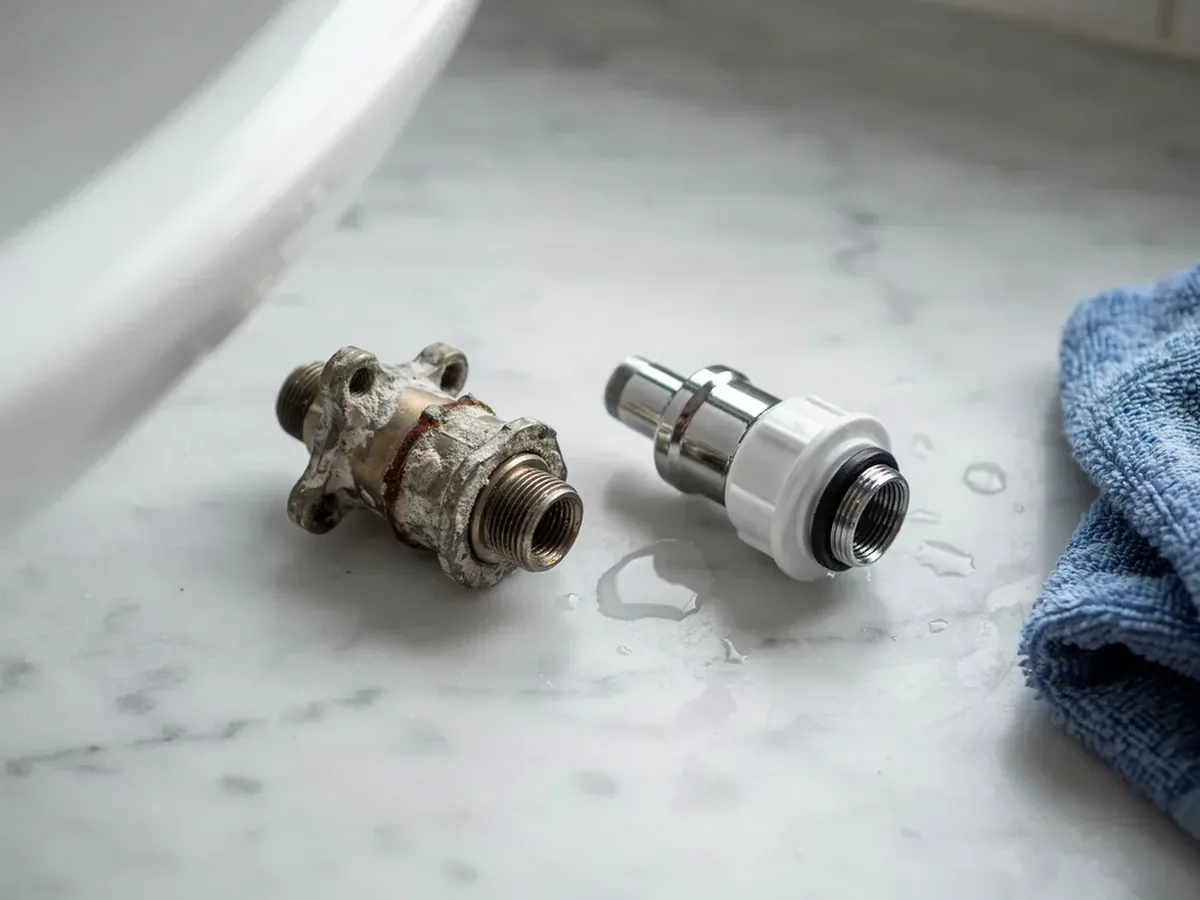
Valves
Choosing the right shower valve
Pressure balancing. The standard modern valve. It senses a pressure drop on one side — somebody flushing a toilet, for instance — and reduces the other side to match, so the temperature stays roughly constant. Reliable, inexpensive, and the right choice for most bathrooms.
Thermostatic. Holds a set temperature rather than a set mix, and reacts to incoming temperature changes as well as pressure. More precise, more expensive, and it allows separate volume and temperature controls. Worth it for a main bathroom or a multi-outlet shower system.
Old two-handle valves have no protection at all. If your shower can scald you when a toilet flushes, that is what you have, and replacing it is a genuine safety improvement rather than an upgrade for its own sake.
One caution on multi-outlet systems: a rain head plus body jets plus a hand shower can easily exceed what a half-inch supply and a standard water heater can deliver. We size the supply and check the heater capacity before anybody orders fixtures.
Diagnosis
Finding a shower leak properly
Determine when it leaks
Only when the shower runs points to the pan, drain or valve. Continuously points to a supply line.
Flood test the pan
The drain is plugged and the pan filled and held. A pan that loses water has a liner or drain problem.
Test the valve and supply
Running the valve without water reaching the pan isolates whether the leak is at the valve body or its connections.
Access minimally
Where possible from the back side of the wall or the ceiling below, rather than through finished tile.
Costs
Shower plumbing costs in West Valley City
| Job | Typical range | Notes |
|---|---|---|
| Shower cartridge replacement | $200 – $420 | Fixes most temperature and drip problems. |
| Shower head and arm replacement | $140 – $320 | Including descaling the outlet. |
| Valve replacement, accessible from behind | $650 – $1,200 | No tile removed. |
| Valve replacement through tile | $900 – $1,900 | Tile repair usually separate. |
| Shower pan flood test | $180 – $350 | Diagnostic, credited against the repair. |
| Shower drain replacement | $450 – $1,100 | Depends on access from below. |
| Tub to shower conversion, plumbing | $1,800 – $4,500 | Drain relocation, new valve, rough-in. Tile separate. |
| New shower rough-in | $1,600 – $3,800 | Supply, drain and vent for a new location. |
Tile, waterproofing and surround work usually handled by a tile contractor and priced separately. Typical local ranges, not quotes.
Advice
Getting a shower right
- Fix temperature swings, do not live with them. It is usually a cartridge, it is not expensive, and a shower that swings hot is a genuine scald risk for children.
- Descale the head regularly. A sandwich bag of white vinegar tied over the head overnight restores most of the flow people think they have lost.
- Take a pan leak seriously. Water getting under a shower floor damages subfloor and framing quietly. A flood test is cheap certainty.
- Plan multi-outlet systems around supply and heater. Two outlets running at once can outrun a half-inch supply or a 40-gallon heater. Better to know before ordering.
- Use a hair catcher. It prevents most of the shower drain calls we get.
- Do the valve while the wall is open. During any tiling or remodel work, replacing an old valve costs a fraction of doing it later through finished tile.
FAQ
Shower Plumbing: your questions answered
Why does my shower go cold when someone flushes the toilet?
Because the cold supply pressure drops and your valve is not compensating. Either it is an old two-handle valve with no balancing at all, or it is a pressure-balancing valve whose cartridge has scaled up. On modern valves the cartridge is replaceable from the front, without opening the wall.
Can you replace a shower valve without removing the tile?
Often, yes. If there is access from behind — a closet, an adjacent room, or the back of the wall — we can work from there and leave the tile untouched. Where there is no rear access, some valves can be rebuilt in place, and only some genuinely require going through the tile.
How do I know if my shower pan is leaking?
The signature is that it only leaks when the shower is used, and there is often a stain on the ceiling below or damp at the base of an adjacent wall. A flood test confirms it: the drain is plugged and the pan filled, and a pan that loses water over an hour has a problem.
How long does a tub-to-shower conversion take?
The plumbing is usually one to two days: removing the tub, relocating the drain, fitting a new valve and rough-in. Tile, waterproofing and glass follow afterwards and are typically another few days with a tile contractor.
Is a thermostatic valve worth the extra?
For a main bathroom, or where you have a rain head plus a hand shower, yes — it holds temperature more precisely and lets you control volume separately. For a straightforward guest bathroom, a good pressure-balancing valve is perfectly adequate.
My shower has almost no pressure. What is it?
Start with the head: descale it, because that is the answer most of the time. If it is still weak, the valve cartridge may be restricted, or the supply line to that bathroom may be narrowed by corrosion, which is common in older galvanized. We can measure and tell you which.
Related plumbing services
Shower swinging hot and cold?
It is usually a scaled cartridge and a single visit. Call and we will fix it without opening the wall wherever possible.