
Pipe Repair & Replacement in West Valley City, UT
From a single pinhole in a copper line to replacing every supply pipe in a 1960s house. We will tell you honestly which one you are actually dealing with.
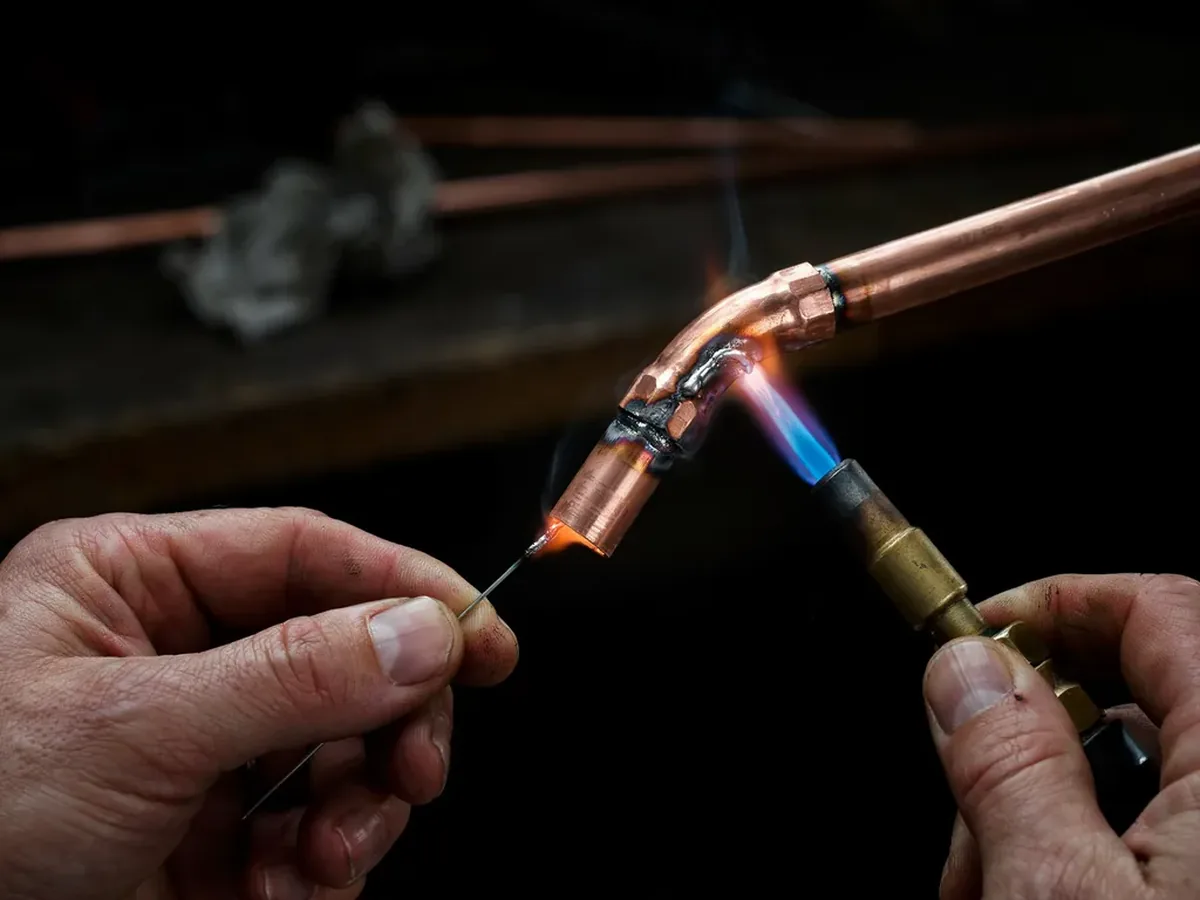
Every plumbing system has a lifespan, and in West Valley City you can usually guess it from the year the house was built. Homes from the 1950s and 60s often still have galvanized steel supply lines, which rust from the inside out and are well past their expected life. Houses from the 70s through the 90s are usually copper, which lasts a long time but develops pinholes as it ages, particularly on the hot side. Newer construction is mostly PEX, which is holding up well.
The question we get asked most is whether to repair or replace. It is a fair question and the honest answer depends on what we find when we cut the pipe open. A single failure in sound copper is a repair. A failure in galvanized that has rusted to a third of its original bore is the first of many, and repairing it is spending money to be back in the same position in six months.
So we show you. When we cut out a failed section we hand it to you and you can see the inside of your own pipe. That usually makes the decision straightforward without anybody having to be persuaded of anything.
Know your pipe
What you probably have, and how long it lasts
Pipe material is the single biggest factor in whether a problem is a one-off or a pattern.
| Material | Common era | Typical life | How it fails |
|---|---|---|---|
| Galvanized steel | Pre-1970 | 40 – 60 years | Rusts internally, bore narrows, fails at threaded joints |
| Copper | 1960s – 2000s | 50 – 70 years | Pinholes from corrosion and abrasion, failed solder joints |
| CPVC | 1980s – 2000s | 40 – 50 years | Becomes brittle with age, cracks at fittings |
| Polybutylene | 1978 – 1995 | Often failed already | Fittings fail, pipe degrades; usually replaced |
| PEX | 2000s onward | 40 – 50+ years | Very durable; failures are usually fittings or UV damage |
| Cast iron (drains) | Pre-1975 | 50 – 80 years | Scales internally, then corrodes through at the bottom |
Life expectancy varies a lot with water chemistry and pressure. Hard water and high pressure shorten all of these.
Pipe services
Pipe work we take on
Same materials, very different jobs. Each page explains what is involved, what it costs and when it is the right choice.
- Pipe RepairLeaking, split and pinholed lines cut out and properly repaired.
- Pipe ReplacementReplacing a failing run or branch without repiping the whole house.
- Whole Home RepipingReplacing every supply line in the house, usually in three to five days.
- Water Line RepairThe buried service line from the meter to your house, repaired.
- Water Line InstallationNew service lines, upsized mains and supply runs to outbuildings.
Warning signs
Signs your pipes are near the end
- Discoloured water when a tap has been off. Brown or rusty water first thing in the morning is corrosion inside galvanized lines.
- Pressure that has slowly declined over years. Not a sudden drop. A gradual decline is the bore of the pipe closing up with rust and scale.
- More than one leak in the same house in a couple of years. Pipe does not fail randomly. Repeat failures mean the whole system is at the same point in its life.
- Visible corrosion, green staining or flaking on exposed pipe. What you can see in the basement or crawlspace tells you what the rest looks like.
- Water that tastes metallic. Dissolved iron from the inside of steel pipe.
- Banging or hammering when a tap closes. Water hammer, which fatigues joints over time. Worth fixing on its own merits.
Materials we use
What we replace old pipe with
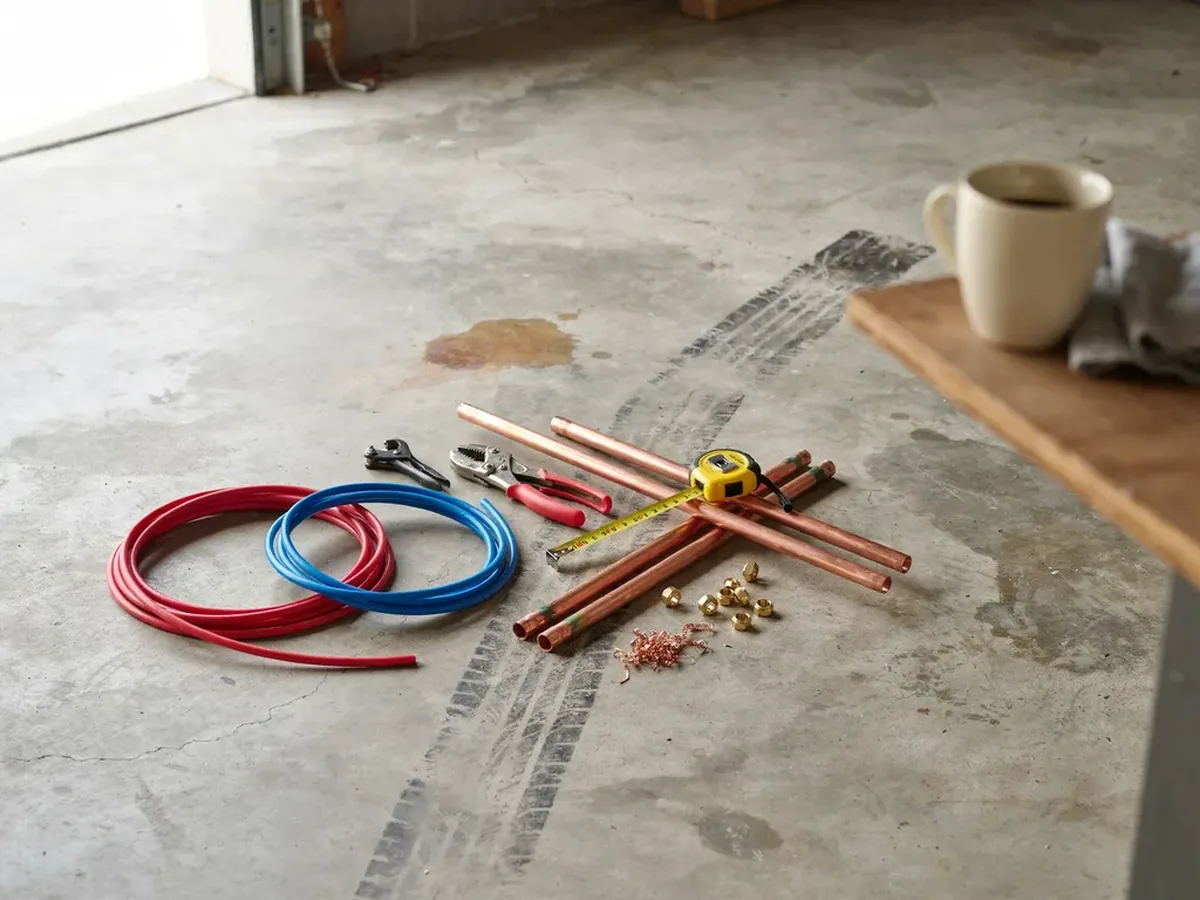
PEX is our default for repiping. It is flexible, which means far fewer fittings and far less wall opening on a retrofit. It handles freezing better than copper because it can expand slightly rather than splitting. It does not corrode, and hard water does not scale it the way it scales steel. Fitted with proper expansion or crimp connections, it is an excellent long-term system.
Copper is still the right choice in some situations: exposed runs where appearance matters, sections near a water heater flue, and where a homeowner simply prefers it. It is more expensive in both material and labour, and it takes longer, but done well it lasts decades.
What we do not install: galvanized steel for supply, and we will always recommend replacing polybutylene rather than repairing it.
For a full repipe we usually run a manifold or a modified home-run layout, so every fixture has its own line back to a central point with labelled shutoffs. It makes future work far simpler and it improves pressure balance when two fixtures run at once.
Our process
How we approach a pipe job
Assess the whole system
Not just the failure. Pressure reading, visible pipe condition, water chemistry and the age of the house.
Show you the evidence
The cut-out section, photos of what is behind the wall, and the pressure test result.
Price the real options
Repair, sectional replacement and full repipe, quoted side by side so you can weigh them properly.
Do the work cleanly
Minimum openings, dust containment, everything pressure tested and inspected before walls close up.
Why us
What we do differently on pipe work
- We never sell a repipe off a single leak. One failure in sound pipe is a repair. We will say so even though the repipe is the bigger invoice.
- Access holes are cut, not smashed. Clean, square, minimum size, in the right place because we locate first.
- Everything gets pressure tested. Before walls close and before we leave, held under pressure and watched.
- Permits pulled where required. Repipes and water service replacements generally need permit and inspection in West Valley City. We handle it.
- Pressure is checked and corrected. There is no point putting new pipe on a system running at 95 psi. A correctly set PRV protects the whole install.
- Written warranty on the work. In plain English, covering both parts and labour.
FAQ
Pipe Services: your questions answered
How do I know what kind of pipe I have?
Look at an exposed section in the basement, crawlspace or at the water heater. Galvanized is dull grey steel with threaded fittings and a magnet sticks to it. Copper is obvious. CPVC is cream or off-white rigid plastic. PEX is flexible plastic tubing, usually red, blue or white. If you are unsure, send us a photo.
Is repiping worth it, or should I just fix leaks as they happen?
Depends entirely on the material and its condition. Fixing leaks as they come is reasonable in sound copper. In corroded galvanized it is a losing strategy: each repair costs several hundred dollars, they come more frequently as time goes on, and every one carries the risk of water damage that costs far more than the plumbing.
How long does a repipe take and can I stay in the house?
Typically three to five days for an average West Valley City home, and yes, most people stay. Water is off during working hours and back on each evening. Expect access holes in walls and ceilings, which are patched afterwards.
Will you need to open a lot of walls?
Fewer than you would expect. PEX is flexible so it can be routed through existing cavities with limited openings, and we plan the route to use closets, cabinets and unfinished spaces wherever possible.
Does hard water damage pipes?
It scales them. In the Salt Lake Valley that scale builds noticeably in water heaters and in the hot side of the system, narrowing bore and accelerating localised corrosion in steel. A softener is genuinely worth considering here, especially alongside a repipe.
Do I need a permit?
For a whole-home repipe or a water service line replacement, generally yes, and the work is inspected. Small repairs typically do not. We pull the permits and meet the inspector so you do not have to.
Related plumbing services
Pipe problems that keep coming back?
We will assess the whole system, show you the inside of your own pipe, and price repair against replacement so you can make an informed call.