
Garbage Disposal Installation in West Valley City, UT
A disposal install is an hour's work done properly and a leak in six months done badly. The details are the flange seal, the discharge alignment and the dishwasher knockout.
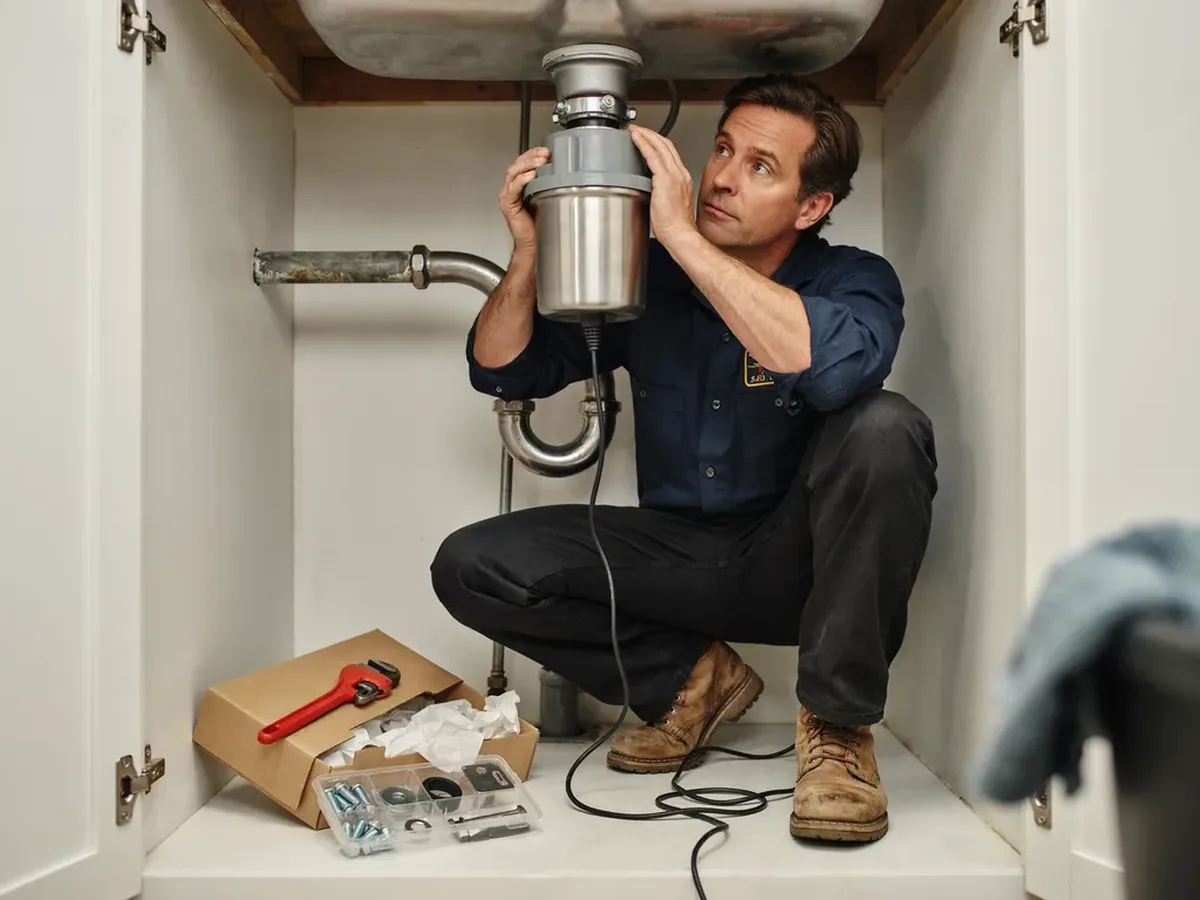
Fitting a garbage disposal is one of those jobs that looks simple and has three specific ways to go wrong. The sink flange has to be seated properly in plumber's putty or with the right gasket, or it weeps into the cabinet. The discharge tube has to line up with the trap without being forced, or the joint leaks under vibration. And if a dishwasher is being connected, the knockout plug inside the disposal inlet has to be removed — forget that and the dishwasher will not drain at all.
That last one is genuinely the most common fault we find on newly installed appliances, and it is entirely avoidable.
The other decision worth making properly is sizing. A quarter-horsepower builder-grade unit will jam on anything remotely fibrous and it will not last long here. A half or three-quarter horsepower unit with a stainless grinding chamber costs modestly more, jams far less and handles hard water better. For most households that is the right buy.
Choosing one
What size disposal you need
1/2 HP
The sensible minimum for a household of one to three. Handles normal food scraps with cold water running. Look for a stainless grinding chamber rather than galvanised.
3/4 HP
The sweet spot for most families. Noticeably less prone to jamming, grinds finer so the drain line stays cleaner, and quieter on better models.
1 HP and up
Larger households, frequent entertaining, or homes where the disposal genuinely gets used hard. Also the quietest units, because they have the most sound insulation.
Batch feed vs. continuous feed
Continuous feed is the standard wall-switch type. Batch feed only runs when a stopper is in place, which is safer with young children in the house.
Installation
How we fit a disposal
Remove and inspect
Old unit out, and we check the sink flange, the trap arm height and the condition of the cabinet base underneath.
Seat the flange properly
Cleaned, sealed and torqued evenly. This is where most leaks originate and it is worth doing carefully.
Mount and align
Unit hung, discharge tube cut and aligned to the trap without forcing, and the dishwasher knockout removed if needed.
Connect and test
Electrical connection checked, then run under a full sink of water with every joint watched dry.
Getting it wrong
How disposal installations fail
- The dishwasher knockout left in place. The single most common fault. The dishwasher cannot drain and people assume the new appliance is faulty.
- Flange not sealed properly. A slow weep into the cabinet that nobody notices until the base swells.
- Discharge tube forced into alignment. Strain on the joint plus vibration equals a leak within months.
- No high loop on the dishwasher drain hose. Allows dirty water to siphon back into the dishwasher.
- Wrong trap configuration. Disposals need the trap arm at the right height, and adding one sometimes means adjusting the drain.
- Undersized unit in a busy kitchen. Constant jams, and the fine grinding a bigger motor achieves is better for the drain line too.
Costs
Disposal installation costs
| Job | Typical range | Notes |
|---|---|---|
| Replace like for like, labour only | $180 – $350 | You supply the unit. |
| 1/2 HP supplied and fitted | $380 – $560 | Including removal of the old unit. |
| 3/4 HP supplied and fitted | $480 – $700 | The recommendation for most households. |
| 1 HP supplied and fitted | $600 – $900 | Quietest, best for heavy use. |
| First-time install (no disposal previously) | $550 – $1,200 | May need electrical work and drain reconfiguration. |
| Add switched outlet under sink | quoted separately | Electrical work by a licensed electrician where required. |
| Drain reconfiguration | $180 – $450 | Where the trap arm height needs changing. |
Typical local ranges, not quotes.
FAQ
Garbage Disposal Installation: your questions answered
How long does it take to install a garbage disposal?
A like-for-like replacement is usually 45 minutes to an hour and a half. A first-time installation where there was no disposal before takes longer, because it may need drain reconfiguration and a switched outlet.
What size disposal should I get?
Three-quarter horsepower is the sweet spot for most families: far fewer jams than a half, grinds finer so the drain line stays cleaner, and reasonably quiet. Half horsepower is adequate for one or two people. Look for a stainless grinding chamber whatever size you choose.
Can you fit a disposal I bought myself?
Yes. Check that the mounting system matches your existing sink flange if you want to keep it — some brands use a different mount — and make sure it comes with the discharge tube and mounting hardware.
Do I need an electrician too?
Only if there is no existing switched outlet under the sink, which is usually the case when a disposal is being added for the first time. For a replacement, the existing connection is normally reused.
Why won't my dishwasher drain after a new disposal was fitted?
Because the knockout plug inside the disposal's dishwasher inlet was not removed. Every new disposal ships with that plug in place and it has to be punched out before the dishwasher hose is connected. It is a five-minute fix.
Is a more expensive disposal actually better?
Up to a point, yes. What you are paying for is motor power, a stainless grinding chamber instead of galvanised, and sound insulation. Those three things are the difference between a unit that jams monthly and one you forget about. Beyond that, the extra features matter less.
Related plumbing services
Need a disposal fitted?
Supplied and fitted, or fitted from your own unit. Old one removed and the dishwasher connected properly.